
Tool preparation
Extending the service life of tools
Machining processes such as drilling, milling and finishing place an enormous strain on the tools used.
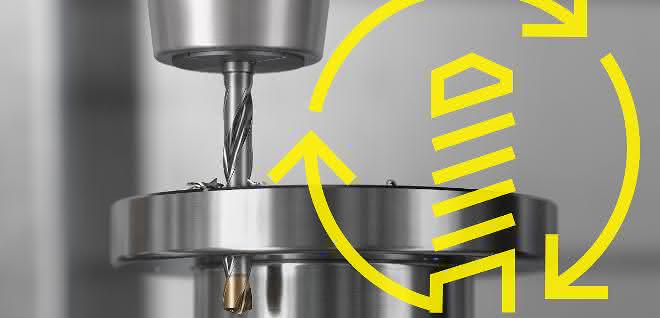
With this in mind, Jill Glynn, Commercial Services Manager at Sandvik Coromant, explains how tool reconditioning can extend the life of a tool - and ultimately provide a cost-effective and sustainable alternative to buying new.
Even if the word "reconditioned" initially leads many people to assume that the performance of worn, overloaded tools is limited compared to new products, reliably reconditioned tools deliver exactly the same consistent machining results as new tools. Nevertheless, there are still some misconceptions about reconditioned tools.
Reconditioning does not equal repair
In contrast to a repair, where only the defective parts are inspected and replaced, reconditioning rejuvenates all product facets. As a result, reconditioned tools are in the same condition as a brand-new product.
However, the reconditioning of cutting tools differs slightly from the reconditioning of other products, as tool wear can vary greatly depending on the application. For example, in the automotive or aerospace industries, where tools often have to produce many bores in a single operation, there is usually more damage. The same applies to industries that operate under difficult conditions: For example, tools used in the aerospace and oil and gas industries are often exposed to harsher environments, which can also reduce their service life.
Because with solid carbide tools the question is not whether the tool is reconditioned, but only when this is done, tool manufacturers should definitely consider tool reconditioning as early as the design phase.
Saving the CAD data usually ensures that the reconditioned tools have the original geometries and coatings. This is absolutely essential for special tools, as otherwise the customer-specific tool specifications cannot be met again.
Act sustainably
Unlike buying and re-buying new tools, a tool that can be re-used multiple times helps to improve sustainability. This is an important aspect, as solid carbide tools such as those from Sandvik Coromant are made from a range of non-renewable raw materials such as cobalt and tungsten and the resources of the latter, for example, are expected to be exhausted in 100 years' time.
Consequently, tools must also be used for as long as possible to ensure the sustainable use of limited resources, which is why tool reconditioning plays an immensely important role. Sandvik Coromant, the global market leader for tools and machining solutions, offers its own tool reconditioning service that customers can integrate into their tool strategies. As almost all of Sandvik Coromant's solid carbide tools are suitable for reconditioning, customers simply need to send their worn tools to the appropriate center in a reconditioning box supplied by Sandvik Coromant. In the specialized centers in Europe, Asia and America, both the tool geometry and the tool coating are restored to the original specifications.
Several reprocessing cycles
Even if a single reprocessing cycle significantly improves the durability of tools, ideally tools should be able to be reprocessed and used several times. Tool manufacturers should therefore always strive to produce tools that can undergo several reconditioning cycles without any loss of quality.
For this reason, Sandvik Coromant has developed the new solid carbide drill CoroDrill 860 with -GM geometry. Its improved tool design ensures a longer tool life compared to its predecessors in the CoroDrill series. The Swedish tool specialist also guarantees that the drilling tool is suitable for up to three reprocessing operations. This means that when purchasing the latest CoroDrill 860, the customer receives not one, but effectively four tools for their drilling operations.
Replacing solid carbide tools by simply buying new ones can be both costly and less sustainable. However, for tool reconditioning to play a key role in companies' sustainability plans, the first step is to dispel misconceptions about tool reconditioning. After all, tool reconditioning can not only help manufacturing companies to get the best out of their tools, but also, as in the case of the CoroDrill 860-GM, to triple tool life.


You might also be interested in
In-house exhibition Bielefeld 2026
How DMG Mori thinks about the factory of the future
DMG Mori will be showcasing turning and milling expertise, automation solutions and additive manufacturing along the Machining Transformation (MX) at the Bielefeld 2026 in-house exhibition.
 read more...
Up to 50 percent higher cutting speeds
The current market situation is putting pressure on companies that rely on carbide tools: Rising raw material costs, volatile supply chains and limited predictability are putting pressure on the industry. Fette Werkzeugtechnik, a member of the LMT...
read more...A robot for all occasions
Industrial robots take on many tasks. Even milling with accuracies in the sub-millimeter range is now possible.
read more...High metal removal rate for high maneuverability
Large module gears for ship drives place high demands on machining. Switching from skiving to 5-axis simultaneous milling with high-feed tools considerably shortens the roughing process. Process parameters and a well thought-out tool selection are...
read more...Schunk shows flexible systems for electronics production
Schunk Electronic Solutions will be exhibiting modular, flexible systems for electronics production at Productronica 2025 - from stand-alone depaneling systems to fully integrated inline solutions.
read more...Hydraulic 4-jaw chuck for automated workpiece clamping
HWR Spanntechnik presents a hydraulically actuated 4-jaw chuck for automated workpiece changing. The clamping device is designed to enable short set-up times, precise clamping and high productivity in automation.
read more...Corner, face and plunge milling
Paul Horn is expanding the DA milling system for corner, face and plunge milling. With the DA65 variant, the system offers a larger cutting insert compared to the existing DA62.
read more...World premieres at the EMO 2025
From September 22 to 26, 2025, Grob will be presenting several innovations at EMO Hannover. The focus of the trade fair appearance will be on the latest 4- and 5-axis universal machining centers and the associated automation solutions.
read more...Flexible and efficient processing
New high-performance CNC series
Fanuc's presentation at EMO will focus on the new FS500i-A CNC series. The new CNC generation offers high user-friendliness, process optimization as well as digital and network technologies.
read more...