
Technology Meeting
Software-Defined Manufacturing Enters Industrial Practice
More than 100 experts from the fields of industry and technology gathered in Munich in early July for the second Xentara Connection Day. The event, organized by the Munich-based software and solutions provider, highlighted how software-defined manufacturing and Physical AI are increasingly evolving from a vision of the future to practical applications in industry.
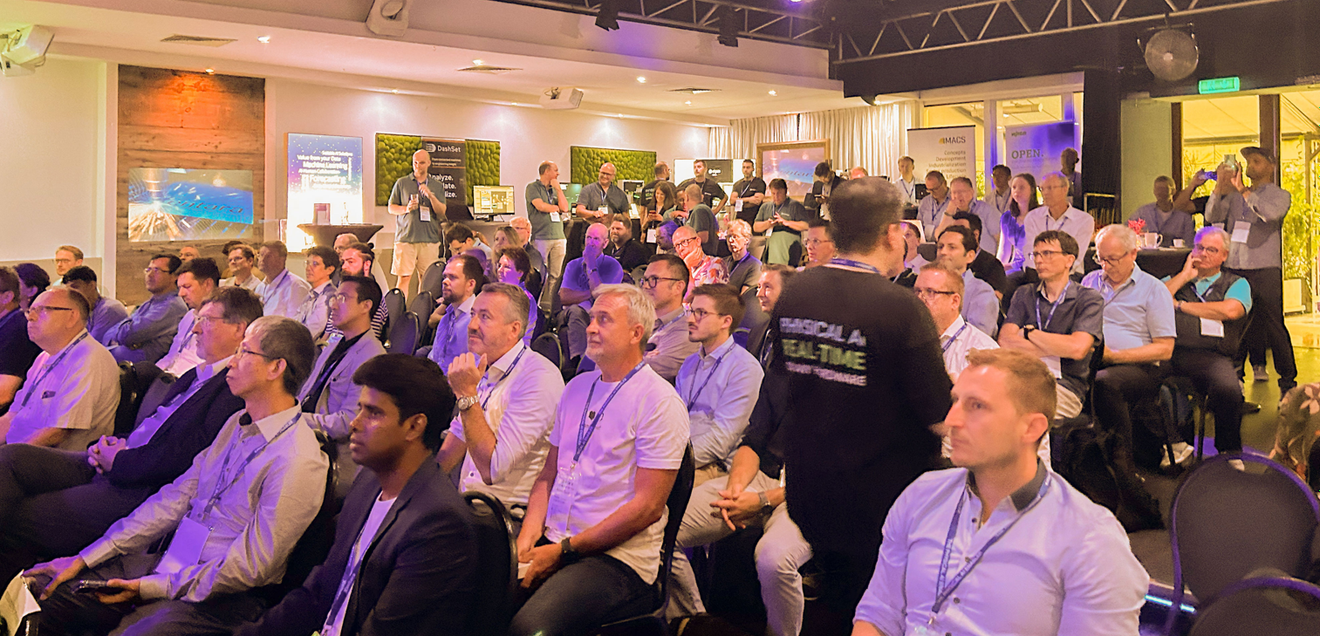
Speakers and exhibitors included Roland Berger, Omdia, WAGO, Advantech, Prognostica, Studio Fluffy, ValueMiner, Benthor Automation, IMACS, and Hilscher. Participants also included representatives from companies such as DMG MORI, SACMI, Red Hat, Intel, Phoenix Contact, Capgemini, HCLTech, Concept Reply, and Carbyte. Interest in software-defined and AI-powered manufacturing is thus growing beyond traditional automation providers.
Software as the Foundation for the Factory of the Future
Keynotes, customer case studies, and live demonstrations focused primarily on how existing production systems can be modernized using AI, robotics, and intelligent automation without having to replace installed equipment or become locked into proprietary hardware. The idea behind this is that software-defined architectures should enhance existing machines with new capabilities, accelerate digital transformation, and at the same time protect existing investments.
From Strategy to Industrial Application
During the event, Xentara also announced the appointment of Andreas Geiss as Chief AI Officer. Geiss, who previously held leadership positions at Siemens and Aleph Alpha, will be responsible for the company’s AI strategy and will drive the adoption of Physical AI in software-defined manufacturing.
Patrick Ruthardt, a principal at Roland Berger, opened the conference program. He explained why, in his view, software-defined manufacturing forms the foundation for Physical AI. Andreas Geiss spoke about the growing competitive pressure on European industry. Anna Ahrens, Principal Analyst at Omdia, highlighted how insights from the development of software-defined vehicles are likely to shape industrial automation in the future.
One focus was on practical implementation. Armin Grozinger, CEO of Benthor Automation, demonstrated a laser system operated on a real-time-capable platform using software-defined automation. This illustrated how existing industrial systems can be modernized through software without having to replace hardware. Jürgen Pfeifer and Alexander Fugmann from WAGO demonstrated the integration of industrial real-time control with local AI inference. Kristina Krebs, co-founder of Prognostica, used a customer example to explain how AI is already improving quality control in optical sorting systems today.
Technology Ecosystem Emphasizes Collaboration
The broader technology ecosystem was also represented. Dr. Johannes Riesterer of Studio Fluffy demonstrated how scientific computing can be integrated into industrial applications via the Xentara ecosystem. Michael Weber from ValueMiner presented a voice-controlled robotic arm operated via the Xentara platform. Umar Ahmad from Advantech discussed the possibilities and limitations of edge AI, as well as the benchmarking of such systems. The event concluded with Xentara founders Michael Schwarz and Robert Schachner offering an outlook on technology trends that are expected to shape industrial automation through 2030 and beyond.
Alongside the conference program, Xentara and partner companies such as WAGO, Hilscher, COLIGO (BE Services), Prognostica, Studio Fluffy, ValueMiner, IMACS, Tronic One, and Benthor Automation presented their solutions in a tabletop exhibition. Also represented were the Open Industry 4.0 Alliance, the ARC Advisory Group, and Bayern Innovativ / Bavarian Chips Alliance. Their joint presence underscored the collaborative approach required for the development of software-defined and AI-supported manufacturing.
Physical AI Is Making Its Way into Practical Applications
“Connection Day exceeded our expectations,” said Michael Schwarz, co-founder and CEO of Xentara. “What really stood out was not only the number of attendees, but also the quality of the discussions that took place throughout the day. It was clear that industrial AI has moved beyond the experimental phase. Physical AI is no longer a concept for the future—it is becoming a practical reality. Especially in Germany and throughout Europe, companies are realizing that they must act now if we want to remain at the forefront of mechanical engineering, industrial automation, and smart manufacturing. Bringing technology providers, analysts, and industrial users together under one roof is exactly what Connection Day was created for, and we are thrilled with the response.”


You might also be interested in
First Security Guideline available
The IO-Link community has published a new Security Deployment Guideline. This is intended to help users evaluate and implement security measures for the use of IO-Link technology.
 read more...
Short changeover times via touch
If many different workpieces are to be processed on one machine, changeover times play an important role.
read more...IO-Link Wireless is an international IEC standard
International standardization drives the worldwide use of the communication solution - and guarantees customers manufacturer-independent compatibility of all components.
read more...Transforming the paper industry towards climate neutrality
Together with partners from industry and research, Voith is developing a project for the optimization of energy and material flows in paper production. The aim of the research project is to develop a digital framework that enables effective process...
read more...Sensor and software development teams merged
Endress+Hauser opens innovation cluster
Endress+Hauser has inaugurated its new premises at the Fribourg Innovation Center (FRIZ). More than 70 employees of the Swiss group of companies specializing in measurement technology are working there on the development of new sensor technologies...
read more...Transport technology from the modular system
Many transport tasks can be realized with the help of linear technology. Pre-configured solutions are available to simplify the interaction between the linear unit, motor, gearbox and controller. This minimizes the effort required for research and...
read more...How production can benefit from AI
Together with AI technology, IIoT networking makes it possible to better control machine parameters and optimize quality with predictive quality. Downtimes and set-up times can also be further minimized. Cloud platforms also make these technologies...
read more...Sensor and software development
Endress+Hauser opens innovation cluster
Endress+Hauser has inaugurated its new premises at the Fribourg Innovation Center (FRIZ). More than 70 employees of the Swiss group of companies specializing in measurement technology are working there on the development of new sensor technologies...
read more...Production of astronomical instruments
Precision for the world's largest telescope
The powerful five-axis machining center G750 from Grob produces large and complex components for the astronomical instruments of the Extremely Large Telescope, ELT, which is scheduled to go into operation in 2028, with maximum stability and...
read more...