
Design and Operation
From ERP System to AI Platform
RNA, based in Aachen, manufactures up to 2,000 custom-designed feeding systems annually and handles all order processing through a central ERP platform. From variable bills of materials to digital twins, the solution enables transparent, data-driven processes from the quotation phase through to after-sales service.
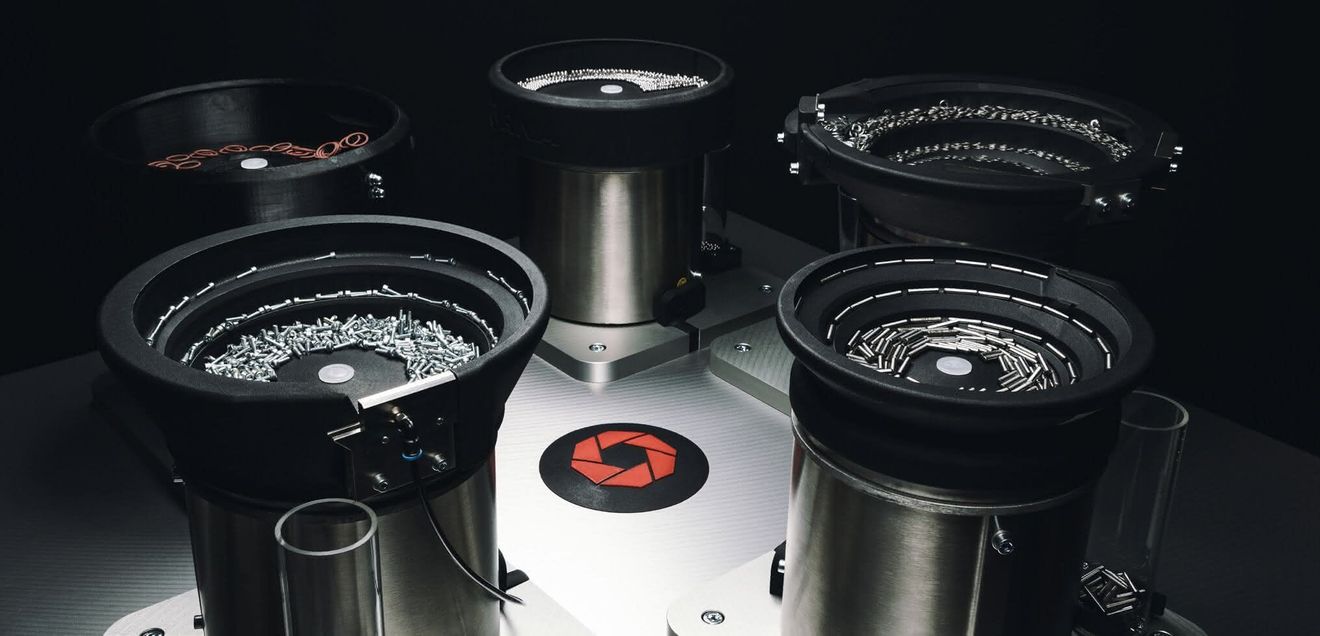
Rhein-Nadel Automation (RNA) specializes in position-accurate feeding technology for assembly processes. Each year, up to 2,000 custom systems leave the company—ranging from simple entry-level solutions to fully digitized systems that utilize artificial intelligence and 3D deep learning to create digital twins and perform geometric simulations. Customers come from the automotive sector, the pharmaceutical and medical technology industries, as well as the consumer goods, electronics, and food industries.
Since 2013, the software foundation for this has been the multiproject management solution ams.erp. Since then, it has consolidated all technical and commercial data from the entire order processing workflow—from sales and engineering through work planning, purchasing, and production to assembly and after-sales service. This end-to-end flow of information ensures efficient workflows and a high degree of transparency in complex customer projects.
Manufacturing Throughout the Design Process
One of the standard ERP functionalities that remains essential for RNA is the handling of dynamic product structures. This is because, in many cases, the workpieces to be fed into the production or assembly processes have not yet been fully developed at the time an order is received. Compared to other systems, ams.erp has the advantage that order processing can still begin immediately after the order is received.
This is made possible by what are known as "growing bills of materials." They accurately track all changes made during the ongoing design process in a version-controlled manner and also provide those responsible with an overview of the current project status.
Another important feature for a company in custom manufacturing is the ability to use “O-parts”—that is, to manage parts in the system without item numbers. Patrick Pirnay, Head of IT at RNA, appreciates this flexibility: “In custom manufacturing,” says the ERP project manager, “maintaining the item master data provides virtually no benefit, since many customer-specific components are used only once. It takes the pressure off our developers when they can manage these parts in the system even without part numbers."
Following the ERP go-live in early 2013, the company succeeded in mapping its processes almost entirely within the standard software. This laid the foundation for ams.erp to be expanded in the following years into the central data hub that today serves as the focal point of all digitalization efforts at RNA.
Thus, in parallel with the ERP implementation, RNA launched an integrated variant configurator that stores the entire product logic and pricing structure. This not only allows quotes to be generated quickly and accurately, but also enables a basic structure for the plant to be built to be defined early in the sales process—a foundation upon which all downstream departments can build.
In sales, new machines are fully described via the configurator in a pre-formatted, readable quote that includes all technical and commercial parameters. In addition, the bills of materials corresponding to the quote specifications are generated. Once an order is won, ams.erp automatically converts the quote into order bills of materials, which are then further developed on a project-specific basis by the design and planning departments. In addition, work plans and budget plans are derived from the quotes. The real-time cost tracking shows how closely actual costs align with the original cost estimate—including projected variances.
Green Light for More Projects
This transparency served as the starting point for further steps toward digitalization. In 2020, RNA expanded the platform to include the ams.bi business intelligence module, which aggregates key performance indicators for executive management and controlling without requiring any additional technical effort on the part of users. In addition to financial and liquidity metrics, the company also uses the solution for material requirements analysis and to evaluate order intake and inventory levels; visualization is handled via Microsoft Power BI. The next major step forward came with the acquisition of a spin-off from the Technical University of Munich that had developed AI-based planning and simulation tools for feeding systems. At the heart of the system is the so-called SolutionFinder: Customers submit 3D models of their workpieces, which are then compared against the machines stored in the ams database. Based on visual characteristics, the AI identifies which systems have already processed geometrically similar workpieces.
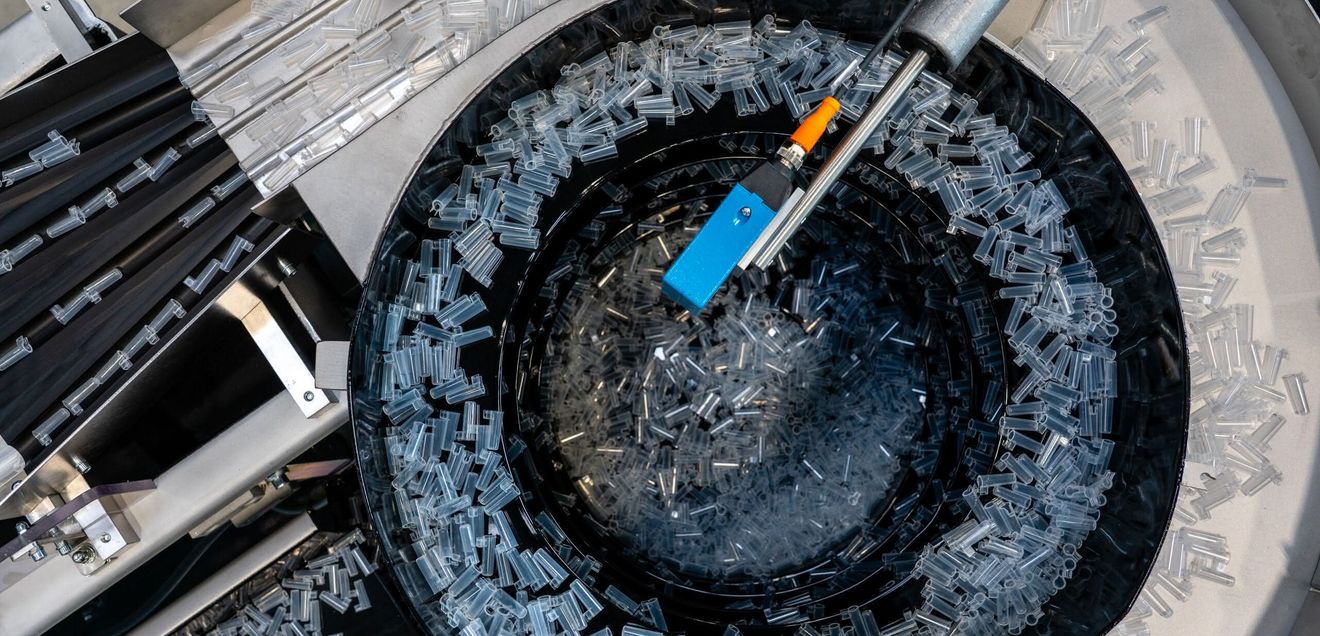
If the system finds matching results, project engineers and technical sales representatives can directly access the relevant information—materials, weight, client, and cost data—and use it to create reliable quotes. In addition, the ERP data is linked to photos and videos from the DMS that document various construction phases. If the information is still insufficient, a direct link from SolutionFinder leads to the corresponding order in the ERP system.
Beyond internal processes, ams.erp also provides the data foundation for the digital representation of the plants themselves. Operators can use digital twins for simulations even before product development is complete and take advantage of services such as predictive maintenance.


You might also be interested in
Predictive Maintenance in the Powertrain: Stöber Is Gradually Expanding Its Approach
Step by step, the company is continuing to develop predictive maintenance: from monitoring to predictive maintenance to smart powertrains.
 read more...
Eric Goos Appointed to the Board of Sumitomo Drive Technologies
Sumitomo Drive Technologies EMEIA continues to expand its leadership team: Eric Goos has been appointed to the board and will serve as managing director of Cyclo Drive Germany GmbH.
read more...The AKIMI Research Project at WZL
Agent-Based AI Aims to Simplify Robotics for Small and Medium-Sized Businesses
The AKIMI research project is developing an agent-based AI designed to significantly simplify the setup, programming, and reconfiguration of robotic systems for small and medium-sized enterprises. The goal is to make robotics more flexible and...
read more...Soft grippers for delicate foods
Irregularly shaped, fragile, and varying in size and weight: products such as potatoes, baked goods, and dairy products push mechanical grippers to their limits.
read more..."As rebar gets thicker, automation has to keep up."
Larger wire diameters, greater performance, higher efficiency: How can rebar processing machines be adapted to changing market requirements using new drive technology and an open automation architecture? A user report.
read more...Humanoid Robotics at BMW in Spartanburg
"Physical AI" combines digital AI with real machines and robots. This allows intelligent systems, such as humanoid robots, to be integrated into real-world production processes. Following the successful deployment of the Figure 02 humanoid robot at...
read more...5 Challenges for AI Projects in Manufacturing
Manufacturing companies have high hopes for AI. IFS highlights the five most common reasons why AI projects fail.
read more...From Theory to the Factory Floor
IT and OT are converging, thereby laying the foundation for the smart factory. Only through seamless data integration can AI, digital twins, and flexible production processes become a reality. Why IT/OT convergence is becoming a competitive...
read more...HIMA Is Growing Despite Challenging Markets
The HIMA Group will increase its revenue to 190.5 million euros in 2025. International business, digitalization, and partnerships are driving this growth.
read more...