
Condition-Based Maintenance
Predictive Maintenance in the Powertrain: Stöber Is Gradually Expanding Its Approach
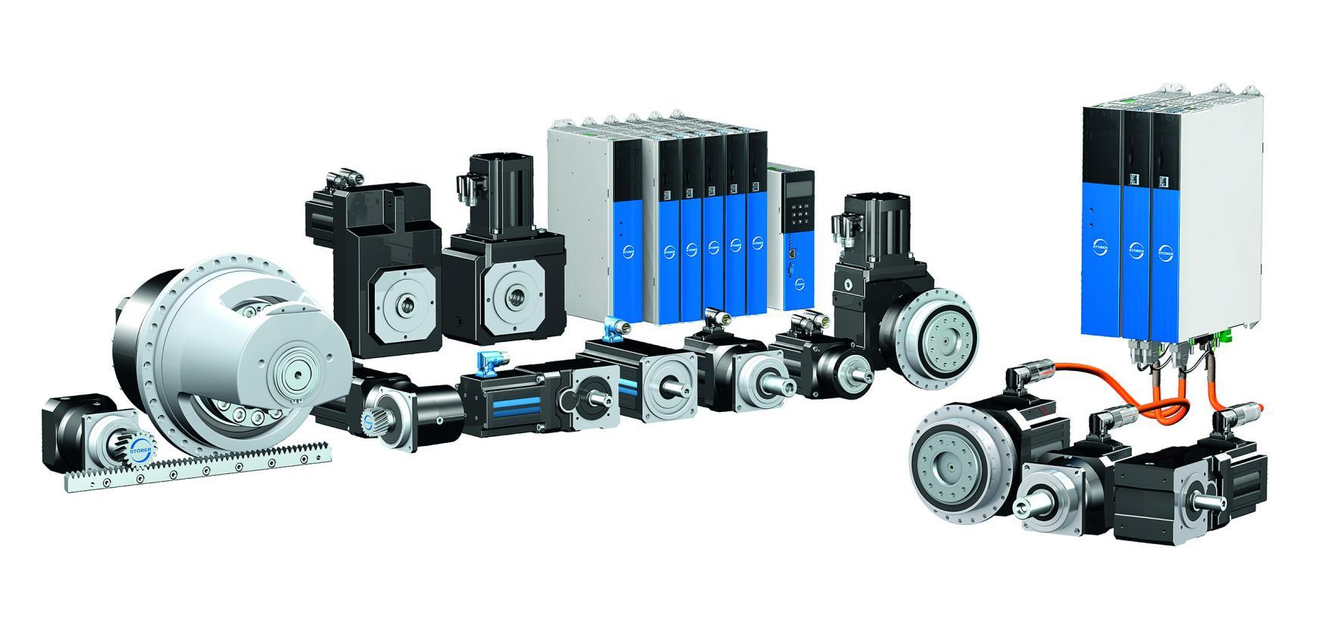
Stöber is working to gradually expand predictive maintenance in the powertrain using a three-stage development plan. The goal is to transition from pure condition monitoring to condition-based maintenance. This is based on process and machine data from which maintenance recommendations can be derived. According to the company, the approach ranges from analytical computational models to future AI-supported methods. The solution is designed to function as an integrated system without external sensors or additional accessories and to be compatible with various control systems.
From Condition Monitoring to Condition-Based Maintenance
“How can we use predictive maintenance to make the transition from pure condition monitoring to true condition-based maintenance for the powertrain?” asked Tim Lang, head of the Systems and Test department at Stöber, and his team.
The starting point is a set of questions that arise in many applications: “How likely is it that the gearmotor will fail soon?” or “When is actually the ideal time to service or replace it?” To answer these questions, Stöber is following a development plan with three phases. The second stage is currently being implemented.
The first phase of development is based on an analytical model
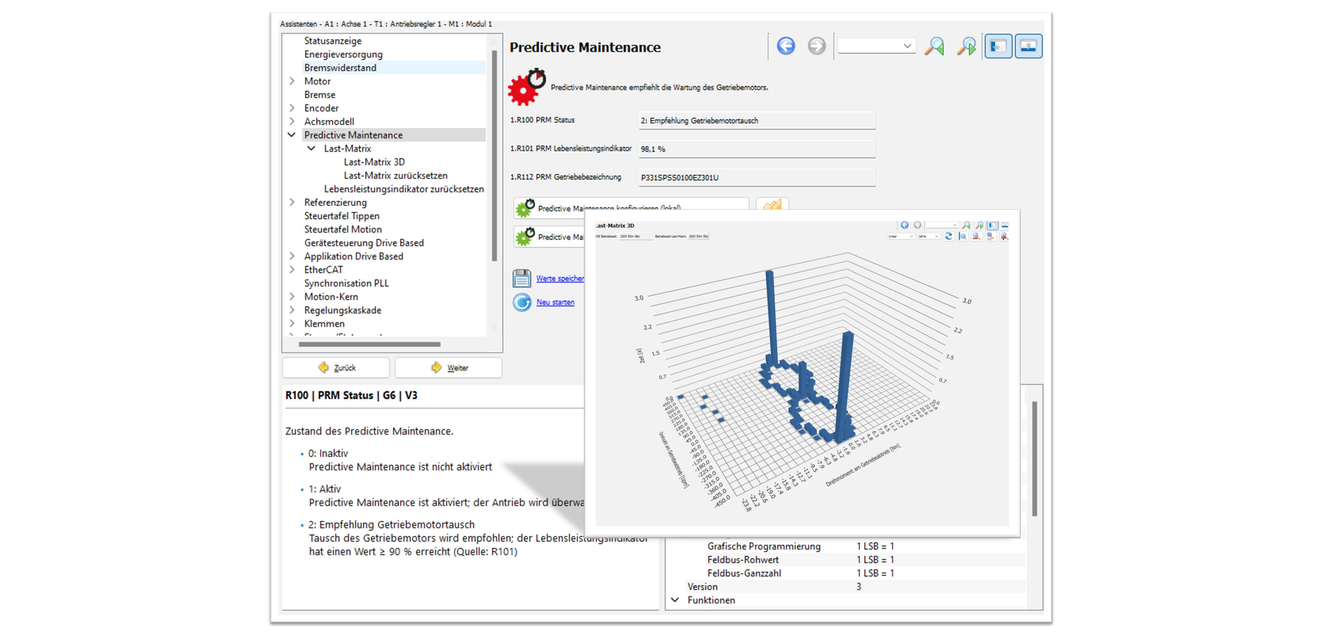
The first phase of the upgrade includes a solution for monitoring the gearmotor. The lifetime performance is calculated using an analytical model and displayed in the drive controller software as a lifetime performance indicator. This value ranges from 0 to 100 percent.
If the indicator reaches a threshold value of 90 percent, the software issues a recommendation to replace the gearmotor. At the same time, this information is made available to the control system as a readable parameter. According to the company, the solution requires no external sensors or additional wiring.
The second phase of development adds measurement data to the model
"In the second stage, the computational model is supplemented with active measurements," Lang explains.
To this end, the company is integrating an accelerometer into the system consisting of the transmission, motor, cables, and drive controller. No additional power or voltage sources are required for this. This approach is intended to enable the monitoring of bearing seats, gear teeth, and other powertrain components, among other things.
"Through frequency analysis, we can use spectral data to predict impending damage," Lang said. "We are currently still in the prototype phase."
Stöber is collaborating with Dr. Johannes Heidenhain GmbH on the development of a gearmotor with an integrated acceleration sensor.
Load matrices form the basis for further analyses
At the same time, according to Stöber, the company has further developed the analytical model and expanded the database to include more than 80,000 combinations of transmissions and engines.
“Among other things, we have improved the analytical model and expanded the database to include more than 80,000 combinations of transmissions and engines,” said Lang.
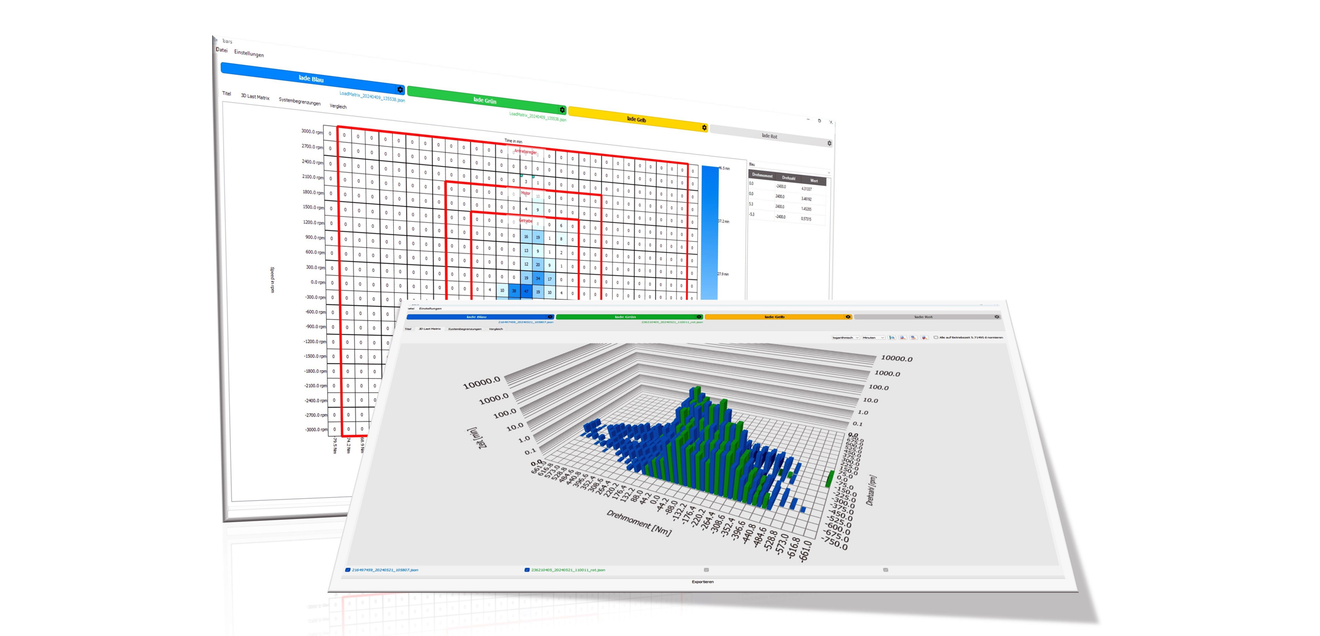
The LastMatrixAnalyzer is also scheduled to become available in the coming months. The software allows users to compare load matrices, create standardized reports, and generate custom analyses. In addition, Stöber plans to provide function blocks and sample programs that will enable load matrices, in particular, to be read via EtherCAT or PROFINET.
According to the company, the load matrices serve as a basis for simulating real-world load conditions. Among other things, they are intended to provide insights into the effects of design and installation, as well as long-term trends.
Visualize and Document Load Cases
Tim Lang explains how the software works: “For each analysis of the load matrices, users assign a project name. This allows individual matrices to be uniquely named, described, and tagged with all relevant information for the analysis report.” The LoadMatrixAnalyzer itself offers several key functions. These include the visualization of load cases. Here, torque and speed at the gearbox output are visualized over time in a 3D graph—making load conditions visible at a glance.”
According to the company, the standard limits for the motor, gearbox, and drive controller can also be displayed individually or together. This makes it possible to determine whether load ranges are within the permissible values or whether deviations are occurring.
The results of an analysis can be documented directly in the software. There, for example, you can note whether a moment load is classified as non-critical or whether there are risks for individual components.
Comparison of Several Load Matrices
The LoadMatrixAnalyzer also allows you to compare up to four load matrices.
“This tells us, for example, whether a transmission has already been run in or whether there are signs of stress or defects,” explains Stöber expert Lang.
The analysis results can then be exported as a standardized PDF report.
AI as the Next Stage of Development
For Tim Lang, the development of the software goes beyond a mere analysis application.
"To me, this tool is more than just a utility—it's a standalone software program. It can be updated, and we're constantly working to improve it."
As the next step in development, Stöber announced the expansion of predictive maintenance solutions to include AI-based methods. The goal is a powertrain that can assess its own condition and provide relevant field data in real time.


You might also be interested in
From ERP System to AI Platform
RNA, based in Aachen, manufactures up to 2,000 custom-designed feeding systems annually and handles all order processing through a central ERP platform.
 read more...
Predictive maintenance in retrofit
Predictive maintenance pays off. This is because early detection of impending failures means that systems can be serviced in a targeted manner before production downtime occurs. But how complex is it to integrate such a maintenance concept into an...
read more...Maintenance with a view to efficiency
At Maintenance, RS offers an overview of its range of products and services. From consumption meters and frequency inverters to power supplies and measuring and testing devices, the company provides support in the selection of products and solutions.
read more...Record number of exhibitors expected at trade fair for maintenance and process technology
The maintenance Dortmund and PumpsS & Valves 2026 trade fairs start with record participation: Over 310 exhibitors are expected. They will be presenting solutions for industrial maintenance, digital assistance systems and process technology.
read more...3D printing for unplanned requirements
The material fails and the machine suddenly stops? Then you need to take the right measures to be able to resume production quickly. Material failure in the form of faulty components or material wear in the frame are a risk for any production.
read more...High demands in terms of safety, application and robustness
Demanding work in the electrical trade and energy supply as well as smooth processes in production require innovative and customized measurement technology that scores points for safety, ease of use and resilience.
read more...Maintenance in Munich: Multimeters and...
Measurement technology for professional maintenance
The maintenance trade fair will take place on October 29 and 30 in Munich. At Conrad, the trade fair for industrial maintenance is all about efficient procurement solutions with a special focus on professional measurement technology.
read more...Challenges in maintenance
In collaboration with Contact Software, Fraunhofer IPK surveyed industry experts on maintenance. The results reveal challenges and potential.
read more...Digital support from a distance
Remote services for machines and systems in industry
In mechanical engineering, service is an indispensable part of the business model and a decisive competitive advantage. However, companies in the field are faced with the challenge of maintaining service quality while costs are rising and skilled...
read more...