
Automotive engineering
Machining gray cast iron
Gray cast iron is still very popular in automotive engineering. The reason for this is certainly its adaptability to a wide range of requirements. However, this also requires special tools for machining.
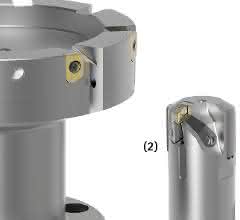
Grey cast iron is a sought-after material: manufacturing costs are low and its properties can be adjusted for specific applications using alloying elements. The tribological sliding and emergency running properties are further special features of the material. Cast iron materials can be divided into white and gray cast iron (Fig. 2). Due to their good mechanical properties, such as high strength and rigidity as well as excellent damping properties, gray cast iron materials are currently used in heavy-duty diesel engines (heavy-duty, truck engines), among others. Here, cast iron with lamellar graphite (GJL), cast iron with vermicular graphite (GJV) and cast iron with spheroidal graphite (GJS) are in competition with each other.
Gray cast iron accounts for 57% of annual iron casting production [1]. Due to the good casting properties of gray cast iron, components can be produced close to their final contour. Nevertheless, machining is required for the production of functional surfaces. Fine and ultra-fine machining processes are increasingly being used to ensure that the required macro- and micro-geometric properties are reliably maintained, and special tool and cutting material solutions adapted to the machining task need to be developed.
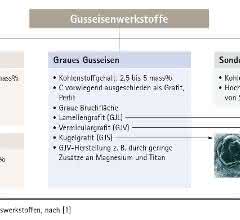
The reliable machining of components made of gray cast iron requires that certain special features be taken into account when designing machining processes. Various studies have shown that ageing has a positive effect on the machinability of cast iron. Ageing reduces the cutting forces and tool wear, and the surface quality and shape accuracy increase [2]. Figure 3 illustrates the significant improvement in machinability after natural ageing at room temperature for up to 1,000 hours. After an ageing period of 30 days, 2-4 μm nitride precipitates form, which cause an increase in strength of up to 13 %. Microhardness measurements showed an increase in hardness in the ferritic cavities around the graphite spheres from 190 HV to 260 HV in 30 days. The increasing material embrittlement with increasing material strength ensures shorter chip breaking, which has a positive effect on tool wear [3].
Effect on tool wear
In addition to the ageing effects, a positive influence of a forming manganese sulphide layer on tool wear was also demonstrated. A comparison of the three gray cast iron materials shows that the cost-effectiveness of fine machining of GJV and GJS is significantly lower than that of GJL. The difference can be attributed to better machinability due to the formation of a wear-minimizing manganese sulphide layer on the engaging tool cutting edge. This enables long tool life when using polycrystalline cubic boron nitride (PcBN) or cutting ceramics for fine machining of lamellar cast iron materials (GJL) [4, 5]. The absence of the wear protection layer can lead to short tool life when fine boring GJV due to the material composition (Fig. 3b). Furthermore, the material composition has a considerable influence on machinability, particularly in the case of GJV alloys. If, for example, the titanium content of the GJV alloy is limited to values below 0.006 mass percent, significantly longer tool life can be expected [6].
Iron-carbon cast materials belong to the group of tribotechnical materials in mechanical and plant engineering and are particularly suitable as a construction material for tribologically stressed functional surfaces. Requirements for functional surfaces include sliding, guiding, storing as well as bonding and sealing. The graphite lamellae embedded in the gray cast iron material act as solid lubricant phases, giving functional surfaces emergency running properties in the event of insufficient lubrication. Furthermore, both the thermal and mechanical material properties influence the tribological component behavior to a considerable extent, although the friction and wear behavior of material pairings cannot be derived directly from their properties.
New tool concepts and cutting materials
Machining processes with geometrically defined or geometrically undefined cutting edges are generally used to produce functional surfaces. Examples of processes with geometrically indeterminate cutting edges include honing, grinding and lapping. In the fine machining of cast materials with geometrically indeterminate cutting edges, the so-called sheet metal shell formation is a major problem in the production of functional surfaces. Sheet metal shell formation generally describes plastic material deformation on the component surface, which can be caused by blunt honing strips or deep rolling processes, for example. Material crushing and scaling on the machined component surfaces clog the honing grooves or overlubricate the graphite lamellae, so that the emergency running properties of the functional surfaces are minimized [7]. A wide variety of tool concepts exist for the fine machining of functional surfaces with geometrically defined cutting edges, such as fine boring or reaming (Figure 1). Suitable tool concepts are selected on the basis of given boundary conditions and taking economic efficiency into account. Tools with indexable inserts (1), (2) offer advantages due to low tool circulation costs, fine boring tools (2) guarantee maximum form and position accuracy, and multi-bladed reamers (3) impress with short cycle times and high output. The various tool bodies can be equipped with different cutting materials for this purpose.
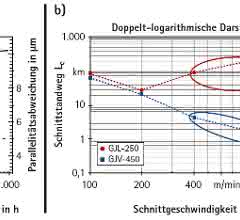
In general, coated carbides (HC) and PcBN cutting materials are mainly used for the fine machining of cast iron materials. For the finishing of cast iron with vermicular graphite (GJV), however, carbide cutting materials of cutting material group K are used in particular.
Carbide cutting materials of application group K10 in combination with an adapted cutting part design and edge rounding greater than 50 μm without additional chip form geometry offer very good tool life behavior for fine boring processes in continuous cutting. When machining vermicular cast iron, an increase in cutting speed has the greatest influence on tool usage behavior compared to an increase in feed and infeed (Fig. 3). In particular when machining cast iron with lamellar graphite, the high-hardness cutting material boron nitride (PcBN) is often used, as well as polycrystalline diamond (PCD), HC and cermet in special cases. The aforementioned cutting materials are used depending on the type of graphite precipitation in the cast iron and the machining task at hand. With the exception of PcBN, the cutting speed for fine machining of cast iron materials should be between
80 m/min and 220 m/min should be selected. For cutting materials made of boron nitride, however, significantly higher cutting speeds of up to 1,200 m/min apply.
In the latter case, machining should also be carried out using dry cutting so that the wear-minimizing manganese sulphide layer can form on the tool cutting edge due to the increased cutting temperatures (see Fig. 3b). In contrast, process conditioning with cryogenic CO2 snow cooling is recommended for the finishing of vermicular gray cast iron so that the thermal tool load can be reduced due to the lack of a manganese sulfide protective layer [6].
Fine machining of cylinder running surfaces
The cylinder running surface is manufactured using a multi-stage process chain consisting of a fine and a superfinishing process. With the fine boring production process (process with geometrically defined cutting edge), each cylinder bore is first given the required macro-geometry (cylinder shape and position).
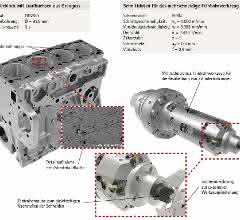
For the fine boring operations, actuating tools with fine adjustment are used. They are characterized by low chip removal and high cutting speeds. Pull/push rod actuation or coolant pressure are usually used to adjust the cutting edges, as is the case with the tool shown in Fig. 4. The cutting edges are first positioned to the set machining diameter by controlling the coolant pressure (approx. 50-60 bar) and the cylinder bore is machined. After completion, the coolant pressure is switched off, the adjustable rockers with the finish cutting edges lift off the workpiece and the tool can be removed from the bore without retraction grooves. In addition, the cutting edges can be adjusted either manually with an assembly wrench via a central screw positioned at the front or automatically via an adjustment device in the machining center to compensate for cutting edge wear. A defined surface profile is required for the subsequent honing process, which can be created specifically by fine boring operations. The requirement regarding the average roughness depth Rz is 8-16 µm.
The functional properties of the cylinder bore are produced in a second process step by using a reamer (process with geometrically indeterminate cutting edge). The resulting microgeometry determines the functional properties of a finished honed surface, which includes the tribological state variables "adhesion" and "sliding" as well as "guiding". The cylindricity deviation after honing should be less than 6 μm. The main advantage of gray cast iron when used in the cylinder block is its emergency running properties, which are achieved by exposing the graphite inclusions. The cross groove structure is a typical surface structure caused by the honing process and, in conjunction with the exposed graphite, leads to excellent tribological sliding properties (Fig. 4). Furthermore, graphite discharge leads to the formation of cavities which act as lubricant reservoirs.
Prof. Dr. Eberhard Abele, Managing Director of the PTW Institute at TU Darmstadt, Dr. Dirk Sellmer, Head of Research and Development, Mapal Dr. Kress / ag
Bibliography
[1] Bundesverband der Deutschen Gießerei-Industrie (BDG): The industry in figures. [online] Homepage: BDG - Bundesverband der Deutschen Gießerei-Industrie e. V., URL: http://www.bdguss.de/branche/die-branche-in-zahlen/ #.WBMJ3S2LSUk [as of: 30.10.2016], 2015.
[2] Lekakh, S. N.; Richards, L.: Cast Iron Machinability - The effect of aging on material properties determines optimal machining time. Modern Casting, 2014.
[3] Berns, H.; Theisen, W.: Eisenwerkstoffe Stahl und Gusseisen. 4th edition; Springer-Verlag Berlin Heidelberg ISBN 978-3-642-31923-5, 2008.
[4] Klöpper, C. F.: Untersuchungen zur Zerspanbarkeit von austenitischferritischem Gusseisen mit Kugelgraphit (ADI). Dissertation, WZL, RWTH Aachen, 2007.
[5] Kress J.: Auswahl und Einsatz von polykristallinem kubischem Boronitrid beim Drehen, Fräsen und Reiben. Dissertation, ISF, Technical University of Dortmund, Vulkan Verlag, Essen, 2007.
[6] Pfeiffer, P.: Technologische Prozessauslegung für die Zerspanung von Gusseisen mit Vermiculargrafit unter kontinuierlichen Schnittbedingungen. Dissertation, PTW, Technical University of Darmstadt, Shaker Verlag, Aachen, 2014.
[7] Welzel, F.: Tribological optimization of cylinder running surfaces in internal combustion engines from a production engineering perspective. Dissertation, Faculty of Mechanical Engineering, Otto von Guericke University Magdeburg, 2014.
[8] Mollenhauer, K.; Tschöke, H.: Handbuch Dieselmotoren. 3rd edition, Springer Berlin Heidelberg New York, ISBN 978-3-540-72164-2, 2007.
[9] Bartels, C.; Gerhards, R.; Hanselka, H.: Gusseisen mit Kugelgraphit Herstellung - Eigenschaften - Anwendung. konstruieren + giessen 32-2007 H.2 ZGV-Zentrale für Gussverwendung im Deutschen Gießereiverband.


You might also be interested in
Customized machining solutions
Custom-fit solutions for hydraulic valve housings from Mapal
The production of valve housings is the supreme discipline in the world of fluid technology. As a technology partner, Mapal provides support and designs the optimum machining strategy in dialog with the customer.
 read more...
Producing profiles to the highest perfection
In times of an abundance of difficult framework conditions, companies in the machining industry need innovative partners and technology suppliers more than ever to help them master the special challenges they face.
read more...Hard finishing for various applications
At the first GrindingHub in Stuttgart, Gleason will be presenting hard fine machining of various applications, from gears of typical e-gears to large wind power gears, including generating grinding, profile grinding, gear honing and power skiving of...
read more...Micrometer-precise bore machining
In the cross-grinding laboratory in Cologne, the employees of Hommel Präzision tackle the demanding challenges of µm-precise bore machining on a daily basis.
read more...Combined deburring and handling solution
Kadia's portfolio includes a wide variety of deburring machines, most of which are designed for fully automatic operation, for example with the aid of a robot.
read more...Induction hardening for heavy-duty applications
Linear guides in industrial automation and heavy-duty applications are often exposed to high mechanical loads and must meet high requirements in terms of robustness, durability, dynamics and performance.
read more...Gripper for battery terminal smoothing machine
Everything runs smoothly here
Gripper unit for battery terminal smoothing machine. Four parallel grippers from the Zimmer Group automate a machine system for surface hardening of battery terminals.
read more...Chip formation as the key to process...
Standardized chip breaker geometry for P and M steels
MAPAL presents standardized chip breaker geometries for unalloyed, alloyed and stainless steels. Optimum chip formation, higher process stability and reduced tool life in machining.
read more...Mapal mourns the death of Dr. Dieter Kress
The former Managing Partner of Mapal, Dr. Dieter Kress, passed away on 27.12.2023 at the age of 81 after a long illness.
read more...