
Tool and mold making
Fully automatic HSC hard machining
Although complex injection moulding tools are often individual items, consistent standardization of workflows and automation of machining processes in conjunction with the right machine can achieve both quality and cost benefits. However, such solutions often require individual adaptations to both hardware and software.
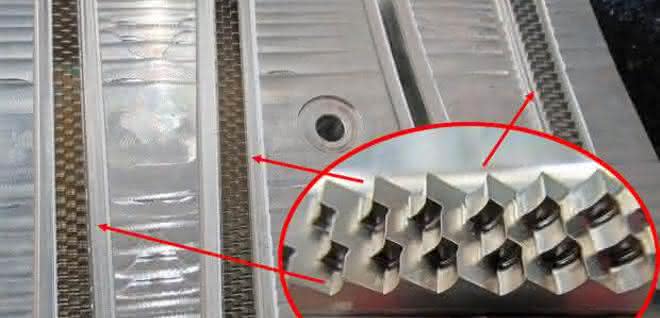
Today, lighting systems for the automotive industry are manufactured from plastic using injection molding, which requires numerous tools, some of which are very large in size. Today's LED lighting systems require plastic components of the highest precision so that the light produced meets the requirements of customers and legislation. Quality criteria include, for example, homogeneous light distribution and defined boundaries between light and dark, even at distances of over 100 meters. The corresponding injection molds must therefore meet the highest requirements in terms of precision and surface quality, particularly in the area of the light-guiding elements. With around 200 employees, the Hella Tool Technology Center is responsible for supplying the global production plants of the internationally active automotive supplier with the corresponding tools, which weigh up to 36 tons. In addition to the production of new tools, one focus of activities is the maintenance of tools within the Group, which often requires the production of new worn components. The tools have a high degree of complexity, such as multiple cycles and numerous slides, and require up to 7,000 production hours.
Although the toolmaker is a subsidiary of Hella, it has to compete with offers from the market order for order: As a matter of principle, some of the requirements are also sourced externally. In addition to quality and deadlines, costs are therefore also a priority for the Hella Tool Technology Center. As early as 2009, the company began to consider how the advantages of automating processes could be exploited. The first small cell for automated, unmanned production was put into operation in 2011.
Machine tool manufacturer as a strategic partner
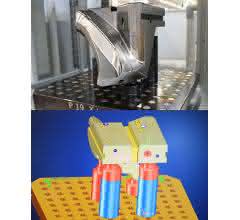
"In order to make the best possible use of the advantages of such a concept, we needed a solution that could be adapted as flexibly as possible to our specific needs over the entire planned period of use," explains Carsten Berhorst, project manager for the introduction of Röders automation at the Hella Tool Technology Center. The corresponding planning began in 2009 and was even the subject of various academic theses. In addition to the performance of the milling machine in terms of dynamics and accuracy, the requirements for the project include the use of uniform software standards for all processes. At the Technology Center, these are Catia for CAD design and Tebis for CAM programming. Another prerequisite is a modular, scalable zero-point clamping system that can be used to clamp a wide variety of workpieces, from small parts to half-ton mould plates, according to the same pattern using standardized tools.
The original idea was to combine two milling machining centers from different manufacturers and a robot from a third manufacturer to supply the cell with workpieces and tools. In the end, the decision was made to look for a single partner as general contractor. This partner must therefore ensure the overall support of all system components - both hardware and software. The cell was to focus primarily on the finishing of mold components in the hardened state, but would also be available for roughing in the "soft" state before hardening. Common materials are hot-work tool steels such as 1.2343, which have hardnesses of up to around 50 HRC, or pre-hardened steels such as 1.2738.
The original configuration
"The first cell delivered at Easter 2015 consisted of two RXU 1200 DSH 5-axis milling machining centers from Röders, which were automated with a robot with a net load capacity of 495 kg from the same supplier," recalls Karl-Heinz Uhle. This type of machine was chosen because it optimally combined the requirements for precision machining and performance in roughing and drilling. These machines are equipped with highly dynamic and precise linear drives as well as a particularly rigid Z-axis with four guide rails. With a work area size of 1,000 mm × 1,050 mm × 600 mm and a load capacity of 1,500 kg for the rotary/tilt table, they can process all possible workpieces. They are robust enough to machine even large workpieces made of hardened tool steel with cutter heads up to Ø 35 mm. In some cases, 3 mm of material is machined down, with a chip thickness of up to 0.2 mm. Holes with diameters of up to 12 mm and depths of up to 250 mm are also drilled into the same workpieces. The machines have been equipped with powerful spindles with HSK-A63 interface for this tough application, which achieve a maximum speed of 24,000 rpm. Despite their robustness, the machines are precise enough to machine even very fine details such as radii of 0.25 mm with milling cutters down to Ø 0.4 mm. Final high-gloss finishes, if still required, are carried out by polishing in separate systems or manually. Due to the surface quality and accuracy that can be achieved, the effort required for these additional work steps has been significantly reduced. At the same time, this resulted in an improvement in accuracy, as geometric distortions during polishing could be reduced to a minimum.
Operational experience
"We were able to prepare thoroughly for the new systems through training and with the help of simulation software before delivery," reveals Carsten Berhorst. The fact that Röders has developed its own control system for its machines and can therefore respond very flexibly to customer requirements was a particular advantage. The importance of this was demonstrated, for example, when using smaller solid carbide tools with NC programs that had previously been written for other machines, which were considerably "softer" and slower in their path guidance. The new Röders systems not only have a very rigid machine frame, but also control the tool path extremely precisely thanks to their 32 kHz control frequency and also achieve extraordinary dynamics thanks to the linear motors. This could also be experienced immediately after commissioning the machine, because tools broke off in wrap-arounds, as these were passed through considerably faster than was previously the case. After adapting the existing NC programs, the machining processes were fortunately much faster. The close contact with the support specialists at Röders proved to be extremely helpful here. Thanks to the good preparation, parts could be produced with the cell just four weeks after delivery, and the ramp-up was also pleasingly fast and problem-free in the subsequent period. The post-processor manual provided by Röders was also very helpful, as it enabled the post-processor to be optimally adapted to the requirements of the Hella Tool Technology Center. Familiarization with the RMS6 machine control system and the RMSMain job manager from Röders was quick and easy, as the manufacturer not only pays attention to the special performance of this software, but also always focuses on simple and effective operation.
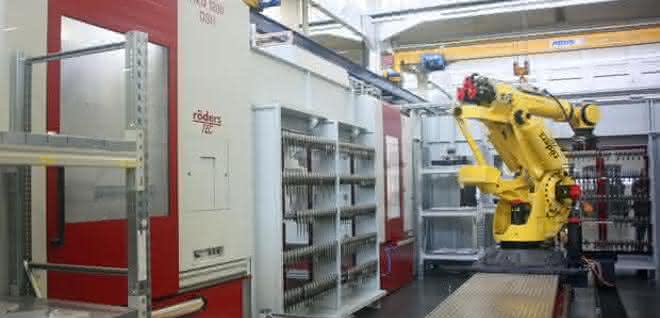
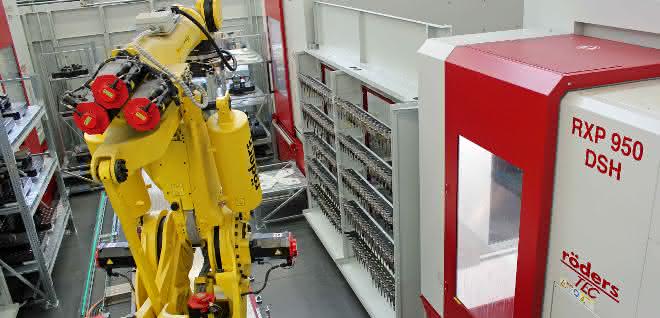
"The chosen solution has proven so successful since then that we carried out an initial expansion in summer 2018," reports Uhle. The robot was placed on a 5,500 mm long rail and a smaller Röders RXP 950 DSH system was added to the cell. This has a smaller working area of 600 mm × 905 mm × 500 mm, but was equipped with the same spindle as the other two machines, so that all milling tools can be freely exchanged within the cell. Naturally, the same clamping system was also selected as on the two existing machines to ensure extensive consistency. The jobs are released for one or both machine types via the job manager and thus automatically assigned to the correct machine. The cell now has a total of 543 tool slots instead of the previous 198 (external + internal), and the number of pallet slots for workpieces has increased from 11 to 21. The addition of a fourth Röders system is being discussed for the future. All workpieces are pre-equipped by the work preparation department on the aforementioned modular pallet system with zero-point clamping, so that the machines can be loaded and unloaded unmanned at any time.
Partnership with a win-win result
"During the course of development, it became clear that we were exactly right in choosing Röders as our supplier," says Carsten Berhorst. As expected, there was a need for adjustments when implementing the cell and modifying existing hardware and software. In the course of project planning, installation and production start-up, Röders proved to be a competent and efficient partner, with whose help all the desired changes could be made. The cell is operated by two employees in two shifts and works unmanned both at night and at weekends. Today, the three systems each achieve an average of around 6,000 hours of complete running time per year. Depending on the job mix, some of the machines even achieve up to 700 milling hours per month. "Our expectations have been met and even exceeded in terms of cost-effectiveness," concludes Uhle.
Klaus Vollrath, freelance journalist in Aarwangen, Switzerland / ag


You might also be interested in
Cutting solutions in 2D and 3D
Microstep showed 2D and 3D cutting solutions in action on sheet metal, tubes, profiles and container bases, including bevel cutting with plasma or waterjet and dynamic fiber laser cutting, as well as drilling, milling and marking demonstrations.
 read more...
Precision machining of bores
Paul Horn is presenting an innovative extension for the Supermini system in the field of ultra-fine machining at EMO 2023. The system has been supplemented by a variant with an ultra-fine ground cutting surface.
read more...Deep drill holes optimized with PCD
When the Schlote Group built a new plant in Harzgerode in 2017, production was geared towards series production of a single component right from the start.
read more...Production goes digital
EMO, the world's leading trade fair for production technology, invites the industry to Hanover from September 18 to 23.
read more...Vibration-free groove turning process
Adjustable damped boring bar
Paul Horn is exhibiting innovations and product enhancements at the EMO in Hanover. Among other things, the company is exhibiting a boring bar that can be adjusted to the vibration amplitudes that occur.
read more...Efficiency with digital twins
Digitalization and automation are the way to increase efficiency and flexibility in machining. The Tebis team will be presenting suitable solutions for mechanical engineering at EMO.
read more...Many highlights in Leipzig
Ceratizit will be presenting the highlights from its portfolio at Intec. In addition to the latest tools for milling, turning and drilling, automation solutions will also be a top topic at the tool manufacturer's stand.
read more...How smart robot simulation works
More intelligent, more efficient, easier to operate - robots are developing rapidly. Among other things, great care is required when setting them up and operating them in order to avoid cost-intensive downtimes. Robot simulation tools are...
read more...Milling, turning and grinding center
Milling, turning, grinding and gear cutting on one and the same machine - in a single clamping operation: Soraluce's multitasking machines are the answer to technically complex workpieces with tight tolerances that require various machining...
read more...