

Interview
Greater vertical integration makes sense
Lean Management. Professor Markus Schneider is a specialist in lean management and intralogistics. We asked him about the necessary consequences for production in light of the coronavirus crisis.
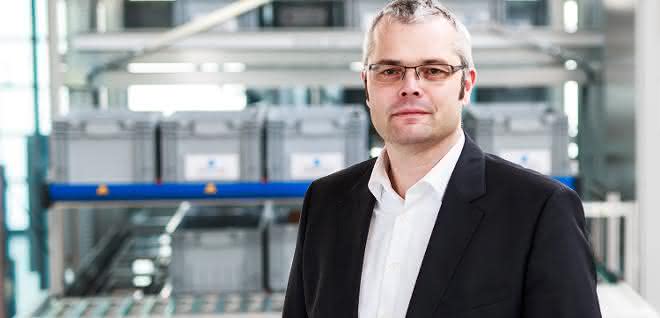
handling: Professor Schneider, we have all been preoccupied with the coronavirus crisis for three months now. Can we foresee what this means for the economy?
MS: The corona crisis has made it clear to us these days just how vulnerable our current global supply chains are. Are we really still in a position to supply ourselves autonomously and self-sufficiently as a company, as a country or at least in Europe? How vulnerable are we to crises in other parts of the world, be they pandemics, natural disasters or political and military conflicts? For decades, our entrepreneurial and political actions have primarily been determined by principles such as the division of labor, concentration on core competencies and the outsourcing of all other activities. Profit maximization as a maxim for action favours cost-oriented decision-making and a global allocation of partial services. However, this favors long, transport-intensive, globally distributed and unfortunately also vulnerable value chains.
handling: Can this also be measured in figures?
MS: One indicator of our economic activity is vertical integration. During the last crisis in Germany, this increased from less than 54% to almost 62% in 2008. Has there been a fundamental rethink in the design of value chains or did we "only" want to employ our own people in the short term? The subsequent fall to around 56% would seem to suggest the latter.
handling: What do you think should be the consequence of this?
MS: I advocate giving preference to the long-term action horizon and replacing profit maximization with survivability as the maxim for action, as proposed in the systemic-evolutionary world view. Survivable units or production facilities can be formed according to the PPRL model (product, process, resource, control). From a product perspective, a plant should not produce individual parts or components, but products that can be sold and used. This could mean that we do not, as is currently the case in a plant in Germany, manufacture components with complex machines, drive the individual parts to Tunisia for pre-assembly and then to Romania for final assembly. The problem with this approach is that the production network is extremely vulnerable. If a plant comes to a standstill or the transport chain is interrupted, the entire network will soon be down as well. However, if each plant were viable in its own right and covered the entire production process, from prefabrication to pre-assembly to final assembly, we would save a lot of transportation. If one plant were to fail, the other two would still be operational.
handling: What would that mean for the economy as a whole?
MS: Using the fractal model, the question could then be asked for the region, the state or even the European economic area as to which products need to be produced locally in order to actually be viable. The question can then also be played out for resources. What resources must we have access to as a company or as a region? Which energy, which raw materials and which production technologies are essential for our production location? Finally, the control dimension deals with how we keep individual units capable of making decisions and taking action. What knowledge, budgets and powers must be available on site in order to be able to make decentralized, fast and agile decisions in line with a central strategy. Once these boundary conditions have been defined, the processes can also be optimized in line with these boundary conditions. The key to the production network of the future lies both in the digitalization of the value chain and in the consistent reorganization of production according to lean principles.
handling: We already talked about lean management last year. But what does this mean for the time after or with corona?
MS: Medium-sized manufacturing companies in particular can use lean measures to reduce their costs comparatively quickly, secure liquidity and thus very effectively counter the economic effects of crises such as the one we are currently experiencing with corona. Lean principles can be used to make work processes and workplaces more efficient, for example. The lean rule of "organize first, invest later" helps to achieve considerable effects with short-term and cost-effective measures. For example, employee deployment can be reduced or throughput increased with the same number of staff. The medium and long-term levers that require investments or new designs can then be implemented later.
handling: What does this look like for the material flow in production?
MS: Yes, there is also considerable potential for savings in the processes of material provision and intralogistics - from tugger trains to warehouse technology - which can also be realized in the short term. Optimizing throughput times in particular can significantly increase the speed of response. As a result, inventory reductions in the warehouse free up urgently needed liquidity.
Software-supported PPS systems are designed for steady states. Setting up new scenarios and production processes is time-consuming and resource-intensive. In highly volatile times of crisis, production control with on-board resources, such as a card system, often helps. Without the support of IT experts, it is possible to react to changing requirements and carry out production planning and control in crisis mode. Understandably, most new construction projects are also postponed in times of crisis. As a result, you have to cope with the given space conditions for even longer. Method-supported material flow optimization - so-called brownfield planning - also pays off quickly in existing buildings. The processes are visualized and optimized together. Whether the necessary changes in the existing building still pay off can then be reliably assessed based on the framework conditions.


You might also be interested in
Sustainability Through Simulation
Digital material selection reduces CO2 emissions by 40 percent
The use of digital material simulations can significantly reduce CO₂ emissions during the development and manufacturing of components. A real-world project by Schunk and Cadfem demonstrates how data-driven material selection can yield savings of up...
 read more...
From ERP System to AI Platform
RNA, based in Aachen, manufactures up to 2,000 custom-designed feeding systems annually and handles all order processing through a central ERP platform.
read more...Cybus Brings in Siemens Executive Stefan Schwab to Lead the Company
The Hamburg-based software provider Cybus will have a dual leadership structure going forward: Stefan Schwab will join co-founder Peter Sorowka as co-CEO.
read more...Artificial Intelligence for the Physical Space
Alibaba Expands Qwen Model Family with a Robotics Suite for Physical AI
Alibaba is expanding its Qwen model family with a robotics suite for Physical AI. The three models—for manipulation, navigation, and simulation—are designed to assist autonomous robots with complex tasks in real-world environments.
read more...5 Challenges for AI Projects in Manufacturing
Manufacturing companies have high hopes for AI. IFS highlights the five most common reasons why AI projects fail.
read more...Implementing Manufacturing Software: 5 Practical Tips
To remain competitive in the market in the future, more and more companies are considering digitizing their CNC manufacturing processes. The right software solutions can make process knowledge transparently accessible and significantly reduce the...
read more...AI automation specialist reorganizes...
Generation change at Insiders Technologies
After almost 30 years at the helm, Werner Weiss is handing over the management of Insiders Technologies. Andree Albrecht takes over the management after a transition phase.
read more...Intelligent brownfield networking
Many industrial companies are struggling with established plant structures and proprietary interfaces. Stefan Klaus' presentation will show in a practical way how brownfield environments can be efficiently networked with open technologies and made...
read more...Factory-X in practice
How can set-up processes in highly variant production be automated efficiently? Markus Benndorff from soffico shows how Factory-X, industrial data rooms and modular architectures create new possibilities for flexible production concepts.
read more...