
CNC Manufacturing
Implementing Manufacturing Software: 5 Practical Tips
To remain competitive in the market in the future, more and more companies are considering digitizing their CNC manufacturing processes. The right software solutions can make process knowledge transparently accessible and significantly reduce the workload on the shop floor—provided the right conditions are in place.
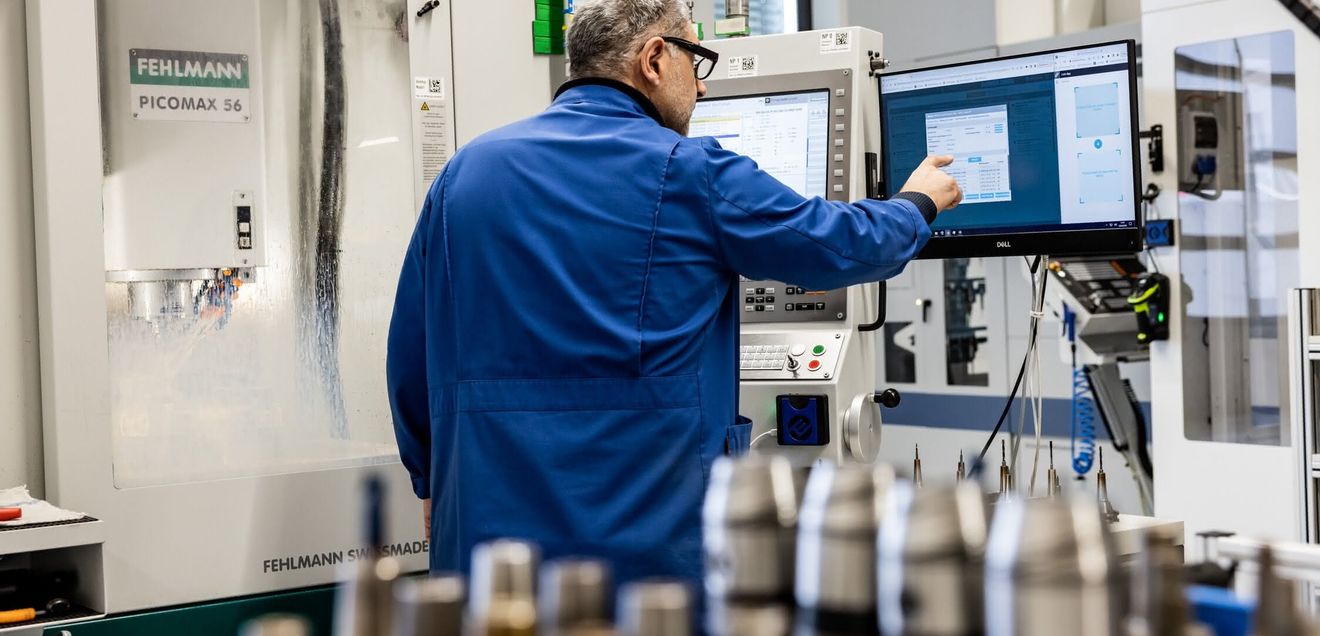
Many small and medium-sized CNC manufacturing companies are familiar with this situation: The order book is stable, employees are working at full capacity, and the machines should be running. And yet, cost recovery and on-time delivery are coming under increasing pressure. There is a lack of transparency in manufacturing: resources, tools, or components have to be tracked down, coordination happens on an ad hoc basis, and information isn’t consistently available. Machines aren’t idle due to technical defects, but rather because of organizational bottlenecks. Experienced employees compensate for these weaknesses through a high level of personal commitment. However, when that personal expertise is lacking, processes begin to falter.
At this point, at the very latest, companies must take action. The digitization of manufacturing processes offers valuable opportunities in this regard. But how can these opportunities be leveraged effectively and efficiently? Five tips have proven effective in practical business settings.
Tip 1: Identify Your Actual Needs and Define Your Goals
Once the decision to implement high-performance manufacturing software has been made, it is important to analyze actual needs and, based on that analysis, define the expectations and goals associated with the implementation.
Possible questions might include:
- Which jobs require a particularly high amount of effort, and why?
- Where do idle times occur, and how can they be avoided?
- How do we actually use our tools, and where are we wasting resources?
- How can setup times be optimized?
- How can we plan more effectively?
The right software answers these questions through business intelligence by automatically consolidating, structuring, linking, and presenting raw production data in real time in a way that is easy to understand. Machine data, tool consumption, job times, and CAM information are thus combined to create a transparent overview of the current situation. This provides an objective basis for sound decisions. The result is greater transparency in planning, a better understanding of one’s own operations, and new starting points for targeted process optimization.
Tip 2: Consider Alternatives
The more precisely the goals to be achieved through the planned digitization of the manufacturing process are defined, the more effectively the desired solution can be selected. It is important that this solution matches the actual requirements in terms of scale and scope of functionality. In this context, companies may also consider a small-scale solution with a low level of digitization. In such cases, data is exported from machines, ERP, or MES systems. The data is then imported into Excel spreadsheets or a free cloud-based business platform, where dashboards are created that transform current figures into colorful graphics. However, this approach has significant weaknesses: The dashboards must be maintained manually and are only as up-to-date as the most recent export.
Tip 3: Use AI where it makes sense
AI is transforming both processes and the way we interact with software. What still requires clicks and menus today will be handled tomorrow by assistants that understand the context and act proactively. In industrial manufacturing in particular, this offers advantages wherever production managers, planners, or machine operators have previously had to interact with a multitude of systems, enter data, or retrieve information.
AI-based assistants are transforming this daily routine. An intelligent agent provides relevant information, makes suggestions, or implements decisions directly. One scenario could be the following prompt: “Reschedule the current order for component X, as employee Y is absent due to illness.” The agent automatically checks available machines and personnel resources, adjusts the production plan, and informs the employees involved. The key benefit is the resulting flexibility. Decisions are no longer based on outdated or filtered figures, but on the actual state of production. Strategic management becomes faster, more precise, and closer to reality. Instead of creating recurring reports, a brief dialogue with the copilot will suffice in the future.
Tip 4: Create Clarity
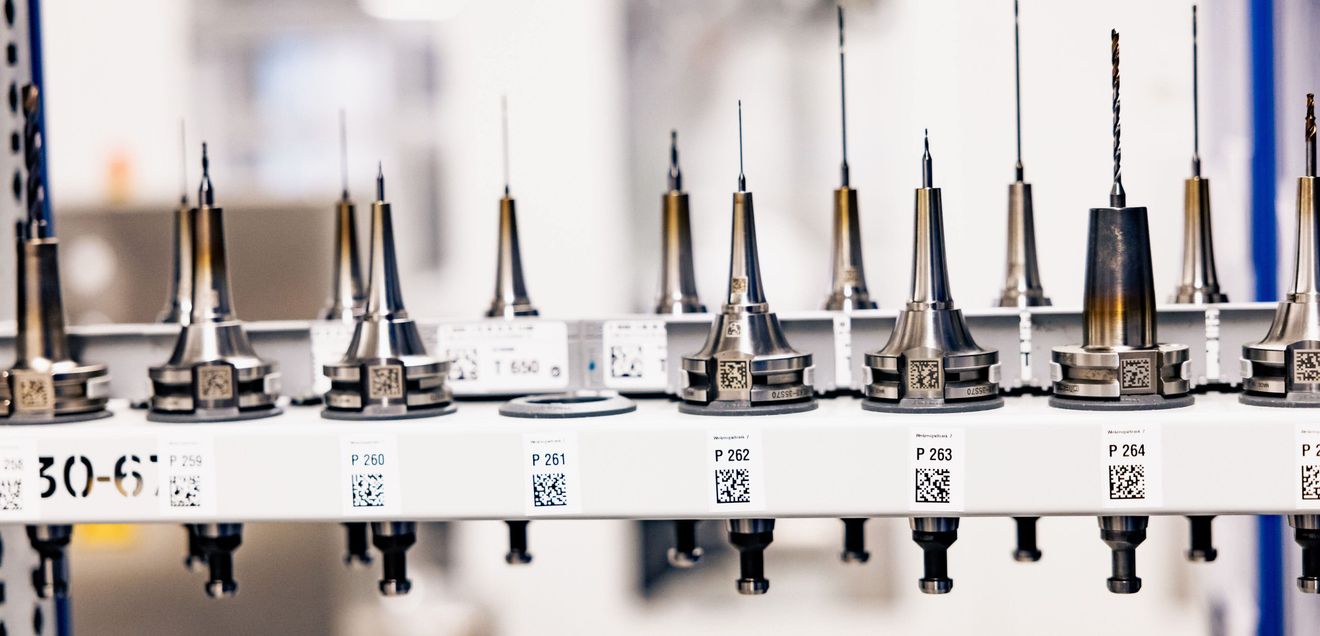
Once the decision to use manufacturing software has been made, the key to smooth, profitable operations often lies in the details at the outset—for example, in how individual tools are named. What may seem like a mere formality at first glance actually forms the foundation upon which efficient digital processes are made possible in the first place. Those who consistently follow through on this step gain structure, acceptance, and speed across the entire team. This is because a tool name can convey information about the material, geometry, technology, dimensions, or holder. When this information is clearly structured, it results in a consistent, standardized naming system that everyone can understand.
Tip 5: Think about tomorrow today
Those looking to digitize manufacturing processes often face a dilemma: Changing everything at once is risky. But doing nothing at all comes at the cost of competitiveness. The key lies in a flexible system that grows with your needs. A modular platform makes it possible to start precisely where the benefits are greatest. The central entry point can then be expanded in various directions as the system scales—for example, toward NC data handling, tool provisioning, production planning, shop floor automation, or quality data collection, depending on needs.
Future-Proof for the Connected Shop Floor
There is no way around digitizing CNC manufacturing processes, even in small and medium-sized businesses. The goal is to meet clearly defined requirements through business intelligence. The Evomecs software platform, for example, demonstrates what such a solution can look like. This modular suite integrates all key areas of CNC manufacturing onto a central platform, enabling them to function as an end-to-end process.
This creates a digital environment that provides transparent access to knowledge within the process, reduces routine tasks, and noticeably eases the workload on the shop floor. Small and medium-sized businesses, in particular, can use this to improve their process stability and cost-effectiveness.
Benjamin Neubauer, Evomecs


You might also be interested in
AI automation specialist reorganizes...
Generation change at Insiders Technologies
After almost 30 years at the helm, Werner Weiss is handing over the management of Insiders Technologies. Andree Albrecht takes over the management after a transition phase.
 read more...
Intelligent brownfield networking
Many industrial companies are struggling with established plant structures and proprietary interfaces. Stefan Klaus' presentation will show in a practical way how brownfield environments can be efficiently networked with open technologies and made...
read more...Factory-X in practice
How can set-up processes in highly variant production be automated efficiently? Markus Benndorff from soffico shows how Factory-X, industrial data rooms and modular architectures create new possibilities for flexible production concepts.
read more...Quality controls in production
Robots check car floor pans fully automatically
How can complex components in automotive production be inspected fully automatically and in real time with the help of machine vision and robotics? The case study shows how floor pans are measured and inspected fully automatically.
read more...Measurement software with integrated calibration wizard
The WinControl measurement software from Ahlborn is designed for the acquisition and processing of measurement data with Almemo measuring devices and offers functions for complex calibration tasks. A graphical user interface and context-sensitive...
read more...New platform facilitates chip design
Siemens opens access to EDA software in Europe
Siemens is cooperating with the Chips JU within the framework of EuroCDP and is facilitating access to modern EDA software for chip design, development and innovation for European companies. The aim is to strengthen start-ups, SMEs and research...
read more...AI and virtual twins for the industry
Dassault Systèmes confirms annual forecast after solid start to 2026
The French software group Dassault Systèmes has made a solid start to 2026 and is continuing to focus on artificial intelligence, cloud applications and virtual twins as growth drivers in its industrial business.
read more...Use data consistently and uniformly
New connectors and an app solution for the IIoT framework from PLCnext Technology make it easier to collect data from controllers, sensors and field devices - especially in existing systems.
read more...How companies can prevent cyberattacks
Instead of using traditional malware, attackers use legitimate programs and system tools within their victims' IT environments. Malicious behavior can hardly be distinguished from normal user behavior. For companies, this means that security...
read more...