
FTS
Bright spots in production
Cooperative driving is a typical task of mobile systems in production facilities.
Because high latency times and packet losses can occur in WiFi channels, the reliable data exchange of AGVs cannot be achieved using this radio standard alone. Communication via visible light, on the other hand, is very reliable and hardly susceptible to interference.
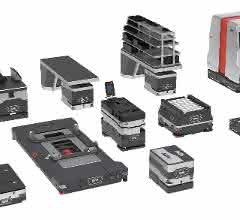
Automated guided vehicles (AGVs) and other mobile systems are becoming increasingly important for modern industrial facilities. Communication and cooperation are crucial for their role in the flexible factory of the future. For example, if two or more AGVs are transporting a load together, they must exchange information for precise formation control. A high latency in this exchange would cause undesirable relative movement in the formation. Cooperating AGVs therefore require particularly reliable communication with low latency - often referred to as ultra Reliable Low Latency Communication (uRLLC). Interference-rich regions of the spectrum must be avoided to ensure uRLLC. Visible light is one such low-interference spectrum.
SEW-Eurodrive chose Visible Light Communication (VLC) as the communication technology for this. VLC is a wireless peer-to-peer communication system for short ranges in the frequency range from 400 to 800 THz (750 to 375 nm). It offers the required low latency and high reliability. VLC ensures communication between cooperating neighboring AGVs. Because global communication with high throughput is also required in addition to this local communication, the AGVs are equipped with two communication interfaces. An additional WiFi interface is responsible for communication with the infrastructure and for other purposes. This solution results in another challenge - deciding which packets should be sent to which interface. The aim is to avoid switching interfaces, as this leads to latency peaks. To achieve this, a routing procedure must be implemented that minimizes the number of handovers between the WiFi and VLC networks.
Network optimization through local clusters
Local clusters are created from cooperating AGVs, which use VLC for communication within the cluster and WiFi for communication with other participants. An SDN switch decides which packets are sent over which connection. This network control enables routing based on global system information such as cooperative tasks, their duration and participants. The advantage of controlling the network using SDN is that this global knowledge about AGV fleet control can be used to plan routing. Interference is one of the biggest challenges for communication within dense network clusters. However, as light signals are completely blocked by the network participants themselves, this reduces the effective topological density and leads to low-interference communication.
The selected VLC interface, a proprietary implementation by SEW-Eurodrive, uses an array of white LEDs to transmit the signal and four independent receivers. Each AGV is equipped with four VLC modules with an aperture angle of 120°. This allows the vehicle to send VLC signals in all directions and receive them from all directions. Communication is possible within a range of 5 m. Signal transmission is only possible with a direct line of sight.
The latency of a connection between AGVs was measured, whereby several connections were active in close proximity - as in a real application. There is no mutual interference here. It was shown that turnaround times of less than 40 ms are achieved with a reliability of significantly more than 99 percent.
VLC routes based on the cooperative tasks
Because several communication technologies are available on the AGV, two challenges arise: defining the rules for interface selection and distributing these rules to the AGV network nodes. In doing so
the number of communication technology changes must be minimized. VLC should also always be preferred because it frees up resources in the WLAN. Tests have shown that the forced, unplanned change of communication technology increases latency up to tenfold. It is therefore of great interest to select routes with a long service life. The strategy is to select the VLC routes based on active cooperative tasks to group the cooperating AGVs. This creates VLC clusters.
Empirical studies and simulation show that the duration of cooperative tasks is on average 100 times longer than the connection duration in a peer-to-peer network between AGVs. It is assumed that during the execution of a cooperative task between AGVs, the VLC connections are not interrupted because the line of sight between the vehicles is not interrupted due to the close cooperation. There is no packet loss during the line-of-sight connection. In endurance tests, no packet loss was observed on VLC connections in which the transmitter and receiver only experienced slight relative movements.
Distribution of routing rules to mobile clients
There are various strategies for distributing routing rules to clients. In the decentralized creation of these rules, a client creates and maintains its own routing tables. Alternatively, routing can be organized and planned by a central unit and the resulting rules distributed to the clients. This solution is advantageous because the implemented strategy is based on global information. The clustering is implemented with the help of SDN. A central SDN controller obtains information on planned tasks from the AGV fleet management system. This information is converted into routing information (flow table entries) by the controller and transmitted to the SDN switches, i.e. to the AGVs. The described behavior was demonstrated in an implementation using the Click-Modular Router.
Cooperating AGVs in industrial environments are an important challenge for the factory of the future. Industrial WiFi implementations are often not sufficient to meet the requirements for low latency and high reliability in cooperative tasks. VLC represents an advantageous alternative. AGV clustering based on this communication technology combines the advantages of both interfaces. The proposed architecture was implemented using SDN, in which all vehicles contain software switches configured by a central SDN controller. This architecture enables local communication that meets the cooperation requirements.
Eike Lyczkowski, Expert Group "Radio and Navigation", and Christian Sauer, Innovation Project Group for Navigation and Communication Technology, both SEW-Eurodrive / am. The authors would like to thank Prof. Dr. Wolfgang Kiess from Koblenz University of Applied Sciences for his support.


You might also be interested in
Switch makes network status transparent
Gigabit Ethernet is becoming increasingly important in mechanical engineering. The scalable infrastructure enables a step-by-step approach in which the backbone is first implemented on Gigabit.
 read more...
Motto "Sustainable!"
Schmersal also wants to support customers in reducing their carbon footprint along the value chain. This starts with the material that most safety switches are made of: Plastic.
read more...Wireless industrial switching devices
Radio-based communication as added value in the industry
The Steute Technologies business unit Controltec presented itself at the Hannover Messe with wireless industrial switching devices in a suitable environment - at the Industrial Wireless Arena + 5G Networks & Applications at the VDMA joint stand.
read more...Guard locking devices for harsh environments
The transponder-coded CTS safety switch with guard locking from Euchner has the highest level of safety and can be used in a variety of applications thanks to its dimensions of 135 mm x 31 mm x 31 mm, a maximum locking force of 3,900 N and flexible...
read more...Liquid separator keeps pumps dry
Vacuum clamping minimizes distortion and enables five sides to be machined in one clamping operation. The use of cooling lubricants poses a challenge: If they get into the vacuum generator, they can cause serious damage.
read more...It started with a timer for X-ray machines
In 2023, the automation expert Omron can look back on 90 years of innovative company history, in which many technological boundaries have been crossed and milestones set.
read more...Protection against cooling lubricant
Liquid separator from Schmalz keeps pumps dry
Anyone clamping with a vacuum during CNC machining must protect the pump from cooling lubricant. The NLS liquid separator from Schmalz separates the cooling lubricant and returns it to the running process - without interrupting the vacuum.
read more...Euchner at the automatica 2023
Euchner presents future-proof safety solutions for automation
Euchner is presenting its latest new developments for communication via IO-Link, via AS-i Safety at Work and via the common fieldbus systems at automatica under the motto "Smart Safety".
read more...Network maintenance
In terms of Overall Equipment Effectiveness (OEE), it is essential to proactively identify and eliminate the causes of system downtimes.
read more...