

Digital twin
Simulation optimizes development
As Kärcher's devices are complex due to their various components and diverse functions, the engineers need a solution that helps them to simulate the entire product holistically during the brainstorming and early development phases. Ansys ' solutions made it possible to further improve the devices.
From the creative thought process to product realization, numerous good ideas usually emerge. However, many possibilities that seem promising at the beginning do not make it to the market. The use of simulation, both in the idea and iteration phase of product design and development, ensures that the path to the next design step requires less time, effort and cost. Holistic use of simulation makes it possible to develop innovative, sophisticated products efficiently.
This is also the case with Kärcher, the manufacturer of high-pressure cleaners and other cleaning appliances. The company's key products include the first modern high-pressure cleaner, the first window vacuum cleaner and the first fully autonomous robotic vacuum cleaner. Simulation supports the company in product realization, the process that ensures a product meets performance and quality targets. Whether it's developing a new product or improving an existing device, simulation enables product teams to stay on track while generating, selecting, implementing and validating better and more viable ideas in the early development phase.
The ability to compare concepts virtually and recognize conflicts is an essential part of this process. This includes understanding how changes to one component affect not only other components, but the system as a whole. However, this is often not possible with conventional finite element analysis (FEA) or computational fluid dynamics (CFD) software alone without considerable computational effort and cost. To overcome this hurdle, Kärcher engineers used Ansys Twin Builder as the basis for a digital engineering workflow that enabled fast and accurate concept comparisons in the optimization of a new device and two existing products: a vacuum cleaner and a battery-powered floor cleaner.
Twin Builder is a digital twin platform that combines the power of a multidomain system modeler with extensive application-specific 0D libraries, 3D physics solvers and reduced-order model (ROM) capabilities. Ansys Twin Builder extends the possibilities of digital engineering by enabling the simulation of complete devices. By combining the Modelica capabilities (Modelica is a modeling language) in Twin Builder with Ansys Fluent, the Kärcher design team gained an unprecedented holistic view of a product, reduced calculation time from days to minutes, and avoided expensive physical prototyping.
Insight in minutes
On the surface, power washers may seem simple and the tasks they perform mundane - mopping a dirty floor or vacuuming up spilled cereal - but in reality, they are very sophisticated products. The liquid pumps alone consist of several parts, including a crankshaft, inlet and outlet valves, tappets, regulators and safety devices. When other components are added - air pumps, electronic connections and controls, heat exchangers, mechanical parts and often batteries - it becomes clear how complex the design process can be and how the right decisions at the initial stage can lead to better results and greater customer satisfaction.
Optimizing the performance of existing devices is also an extensive process, especially as new technologies become available and consumer preferences change. Engineers need to know exactly how existing products work. They need to understand the interaction between parts and how changing one component can cause other components to adapt. Without this information, they may launch a new version of a product only to find that nothing has improved.
Before Kärcher used Twin Builder, the engineers simulated each component individually using classic FEA or CFD software. Although this helped them to understand how a part would behave under different conditions, it did not provide any insight into the entire system. Modeling the entire device with individual software was possible, but time-consuming. The calculations could take up to three days, leading to unwanted delays. However, by skipping this step and not simulating the entire device, engineers risk bringing a product almost to market before potential problems are uncovered.
The combination of Twin Builder's multidisciplinary capabilities with Fluent provided the proof-of-concept controls Kärcher needed. When optimizing the vacuum cleaner, Twin Builder reduced the calculation time from days to minutes. The accuracy of the results was between 5 and 6 percent higher than that of FEA or CFD alone.
Smaller battery pack reduces weight
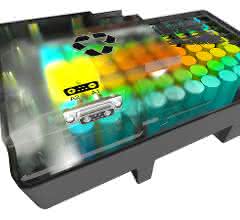
One priority of product optimization at Kärcher was the development of a new battery pack for an established floor cleaner. To meet the demand for lighter and more flexible products, the engineers wanted to reduce the size of the 70-cell battery pack. They were looking for a new type of battery cell that would generate just as much energy as the existing pack, but with fewer cells.
To ensure accuracy and speed, the engineers modeled the battery pack in Twin Builder and the entire cleaning device in Fluent. Coupling the two allowed engineers to extract key battery pack properties from Twin Builder and increase computational efficiency. In fact, simulating the battery pack in Twin Builder took less than two minutes, and simulating the entire cleaning device was completed in four hours.
Controlling heat generation is always a problem in the development of rechargeable batteries. Heat stresses the batteries, leads to longer charging times and increases the risk of failure, which is unacceptable, especially for consumer products from which customers expect a long battery life.
By simulating the electrochemical-thermal flow of different battery cells under real operating conditions, Kärcher identified a cell type and a battery housing design with which the number of cells in the battery pack could be reduced by 20 percent. This resulted in lower heat generation and a lighter and more compact design, as well as lower material requirements and costs.
Finally, Kärcher simulated the entire battery pack with Twin Builder and Modelica, which enables component-oriented modeling of complex systems. In addition, the engineers used Fluent to simulate the air flow inside the cleaning device. The reciprocal coupling of these simulations gave the engineers the additional flexibility they needed to take into account factors such as different battery cells or housing materials of the battery pack under real installation conditions. Due to the computational effort involved in such detailed system simulations, this would not have been possible with CFD software alone. With Twin Builder, Kärcher has carried out simulations at system level to an extent that was previously not possible.
Sameer Kher, Senior Director of Systems and Digital Twins at Ansys


You might also be interested in
Rethinking mobile energy
Electrification, battery storage and intelligent energy management are changing industry and construction sites. Lukas Krüger, product specialist for battery storage systems at Bredenoord, talks in an interview about trends, technologies and the...
 read more...
Solutions for surface treatment
Lasers make batteries safe
At the parts2clean trade fair, Trumpf will be presenting manufacturing solutions for surface processing in automotive production, including the TruPulse 5050 nano short-pulse laser and the PFO33 scanner optics.
read more...Electric motors and batteries in a circuit
Batteries and electric motors are electromobility components that contain valuable raw materials. The "Zirkel-Konsortium" has set itself the task of developing technologies to feed these raw materials into a circular economy. One key to an efficient...
read more...Production of high-voltage batteries
Electrically mobile - sustainable on the road
High-voltage batteries for electric cars are produced at the BMW plant in Leipzig. SEW-Eurodrive supplies proven and new drive solutions from the Movi-C modular system for all process steps - from cell preparation to end-of-line testing.
read more...Producing battery cells flexibly and sustainably
The industry needs more and more battery cells. However, their production in gigafactories consumes enormous amounts of energy. In addition, the large production lines are very inflexible. A possible alternative has now been successfully tested at...
read more...Battery technology for material transportation
Strong and robust for indoor and outdoor use
Farasis Energy, the developer and producer of high-performance battery technology and pouch cells, will be showcasing its products for electromobility at Logimat.
read more...Mobile labeling in a complete package
The P-touch E300VP mobile labeling device from Brother helps trade and industry to keep track of things. Weighing just 740 g, the P-touch E300VP with its long-life Li-ion batteries has been specially developed for use on the move.
read more...Yamaha shows robots, cobots and battery cell assembly
Yamaha will be bringing pioneering products and new application examples to Automatica 2023, such as the assembly of battery cells for electric cars.
read more...E-scooter with customizable damping
The startup Scuddy has significantly improved the flexibility, performance, customizability and ergonomics of its second-generation foldable e-scooter of the same name - thanks in part to damping technology from ACE.
read more...