
Interview on design tool
The trend is towards online construction
In the past, designing even simple elements and products was very time-consuming. Item's online engineering tool shows that this no longer has to be the case. Christian Thiel, Product Manager for online tools at Item, explains how the design process is changing in an interview with Andreas Mühlbauer.
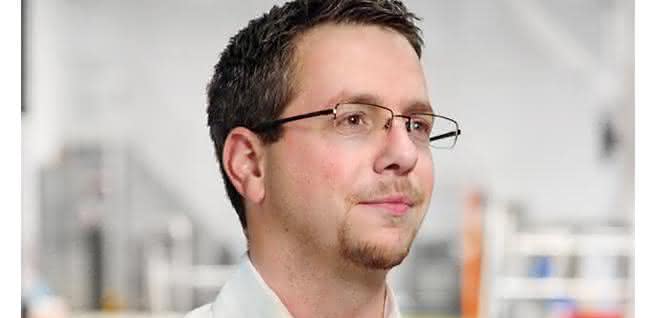
Mr. Thiel, what was the reason for developing the engineering tool?
When developing the engineering tool, we consistently focused on the needs of our customers. Designers were looking for a solution that would allow them to design quickly and easily with our products. For many applications, a CAD system is simply oversized or too cumbersome. As a result, around 95 percent of our customers do not include any connection technology in their designs because it is too time-consuming. This means that not only the connectors are missing from the parts list, but also the associated machining operations. Both are automatically inserted correctly in the engineering tool.
Another trend is the demand for preconfigured system solutions. Our customers no longer want to design everything down to the last detail themselves, but want to use the time-saving options offered by configurators. The third point is the digitalization of our processes and those of our customers. The item engineering tool provides us with all the information we need in digital form. This allows us to deliver the design to our customers more cost-effectively and, above all, even faster than before. Projects can be shared and revised more quickly and easily within a company. Similar designs can be easily derived and a lot of time can be saved in production and assembly thanks to the project documentation available online.
What can the customer construct with it and where are there restrictions?
The engineering tool enables design with item products. We currently provide around 900 of our more than 4,000 sales items in the engineering catalog. We are constantly expanding the range of products in the engineering tool. This includes our classic profile technology including all connection technology, angles, cover caps and other accessories.
In addition, almost the entire scope of our lean production modular system can be used to design extensive FiFo shelving, for example. We have not simply transferred the geometries of our products into the engineering tool. The tool knows which products can be installed together, which fastening elements are required and which connection processing is necessary. This allows our customers to concentrate on the actual design.
The customer even receives complete documentation at the end. What does this include?
We are particularly proud of our project documentation. It contains all the information we or our customers need: a cover sheet with an isometric view for quick recognition, a QR code that leads directly to our Project Viewer - where I in turn receive all the information directly on any end device -, a parts list, a complete processing plan of all profiles, an exploded view and finally assembly instructions.
Will the industrial design process generally move towards online tools in the future?
A very clear yes. The advantages in the areas of collaboration and communication are obvious. Everyone involved in a design is always on the same page. Large amounts of data no longer need to be sent by e-mail or FTP server. And another time waster is eliminated: there is no need for local IT administration as software no longer needs to be installed and maintained.
What do you say to customers who prefer to design with their own software in order to keep their data in-house?
To be honest, I haven't been asked this question yet. I think our customers recognize the clear added value for themselves that online software offers. In addition to the time saved in design and the creation of project documentation, these are the benefits of collaboration and communication. We treat our customers' designs securely and confidentially - and all in compliance with the General Data Protection Regulation, of course.


You might also be interested in
Sustainability Through Simulation
Digital material selection reduces CO2 emissions by 40 percent
The use of digital material simulations can significantly reduce CO₂ emissions during the development and manufacturing of components. A real-world project by Schunk and Cadfem demonstrates how data-driven material selection can yield savings of up...
 read more...
From ERP System to AI Platform
RNA, based in Aachen, manufactures up to 2,000 custom-designed feeding systems annually and handles all order processing through a central ERP platform.
read more...Cybus Brings in Siemens Executive Stefan Schwab to Lead the Company
The Hamburg-based software provider Cybus will have a dual leadership structure going forward: Stefan Schwab will join co-founder Peter Sorowka as co-CEO.
read more...Artificial Intelligence for the Physical Space
Alibaba Expands Qwen Model Family with a Robotics Suite for Physical AI
Alibaba is expanding its Qwen model family with a robotics suite for Physical AI. The three models—for manipulation, navigation, and simulation—are designed to assist autonomous robots with complex tasks in real-world environments.
read more...5 Challenges for AI Projects in Manufacturing
Manufacturing companies have high hopes for AI. IFS highlights the five most common reasons why AI projects fail.
read more...Implementing Manufacturing Software: 5 Practical Tips
To remain competitive in the market in the future, more and more companies are considering digitizing their CNC manufacturing processes. The right software solutions can make process knowledge transparently accessible and significantly reduce the...
read more...AI automation specialist reorganizes...
Generation change at Insiders Technologies
After almost 30 years at the helm, Werner Weiss is handing over the management of Insiders Technologies. Andree Albrecht takes over the management after a transition phase.
read more...Intelligent brownfield networking
Many industrial companies are struggling with established plant structures and proprietary interfaces. Stefan Klaus' presentation will show in a practical way how brownfield environments can be efficiently networked with open technologies and made...
read more...Factory-X in practice
How can set-up processes in highly variant production be automated efficiently? Markus Benndorff from soffico shows how Factory-X, industrial data rooms and modular architectures create new possibilities for flexible production concepts.
read more...