

Standards
The future of manufacturing is Plug & Produce
Standards ensure greater flexibility and openness in production. There are already standardized interfaces for control, recipe and product data across manufacturers, and with the concept of the administration shell and machine skills, Lenze is showing what the future could look like.
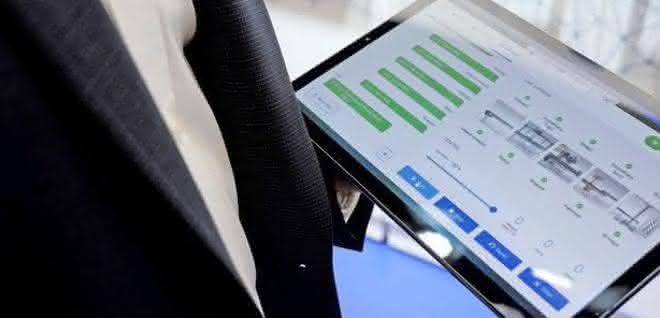
A new order, a new product, a new format: the infeed and pick & place of the production line need to be changed, the packaging and palletizer remain untouched, but the outfeed module also needs to be changed. This is complicated, time-consuming and labor-intensive - for now. The Plug & Produce concept could soon ensure that the production line is quickly ready for use again - without a great deal of manual effort for configuration and programming.
Greater individualization of products means ever smaller batch sizes - and therefore more frequent retooling of production lines. It is not only the mechatronic modules of a machine or system that need to be replaced. Programming the control system, integrating it into the HMI, diagnostics and commissioning are further necessary work steps before production can be resumed. This means time and personnel costs for the end user. But the OEM also has to invest a lot, for example to implement the required connection options, provide different data or data formats and coordinate with suppliers of other modules.
Lenze, a specialist in machine automation, demonstrates that there is another way, using a fully functional showcase. This simulates the packaging of various products with different modules in the production line. The conversion of the production line follows the "Plug & Produce" concept - simply plug in and get started. The secret lies in the communication: open, manufacturer-independent standards enable the modules involved to automatically configure the production line and exchange data with each other, including full interaction during the production order. The production line therefore no longer needs to be programmed.
Using existing standards
The foundations of standardized communication include OPC UA and its Companion Specification PackML. Lenze was one of the first companies to use the asset administration shell to provide data for describing machine capabilities ("skills"). On this basis, the modules can couple automatically and organize the interaction in the production process. The Plug & Produce showcase is an example of the performance of the Lenze automation platform consisting of hardware and software in terms of openness, scalability, modularity and networking.
The manufacturer's aim is to create cross-manufacturer standards for this application. To this end, he is looking for allies in the industry and among OEMs and is involved in the standardization committees of the associations. This is the only way to achieve the goals of true Plug & Produce: openness in the selection of machine suppliers, in the adaptation of production lines and in product changes also means openness in the automation platform.
Advantages for OEMs ...
Mechanical engineering benefits from the Plug & Produce concept, as uniform interfaces and standards simplify the modularization of machines and systems. At the same time, the OEM's intellectual property is protected, as no core know-how needs to be disclosed to third parties in order to ensure smooth communication and networking. The integration and programming effort is reduced and the integration of visualization systems is also simplified - this reduces potential sources of error and provides more scope for the development of innovations. Better functionality with a shorter time-to-market and more effective use of personnel strengthens competitiveness.
... and end users
For users, Plug & Produce already pays off when designing a new production line: greater flexibility and adaptability, more openness in the selection of machines and suppliers and easier reusability of machine modules. Production can be adapted more quickly to changing market and customer requirements - with less integration effort and personnel deployment. End-to-end communication enables standardization of diagnostic and alarm management. In ongoing production, Plug & Produce enables more frequent product changes thanks to simpler, faster changeovers and higher system availability.
P. Brother/p


You might also be interested in
VDMA: Change of Chief Economist and Head of Foreign Trade
The VDMA has filled two key positions: On May 1, Dr. Johannes Gernandt will take office as the new VDMA Chief Economist, replacing Dr. Ralph Wiechers. Oliver Richtberg will also take over as Head of the Foreign Trade Department on May 1.
 read more...
BDI President Russwurm visits Pilz
Short paths for technology and knowledge transfer
The automation company Pilz welcomed the President of the Federation of German Industries (BDI) Siegfried Russwurm. During a tour of the family-owned company's development, test laboratories and production facilities, he emphasized how important the...
read more...Sales growth of 4 percent expected for 2024
The robotics and automation industry in Germany is forecasting a 4% increase in turnover for 2024. According to the latest figures from the VDMA Robotics + Automation Association (VDMA R+A), industry turnover will therefore rise to 16.8 billion...
read more...Loss of competitiveness?
The major associations BDI, VDMA and ZVEI are calling for more efforts to ensure that Germany remains competitive on an international level.
read more..."A strong signal for the industrial location"
After three years dominated by coronavirus, Hannover Messe 2023 celebrated a successful comeback. The exhibitors from the mechanical and plant engineering sector showed with their technologies how climate change can be combated and intelligent...
read more...DC voltage in the industry
Karsten Fuchs is a research engineer for advanced technology in the Innovation and Advanced Technology department at Lapp Holding. Andreas Mühlbauer spoke to him about the prospects for DC voltage technology in the industry.
read more...WomenPower at the Hannover Messe
With more than 1,000 participants, the WomenPower career congress kicks off on April 21 at the Convention Center on the exhibition grounds in Hanover. Deutsche Messe is organizing this important career congress for the twentieth time as part of the...
read more...Solutions for a networked and climate-neutral industry
At the world's leading trade fair for industry, around 4,000 companies from the mechanical engineering, electrical and digital industries as well as the energy sector will be showcasing solutions for the production and energy supply of the future.
read more...New offices for Bettenhausen and Harting
Dr. Kurt D. Bettenhausen is President of the DKE, Member of the IEC Board and President of the German National Committee of the IEC. Philip Harting unanimously elected to the VDE Executive Committee by the Assembly of Delegates
read more...