

Interview with Steffen Roos
"It's about an overall concept"
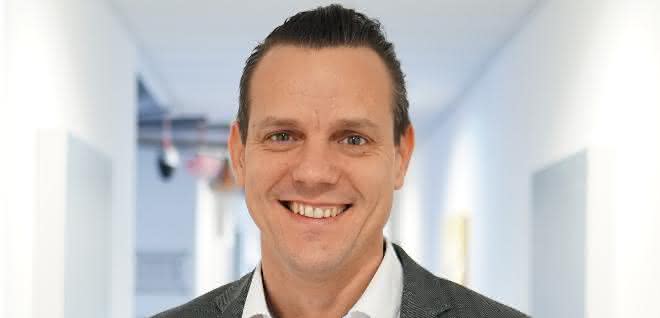
Cloud and edge computing: where do we stand and what role do these components play in the digitalization concept? Steffen Roos, Managing Partner at Telekom subsidiary Detecon International, answers these questions in an interview with Andreas Mühlbauer.
What role does the cloud play in industry today? And where do you see potential for the future in this area?
The cloud has long been at the top of the agenda for industrial CIOs, albeit with very different levels of maturity in its use. While some have already delved deep into the subject, others have only been able to scratch the surface. Of course, the extent to which companies get to grips with the cloud depends entirely on the respective business strategy and the IT strategy derived from it. After all, the cloud - with all its advantages - is not always the more cost-effective alternative compared to the existing infrastructure. Nevertheless, there is still a lot of untapped potential in the area of cloudification.
But before you start thinking about where the journey with the cloud is taking you, you should ask yourself what the actual added value of the cloud is for your own company. Specifically, companies need to examine the extent to which cloud solutions can generate a business impact for their own organization. Should the solution be used as a driver for the optimization of existing business processes, for example through data-driven automation, decision-making and control, or as an enabler for new business areas, for example through a new digital product portfolio or through strategic partner networks and networked supply chains? The central question should therefore be: "What challenges do I want to overcome with the help of the cloud and what are the champion use cases for my company?" No two companies have the same answer to this question, as the different circumstances of a company - be it the underlying business model or the existing assets and legacy systems - result in different potentials and opportunities for each company. The spectrum is broad and ranges from product development and ERP systems to logistics and actual production. Cloudification is conceivable everywhere, but does not always make sense. After all, you can't and don't have to install an iPhone in every hairdryer.
Another increasingly important technology is edge computing.Isthis limited to time-critical processes or where are the future areas of application?
The ongoing digitalization of companies is increasing the demands on data flow and data analysis, particularly in terms of latency. By implementing specific IoT solutions - such as predictive maintenance, digital employee management or collaborative robots - ever larger volumes of data need to be analyzed in a short space of time and fed back as decision-making impulses. Edge computing is the perfect solution for this and ensures the further networking of the company. While the cloud is usually located far away, I have "small data centers" directly on site - right at the edge, the outer edge of my infrastructure. Data can be processed decentrally here, directly where it is generated. The data is therefore processed faster and can be quickly translated into processes. This reduces response times. An example: for a machine that is susceptible to temperature fluctuations, we would connect the thermometer to the Edge and analyze the data there instead of taking a detour via the cloud. Here, the Edge fulfills a filter function for high-quality real-time analyses.
With the help of edge computing, a company can also ensure a high level of reliability through decentralized data processing and is therefore very well suited for deployments with a high number of devices in a small coverage area, for example. Edge also offers enormous advantages for companies in terms of security and data protection, as data can be filtered and encrypted before it is sent to the cloud.
How can these two technologies be meaningfully integrated into a comprehensive digitalization concept?
Edge and cloud computing are first and foremost technology components within an enterprise architecture. What this architecture looks like depends on the challenges it is intended to address. For example, if real-time processing of data is required, then it is worth carrying this out on site at the edge. On the other hand, long-term maintenance analyses can be better mapped in the cloud. Depending on whether the focus is on performance, availability, security, interfaces or, above all, the criticality of the applications, it is important to consider which data is located where. There are also questions about which systems are already in place, which need to be connected, what the interfaces and data models look like and which systems need to be transformed. Ultimately, it's all about a sensible overall concept, which can also consist of a combination of cloud, edge and on-premise solutions. None of the building blocks should be considered in isolation from one another, but rather as part of a long-term and sustainable business strategy that can meet the challenges of the future.


You might also be interested in
Filtration and sound attenuation in circuits
In liquid or air circuits, filter housings and silencers protect measuring devices, ensure particle-free vacuum and pneumatic systems, keep cooling circuits clean and reduce noise.
 read more...
KSS ultrafine filtration for grinding oils
Modular concept for pure oil
In order to grind economically, reliably and with the highest quality, extremely clean grinding oils are required. Filter manufacturer Vomat offers the metalworking industry high-performance and customized concepts for the filtration of cooling...
read more...Up to 95 percent less flue gas thanks to direct extraction
The requirements for occupational safety measures and safety technology are also constantly increasing in welding technology. The Technical Rules for Hazardous Substances (TRGS) stipulate that welding fumes and harmful substances must be extracted...
read more...Everything accurate in switch cabinet construction
To ensure smooth work processes, tools for processing enclosures and housings must function flawlessly and reliably. Häwa rounds off its punching range with the Multi-Press 500.
read more...Cooling and temperature control units
Hygienic packaging sells safely
In few industries are the requirements for hygiene in the production process as strict as in the food sector - the health of consumers has top priority. This results in enormous challenges for all machines and components involved, especially in...
read more...Efficient and sustainable
Rotary screw compressors are the reliable backbone of industrial compressed air generation. The innovative CSD/CSDX series from Kaeser Kompressoren with its numerous features produces them efficiently and saves energy costs. This also reduces theCO2...
read more...Healthy air during welding
Welding produces fumes and gases that are hazardous to health. Extraction is necessary to comply with the occupational exposure limits and is even mandatory when welding high-alloy steels.
read more...Wire mesh filters in medical technology
In hardly any other industrial development sector are the demands placed on products as high as in medical technology. After all, human lives depend on the performance and reliable quality of medical devices.
read more...Energy efficiency and sustainability in the smallest of spaces
With the StingR ultra-fine filter system, Lehmann-UMT has created a solution for the energy-efficient and precise treatment of fluids during tool grinding for extended tool life and high tool quality.
read more...