
From fine dosing to large quantities
Precise delivery with piston pumps
Piston pumps are very easy to control and their flow rate can be precisely adjusted. This makes the flexible and robust devices suitable for many applications, from the finest dosing in the laboratory to large flow rates in industry.
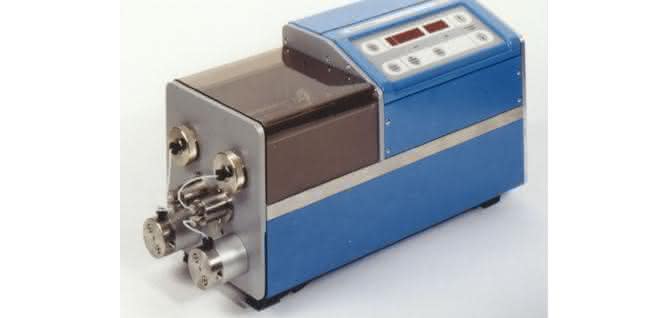
There are many different types of pumps used in industry for the suction, extraction and delivery of liquids and gases. Piston pumps are a technically and economically important category. Their principle has been known for a very long time; the Greeks and Romans used piston pumps to lift water from wells and rivers. Nowadays, thanks to their reliability and low maintenance requirements, they are indispensable as feed pumps in many laboratory and industrial applications. These include dosing pumps, which are used in the pharmaceutical, food and chemical industries to add additives or reaction components to ongoing processes, and high-precision piston pumps in modern HPLC systems and automatic analyzers. However, this type of pump is also suitable for drinking water supply, agricultural irrigation and sprinkler systems and waste water management, as well as robust mortar and concrete pumps for the construction industry.
Piston pumps are positive displacement pumps. Their basic operating principle is simple: a piston is pressed axially into a precisely fitting cylinder, displacing the medium inside. In order to achieve a continuous pumping process, the cylinder is equipped with two counter-closing valves. When the medium is pressed out, one of the two valves, the outlet valve, opens while the other valve closes. When the piston returns, the outlet valve closes, whereas the second valve, the intake valve, opens and the cylinder fills up again with the medium to be conveyed.
The continuous pumping process is achieved by continuous, electronically controlled back-and-forth movement of the piston in modern pumps, which causes the cylinder to refill automatically with each stroke.
The simplest version of a piston pump is the injection syringe commonly used in the medical sector. It fulfills the basic principle of a positive displacement pump. However, as it lacks the valves for the inlet and outlet of the medium, the plunger must be refilled separately after each emptying before the next pumping process can begin. For this reason, a continuous pumping process cannot take place. It ends when the plunger is emptied. Outside the medical field, hypodermic syringes are mainly used as a practical dosing aid for chemical laboratory work. A modified, technically perfected form of the hypodermic syringe is the piston-stroke pipette for dosing liquids in the micro and milliliter range. It is also known as a "micropipette" for short.
Single-piston pump systems
Simple pumps work with just one piston. Single-piston pumps are suitable for pumping and dosing liquids, suspensions or viscous solutions. Due to their robustness, they are particularly suitable as chemical pumps for continuous operation and as feed pumps for both small and large quantities.
The disadvantage of single-piston pumps is that the pressure drops briefly during refilling of the cylinder and then rises again spontaneously as the medium is pressed out. This results in considerable pressure surges in the lines, which not only put a strain on the tightness and pressure resistance of the system as a whole, but also only allow a pulsating flow rate.
Double piston pumps prevent pressure fluctuations
Systems with twin-piston pumps, on the other hand, exhibit only minimal to no pressure fluctuations if the working rhythms, the stroke of the two pistons, are coordinated by mechanical or electronic control so that while one cylinder is being filled, the other is simultaneously emptied. Technically advanced double piston pumps allow a pulsation-free flow even at high pressures. They are therefore often used as high-tech feed pumps in the field of high-performance liquid chromatography.
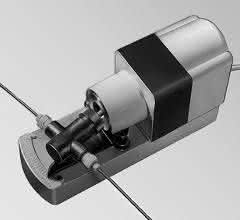
Wobbling piston pumps are another variant of feed pumps. They operate without valves and are remotely comparable to the way a two-stroke engine works. During the pumping process, the piston equipped with two milled, opposing channels rotates in the cylinder and releases either the media inlet or the media outlet. The delivery rate of this piston pump can be adjusted very precisely and continuously at a constant speed simply by changing the piston stroke. To do this, the inclination of the pump head is changed and the piston stroke adjusted accordingly.
Wobbling piston pumps such as the E-1500-MP micro-dosing pump from Reichelt Chemietechnik (RCT) are low-pulsation, very robust pumps for continuous operation whose pistons and cylinders are made of corundum and all other parts that come into contact with the medium are made of inert plastics. This makes tumbling piston pumps particularly suitable as dosing and feed pumps for chemically aggressive and abrasive media.
Precise dosing
Piston pumps are characterized in particular by their robustness and precise operation. They are used in chemical engineering and as dosing and feed pumps in the pharmaceutical and food industries as well as many other areas of industry and laboratories. The delivery rate ranges from a few milliliters per minute, which is important for analytical applications and precise dosing, to several liters per minute. Piston pumps are therefore of particular interest for process technology.
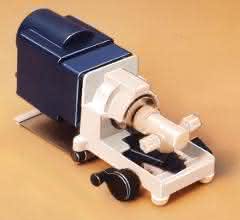
Due to their ability to pump very small volumes, piston pumps are also frequently used in laboratories. They can be used to pump inorganic or organic media as well as viscous solutions, suspensions, low-viscosity slurries and pastes. Single and twin-piston pumps can be controlled via modern, usually microprocessor-controlled drives, which allow the delivery rate to be adjusted. It is also possible to operate the piston pumps independently of the mains - and thus for mobile use, as is often necessary for environmental analysis, for example.
In wobble piston pumps, on the other hand, the piston stroke is changed mechanically to set the desired delivery rate. To ensure their robustness, different materials are used for the pump heads - such as resistant plastics like PVDF, PTFE or ETFE. Pistons and cylinders are made of inert sintered corundum.
Other types of feed pumps for a wide range of requirements
Depending on the issue, area of application and requirements, other feed pumps are used in addition to piston pumps. They differ in terms of their underlying technology and mode of operation. Examples include gear pumps, diaphragm pumps and centrifugal pumps, as well as peristaltic pumps.
Although gear pumps and diaphragm pumps differ significantly from each other technically, they are similar in their areas of application to the pump systems already listed - both in terms of their robustness and their delivery rates. Centrifugal pumps, also known as centrifugal pumps, are feed pumps for very high flow rates. They are therefore usually only used in industrial plants.
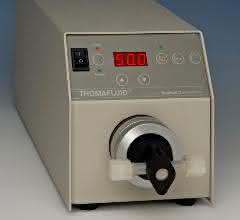
Peristaltic pumps, on the other hand, are used almost exclusively in laboratories. Their delivery rates range from a few milliliters to several hundred milliliters per hour. They work very reliably and are also suitable for continuous operation. They are mainly used in low-pressure chromatography, for rinsing processes or for pumping out process solutions. The selection of a pump is always determined by the practical requirements. Just as important is the question of the desired dosing performance and precision.
Piston pumps fulfill many practical requirements and are therefore preferably used in chemical process technology as well as in the pharmaceutical, food and biotechnology industries, where robust and precise feed pumps are required.
Dr. Karl-Heinz Heise, Editor-in-Chief at Reichelt Chemietechnik / am


You might also be interested in
Maintenance and Pumps&Valves in February
Final preparations are underway in Dortmund: On February 21, 2024, maintenance will start as the leading trade fair for industrial maintenance and with it Pumps&Valves as the trade fair for industrial pumps, fittings and valves.
 read more...
Cooling and temperature control units
Hygienic packaging sells safely
In few industries are the requirements for hygiene in the production process as strict as in the food sector - the health of consumers has top priority. This results in enormous challenges for all machines and components involved, especially in...
read more...Cooperation between SMC and Yaskawa
Another chapter in the cooperation between Yaskawa and SMC: The new European Yaskawa Europe headquarters is also home to an academy with robots and cobots, to which various SMC solutions are exclusively connected.
read more...Proportional flow control
With the Asco 209 series, Emerson has introduced a proportional valve for flow applications in the medical technology, food and beverage, heating, ventilation and air conditioning (HVAC) industries.
read more...Double piston pump and proportional valve
High-precision gluing of folding boxes
Thanks to their sustainability, cardboard packaging is increasingly replacing plastic packaging. An important production step in the manufacture of folding boxes is the high-precision gluing of the cardboard blanks.
read more...Three leak tests at once
Systems for leak testing modern components for electromobility and hydrogen fuel cells are a key focus of Worthmann Maschinenbau and its subsidiary Maceas.
read more...Bonding and lubricating - precise dosing
Jet valves from Vieweg lubricate and grease electromechanical switches and bond and seal electronic components. More and more customer-specific solutions are being used.
read more...digital networking days Sustainability
Predictive maintenance for semiconductor production
The control valves for ultrapure water are an important supply medium in semiconductor production. While specialists used to check these valves personally on site, an IoT solution now checks the critical components.
read more...Seamless product and process traceability
After exploring the market, a plastics processor decided in 2019 to have WSW Software develop a new MES. The web-based ME system called Valeris is now in productive use and is marketed as an industry-neutral standard solution.
read more...