

Tool development
Trends in tool development
The reduction of the greenhouse gasCO2 has become a global goal. Taxes onCO2 emissions are now being discussed in many places. The German government has set itself the goal of reducing carbon dioxide emissions in Germany by 55 percent by 2030. This also has a massive impact on the development of cutting tools.
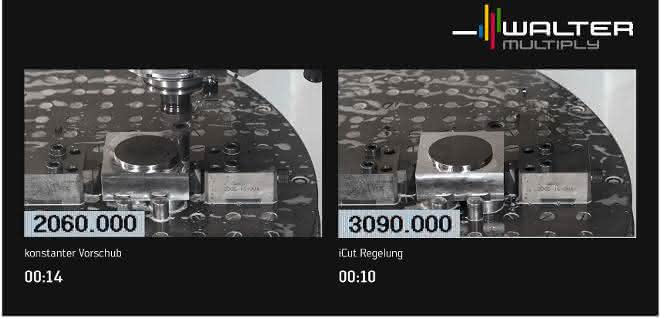
ReducingCO2 emissions has an impact on all areas of our lives. New fields of application are emerging and existing ones need to be adapted. The development of cutting tools is also affected. Because alternative drives, new lighter materials, energy-saving and resource-conserving concepts are more in demand than ever, but it must also be possible to machine them. Developers therefore see great potential in design changes to tools and new coatings, in new machining strategies - and in digital solutions that react to the existing framework conditions in real time.
Double service life with coating
New, lightweight aluminum-lithium alloys are all the rage. Conventional tools are quickly overwhelmed by these materials. This leads to an increasing demand for high-performance tools that are specially developed for this area of application.
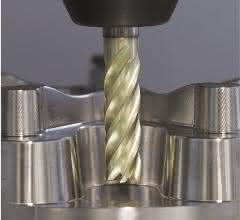
For example, aircraft components made from aluminum alloys often have a machining volume of up to 90 percent. Depending on the desired component geometry, numerous chamfers or cavities have to be milled out of the metal. The aim is to ensure stability and save weight. In order to produce the components economically and at the same time to a high quality, they must be machined using the high-speed cutting (HSC) process, with cutting speeds of up to 3,000 m/min. Cutting values that are too low lead to built-up edges - and therefore to rapid wear and frequent tool changes. High costs due to long machine running times are the consequence. It is therefore not without reason that the aluminum specialists among the machining companies demand above-average cutting data and tool life as well as particularly high process reliability.
The tool developers at Walter AG show how such a complex requirement profile can be handled with the design of the M2131 ramping milling cutter. The 90° milling cutter is fitted with a new type of indexable insert with the designation WNN15. Behind this is a new PVD coating, which is produced using the so-called HiPIMS process. The term HiPIMS stands for "High Power Impulse Magnetron Sputtering". This technology is derived from the English word "sputtering" and involves sputtering with a magnetron. The special feature of the physical coating process is that it produces an extremely dense and smooth PVD coating. This greatly reduces friction and the tendency for built-up edge formation. At the same time, the process increases cutting edge stability and resistance to flank wear. The result is a maximum metal removal rate. Field tests have confirmed the advantages of HiPIMS indexable inserts compared to corresponding standard types. Increases in tool life of up to 200 percent were achieved. "We see an increasing demand for high-performance tools for aluminum machining - especially in aerospace technology, but also increasingly in the automotive industry," says Wolfgang Vötsch, Senior Product Manager Milling at Walter AG.
Dynamic milling - HPC versus HDC
More process reliability, faster processing - at ever lower costs and consistent quality. Many sectors are under this pressure, especially the supplier industry. The demands on surface quality and dimensional accuracy are often increasing at the same rate as the requirements for process reliability and cost-effectiveness. Added to this is the growing demand for materials that are lightweight or heat-resistant. Materials from the ISO M and ISO S material groups, which are often difficult to machine due to these properties.
Dynamic milling offers a solution that provides both productivity and process reliability. More and more metalworking companies are therefore opting for it.
The main differences between conventional high-performance cutting (HPC) and high dynamic cutting (HDC) lie in the movement of the milling cutter - and in the forces that are generated. With HPC, the milling tool moves at relatively shallow cutting depths; with HDC, the CAD/CAM control system adapts the paths that the tool describes during machining to the shape of the workpiece. This prevents empty paths or at least shortens them. In addition, the cutting depth with the HDC is significantly greater than with the conventional HPC. This also reduces travel distances because the entire tool length can be used right from the start.
The pressure angle is usually very large with HPC. The forces that occur are correspondingly high. This in turn quickly leads to signs of wear on the tool and the machine spindle. In contrast, dynamic milling is characterized by high process stability and a long tool life. The pressure angle is usually chosen to be small for HDC. This means that the forces acting on the tool and machine are significantly lower than with HPC. Higher cutting parameters, less idle travel and more process stability result in a clearly higher metal removal rate for HDC milling compared to HPC.
Adaptive feed control: cutting data optimization with live data
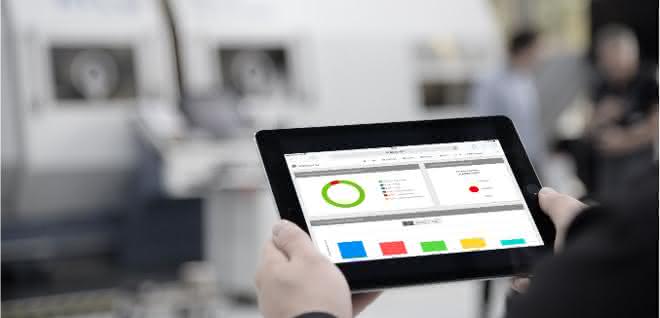
Automation, digitalization and networked processes have long been part of everyday life in many areas of metalworking. In particular, the hardware and software for recording and analyzing live data has achieved enormous leaps in performance.
The Comara iCut software tool shows how this opens up opportunities for process optimization. The adaptive feed control analyzes incoming machine data in real time and adjusts the processing accordingly. This answers one of the central questions of many users: How can we get the most out of a machine without massive intervention in the process and without costly reprogramming?
With the iCut software, the processing time per workpiece can be significantly reduced. The software is integrated into the existing control program and takes the data for the machining process from it. In the first cut, iCut "learns" the idle power of the spindle and the maximum cutting power per cut. From then on, it measures the spindle power up to 500 times per second and automatically adjusts the feed rate. In this way, the machine always runs at the maximum possible feed rate per tool. If the cutting conditions change (cutting depths, oversizes, wear, etc.), iCut adjusts the speed and performance in real time. This not only has a positive effect on the machining time of the workpiece. The optimized milling behaviour also increases process reliability. The forces acting on the spindle become more constant. This also increases their service life.
If the tool threatens to break, iCut immediately reduces the feed rate or stops the action altogether. Florian Böpple, Manager Digital Solutions at Walter, says: "We have already achieved amazing increases in efficiency for customers with iCut. If the machining is right, you can always achieve a ten percent reduction in machining time. We've even managed to double that. With high quantities, this frees up a lot of machine capacity." Incidentally, this works regardless of whether Walter tools are in use; only the system requirements of the machine need to be met.
Milling with "Xtended Technology"
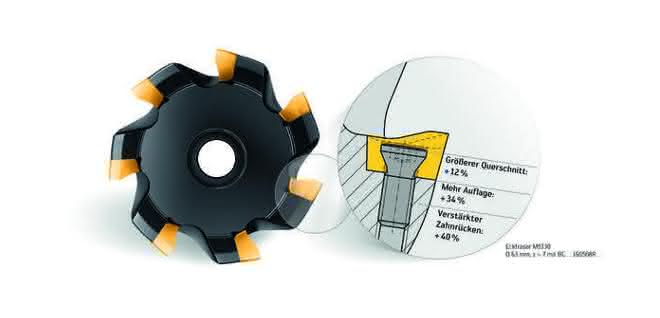
With Xtra-tec XT, Walter has developed a completely new generation of milling cutters that combines design improvements with high-performance cutting materials. The focus is always on greater productivity and process reliability. The most striking design feature is the installation position of the indexable inserts: more inclined and with a larger contact surface. This reduces the surface pressure in the seat and increases stability. The larger cross-section around the screw hole stabilizes the indexable insert and the longer screws increase the clamping security. The cutter body is also more stable, with significantly more material behind the insert seat.
In addition to greater process reliability, the special mounting position of the inserts also enables one more tooth - and therefore increases productivity. The precise 90° shape of the corner cutters helps to reduce the number of additional finishing operations that would otherwise be necessary. Easily accessible clamping screws optimize handling and help to avoid assembly errors. Another innovation, which is particularly important for the M5009 face milling cutter, is the smaller indexable inserts that can be fitted to the milling cutter. These respond to the current trend towards smaller dimensions. In the M5009, they combine small cutting depths with the economic advantages of double-sided indexable inserts: Instead of four, they have eight usable cutting edges. This, and the partial elimination of finishing operations, makes the milling cutter more economical. As part of Walter Green, the production and supply chain of the Xtra-tec XT milling cutters areCO2-compensated.
Siegfried Schaal, Technical Writer at Walter / ag


You might also be interested in
In-house exhibition Bielefeld 2026
How DMG Mori thinks about the factory of the future
DMG Mori will be showcasing turning and milling expertise, automation solutions and additive manufacturing along the Machining Transformation (MX) at the Bielefeld 2026 in-house exhibition.
 read more...
Up to 50 percent higher cutting speeds
The current market situation is putting pressure on companies that rely on carbide tools: Rising raw material costs, volatile supply chains and limited predictability are putting pressure on the industry. Fette Werkzeugtechnik, a member of the LMT...
read more...A robot for all occasions
Industrial robots take on many tasks. Even milling with accuracies in the sub-millimeter range is now possible.
read more...High metal removal rate for high maneuverability
Large module gears for ship drives place high demands on machining. Switching from skiving to 5-axis simultaneous milling with high-feed tools considerably shortens the roughing process. Process parameters and a well thought-out tool selection are...
read more...Schunk shows flexible systems for electronics production
Schunk Electronic Solutions will be exhibiting modular, flexible systems for electronics production at Productronica 2025 - from stand-alone depaneling systems to fully integrated inline solutions.
read more...Hydraulic 4-jaw chuck for automated workpiece clamping
HWR Spanntechnik presents a hydraulically actuated 4-jaw chuck for automated workpiece changing. The clamping device is designed to enable short set-up times, precise clamping and high productivity in automation.
read more...Corner, face and plunge milling
Paul Horn is expanding the DA milling system for corner, face and plunge milling. With the DA65 variant, the system offers a larger cutting insert compared to the existing DA62.
read more...World premieres at the EMO 2025
From September 22 to 26, 2025, Grob will be presenting several innovations at EMO Hannover. The focus of the trade fair appearance will be on the latest 4- and 5-axis universal machining centers and the associated automation solutions.
read more...Flexible and efficient processing
New high-performance CNC series
Fanuc's presentation at EMO will focus on the new FS500i-A CNC series. The new CNC generation offers high user-friendliness, process optimization as well as digital and network technologies.
read more...