
Electrical industry
ZVEI expects production to increase by one percent
The German electrical and electronics industry started the new year with mixed results: While sales and exports rose in January, incoming orders and production fell. The ZVEI 5G continues to see great potential in 5G technology.
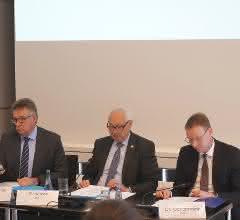
"Although the products of the German electrical and electronics industry are in demand and competitive worldwide, the obstacles on the demand side are currently increasing again," explains ZVEI President Michael Ziesemer. "In view of the high level of uncertainty - from protectionism and slowing global growth to Brexit - we are therefore sticking to our cautious forecast from the beginning of the year and expect real production growth of one percent."
The USA and China continue to be the largest sales markets for the German electrical industry. However, China further expanded both its position as the largest customer and its lead over the USA in 2018. At 21 billion euros, ten percent more exports went to China than in the previous year. "Nevertheless, growth is slowing in both countries, which is also having an impact on trade," explains Ziesemer. Not least due to ongoing trade conflicts, general business expectations in the electrical and electronics industry have recently deteriorated noticeably.
In 2018, nominal revenue rose to a new high of 193.5 billion euros. The sector currently employs 888,000 people in Germany. Last year, 22,000 new jobs were created. 96,000 employees work in research and development alone.
Industrial 5G accelerates the development of a digital ecosystem
The expansion of the digital infrastructure will make good progress with the new 5G mobile communications standard. "Together with other associations, the ZVEI has successfully campaigned to ensure that the special needs of industry for 5G are taken into account from the outset. A quarter of the frequency band is now being kept free for local applications. This means that 5G will be used where it can best play to its strengths - in companies," says Ziesemer. This is an important prerequisite for success in international competition.
"We have succeeded in creating an ecosystem for Industry 4.0 that is unparalleled worldwide. Now we need to shape an industrial policy strategy in Germany and Europe that creates a similar ecosystem for the industrial data and platform economy," explains Ziesemer, adding: "We also want to play a leading role in the application of artificial intelligence in the industrial and B2B sectors."
Industry ready for new mobile communications standard
5G was also a dominant topic at this year's Hannover Messe. The 5G Alliance for Connected Industries and Automation (5G-ACIA) aims to raise awareness of the technology's challenges and opportunities.
Dr. Andreas Müller (Bosch), Chairman of 5G-ACIA, explains: "With the publication of the first standards and the availability of the first chipsets and infrastructure components, 5G is rapidly gaining momentum. This is clearly reflected in the wide range of 5G-related activities at Hannover Messe 2019. In fact, many companies are beginning to recognize the crucial role this technology will play in the digital transformation of their businesses. At the same time, the ICT sector is realizing that 5G also has great potential for them." Against this backdrop, the initiative plays a central role in bringing together all relevant players.
The official launch of the ZVEI working group took place in April 2018 and since then the 5G-ACIA has recorded significant growth in membership. The 5G-ACIA will continue to expand its activities worldwide in 2019. Müller emphasizes: "We are very pleased with the high rate of growth and expect many more companies to join over the course of the year."


You might also be interested in
VDMA: Change of Chief Economist and Head of Foreign Trade
The VDMA has filled two key positions: On May 1, Dr. Johannes Gernandt will take office as the new VDMA Chief Economist, replacing Dr. Ralph Wiechers. Oliver Richtberg will also take over as Head of the Foreign Trade Department on May 1.
 read more...
BDI President Russwurm visits Pilz
Short paths for technology and knowledge transfer
The automation company Pilz welcomed the President of the Federation of German Industries (BDI) Siegfried Russwurm. During a tour of the family-owned company's development, test laboratories and production facilities, he emphasized how important the...
read more...Sales growth of 4 percent expected for 2024
The robotics and automation industry in Germany is forecasting a 4% increase in turnover for 2024. According to the latest figures from the VDMA Robotics + Automation Association (VDMA R+A), industry turnover will therefore rise to 16.8 billion...
read more...Loss of competitiveness?
The major associations BDI, VDMA and ZVEI are calling for more efforts to ensure that Germany remains competitive on an international level.
read more..."A strong signal for the industrial location"
After three years dominated by coronavirus, Hannover Messe 2023 celebrated a successful comeback. The exhibitors from the mechanical and plant engineering sector showed with their technologies how climate change can be combated and intelligent...
read more...DC voltage in the industry
Karsten Fuchs is a research engineer for advanced technology in the Innovation and Advanced Technology department at Lapp Holding. Andreas Mühlbauer spoke to him about the prospects for DC voltage technology in the industry.
read more...WomenPower at the Hannover Messe
With more than 1,000 participants, the WomenPower career congress kicks off on April 21 at the Convention Center on the exhibition grounds in Hanover. Deutsche Messe is organizing this important career congress for the twentieth time as part of the...
read more...Solutions for a networked and climate-neutral industry
At the world's leading trade fair for industry, around 4,000 companies from the mechanical engineering, electrical and digital industries as well as the energy sector will be showcasing solutions for the production and energy supply of the future.
read more...New offices for Bettenhausen and Harting
Dr. Kurt D. Bettenhausen is President of the DKE, Member of the IEC Board and President of the German National Committee of the IEC. Philip Harting unanimously elected to the VDE Executive Committee by the Assembly of Delegates
read more...