
Capacitive sensor button
Touch unwanted
Increasing hygiene and safety requirements in many areas are driving the need for contactless operating technologies. Capacitive sensor buttons with touch function play an important role here - they are reliable, durable and convenient.
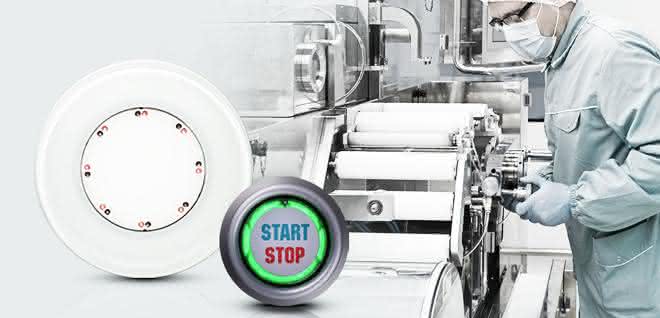
The coronavirus crisis has profoundly changed people's behavior, their work processes and the way we interact in society. Strict hygiene standards now govern work and leisure time. The simplest everyday processes are affected. Those responsible in industry, trade and the public sector are adapting to the changed circumstances. For example, many people avoid touching objects in public - door handles, for example, but also switches with a stroke, such as those on public transport. This is where electronic buttons with a touch function, such as capacitive sensor technology from Captron, come into their own.
Modern push-buttons such as the CANEO series10 can be freely configured for various applications. They can be integrated into future-proof communication systems such as IO-Link or other protocols. They interact with both digital and analog interfaces. The ability to freely adjust all operating and electrical parameters means that the button sensitivity and minimum actuation duration can be selected to reduce the risk of infection. In this way, users are always prepared for new hygiene requirements.
Operation with glove possible
Capacitive sensor switches are convenient because - unlike mechanical switches, which have to be operated with a specific, fixed pressure - they only need to be touched lightly and briefly. They can even be operated easily with a glove. This is made possible by the electromagnetic field created by the push-button. The capacitance between the switch surface and its surroundings is constantly measured in this field. If a conductive object, such as a human hand, approaches this field, the capacitance increases and the push-button performs the switching operation. A covered glove does not interfere with this process. If the sensitivity of the button is increased, it can also be operated completely contact-free. This would meet higher hygiene and safety requirements.
Many transport companies have already installed these capacitive buttons in their vehicles. In addition to the hygiene and safety aspect, the simple operation is also a step towards greater accessibility, as intelligent technology in the electronic touch buttons prevents them from being activated accidentally. This technology also includes protection against environmental influences such as rain, mechanical shocks, high humidity, frost or contamination. Automatic calibration for any interference factors means that the switching process can be carried out at any time without interference.
Improving hygiene in all areas
In hygiene-critical environments such as hospitals, retirement homes or care facilities, where there is an increased risk of disease transmission, people at risk must be able to move around without barriers and with as few germs as possible. Electronic push-buttons with touch function make it easier to open doors and control lighting in these areas, for example. Capacitive sensor buttons can also be integrated into the floor as foot switches. Captron manufactures particularly robust and hygienic sensor models in sealed stainless steel versions. These sensors are easy to clean and can even be sterilized; they are preferred for use in operating theatres and industrial clean rooms. Companies in the food industry and in medical and pharmaceutical technology must also ensure that the production environment not only meets the usual industry standards, but that it is also hygienic and fail-safe. Operating a machine with gloves is a good example of this. Capacitive sensor switches, which are insensitive to dust, dirt, extreme temperatures and vibrations compared to mechanical models, are an advantage here.


You might also be interested in
Switch makes network status transparent
Gigabit Ethernet is becoming increasingly important in mechanical engineering. The scalable infrastructure enables a step-by-step approach in which the backbone is first implemented on Gigabit.
 read more...
Motto "Sustainable!"
Schmersal also wants to support customers in reducing their carbon footprint along the value chain. This starts with the material that most safety switches are made of: Plastic.
read more...Wireless industrial switching devices
Radio-based communication as added value in the industry
The Steute Technologies business unit Controltec presented itself at the Hannover Messe with wireless industrial switching devices in a suitable environment - at the Industrial Wireless Arena + 5G Networks & Applications at the VDMA joint stand.
read more...Guard locking devices for harsh environments
The transponder-coded CTS safety switch with guard locking from Euchner has the highest level of safety and can be used in a variety of applications thanks to its dimensions of 135 mm x 31 mm x 31 mm, a maximum locking force of 3,900 N and flexible...
read more...Liquid separator keeps pumps dry
Vacuum clamping minimizes distortion and enables five sides to be machined in one clamping operation. The use of cooling lubricants poses a challenge: If they get into the vacuum generator, they can cause serious damage.
read more...It started with a timer for X-ray machines
In 2023, the automation expert Omron can look back on 90 years of innovative company history, in which many technological boundaries have been crossed and milestones set.
read more...Protection against cooling lubricant
Liquid separator from Schmalz keeps pumps dry
Anyone clamping with a vacuum during CNC machining must protect the pump from cooling lubricant. The NLS liquid separator from Schmalz separates the cooling lubricant and returns it to the running process - without interrupting the vacuum.
read more...Euchner at the automatica 2023
Euchner presents future-proof safety solutions for automation
Euchner is presenting its latest new developments for communication via IO-Link, via AS-i Safety at Work and via the common fieldbus systems at automatica under the motto "Smart Safety".
read more...Network maintenance
In terms of Overall Equipment Effectiveness (OEE), it is essential to proactively identify and eliminate the causes of system downtimes.
read more...