

Quality management and data protection
GDPR: utilizing synergies with QM
The EU GDPR has come into force. Violations can result in high fines. Despite the transition period, not all companies are yet compliant with data protection regulations. An electronic data protection management system could help. By Dr. Iris Bruns
The new European General Data Protection Regulation (EU GDPR) will become binding at the end of the transition period on May 25, 2018. The previous requirements of the Data Protection Directive 95/46/EC have been specified and expanded. However, not all companies are sufficiently prepared. Now is the time to hurry, as violations are punishable by fines of up to 20 million euros or up to 4 percent of annual global turnover. "We advise all companies that collect or process personal data - and this actually applies to every organization, including associations with their members and volunteers - to start implementing the law quickly and demonstrably now at the latest due to the liability risks and to set up a systematic data protection management system," recommends Dr. Stephan Killich from the ConSense management board.
Determine need for action, implement GDPR
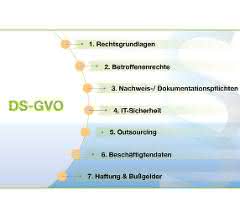
Those who are only now dealing with the regulation should proceed in a structured manner in order to implement the requirements efficiently and systematically. The first step is to determine the need for action: In which processes is personal data processed? What are the respective legal bases? How is the protection of personal data currently organized? If documentation such as procedure directories, IT security concepts or similar already exists, it is easy to build on this.

With ConSense GDPR, ConSense GmbH has developed software that can be used to set up a transparent data protection management system. Dr. Stephan Killich explains: "An electronic management system helps to bring all data protection-related activities into a clear structure. It reduces the workload because it carries out routine activities and automates processes." The software takes over work to fulfill the documentation obligation with the associated revisions. It also ensures that up-to-date documents and processes can always be accessed. Processes for the obligation to report data protection breaches and for deleting information can be mapped. It also supports the compliant handling of data subject rights and information obligations.
QM and data protection: How to use synergies
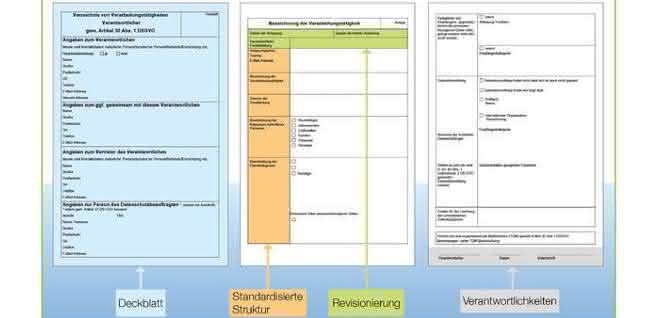
In order to minimize the effort and achieve implementation as quickly as possible, the experts recommend building on what already exists and using existing resources, structures, content and methods in the company. Quality management (QM) in accordance with DIN EN ISO 9001 is particularly suitable for this, as it has many parallels in procedures and structures with the EU GDPR:
Specification documentation with revision: According to the EU GDPR, existing processes must be systematically checked for data protection aspects. The processes, procedures and responsibilities already documented in the QM system can be used to set up the specification documentation. Suitable management software provides support with workflow-supported procedures for auditing, checking, approval or resubmission, thus reducing the effort required for documentation obligations.
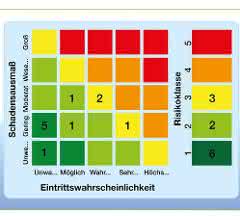
Data protection impact assessment (DPIA) and measures: Existing risk management mechanisms from QM can be used to prepare the required DPIA. Like the QM standard, the EU GDPR also requires suitable control processes or measures to be taken in the event of deviations. Suitable software can be used to assign responsibilities to the measures. Standardized workflows are used to manage and monitor implementation.
● Directory of processing activities: A lot of information for the required directory of processing activities can be generated from the QM documentation. Software for an integrated management system comprising QM and data protection enables, among other things, the analysis of QM documentation with regard to the processing of personal data. Relationships between the processes and the associated processing activities are established in order to derive the directory.
● Responsibilities and acknowledgements: As in QM, responsibilities and knowledge must also be clearly defined in data protection management. For example, a management system can be used to define and document the responsibilities for each process (step) and each document. Employees are prompted by the software to take note of new content, instructions and changes. These are recorded electronically and can therefore be verified at any time. In QM, a "yes" or "no" is sufficient for verification; in data protection, the date and time are also required.
● Training/instruction: According to the EU GDPR, employees must be instructed in the handling of confidential data. Existing training and qualification concepts from quality management can be used here. For example, a software-supported system offers the option of creating a qualification structure and assigning validity periods to employees' specialist qualifications. Useful extras such as eLearning and tutorials make it possible to provide training anywhere and at any time.
Implement GDPR, increase trust
The numerous parallels suggest implementing an integrated solution comprising data protection management and quality management and avoiding inefficient isolated solutions. "If you operate two separate systems, you run the risk of overlooking the essentials," says Dr. Stephan Killich. "The establishment of a systematic data protection management system is not only worthwhile in terms of avoiding sensitive fines. Existing processes that are also safeguarded under data protection law increase the trust of customers and cooperation partners."


You might also be interested in
Sustainability Through Simulation
Digital material selection reduces CO2 emissions by 40 percent
The use of digital material simulations can significantly reduce CO₂ emissions during the development and manufacturing of components. A real-world project by Schunk and Cadfem demonstrates how data-driven material selection can yield savings of up...
 read more...
From ERP System to AI Platform
RNA, based in Aachen, manufactures up to 2,000 custom-designed feeding systems annually and handles all order processing through a central ERP platform.
read more...Cybus Brings in Siemens Executive Stefan Schwab to Lead the Company
The Hamburg-based software provider Cybus will have a dual leadership structure going forward: Stefan Schwab will join co-founder Peter Sorowka as co-CEO.
read more...Artificial Intelligence for the Physical Space
Alibaba Expands Qwen Model Family with a Robotics Suite for Physical AI
Alibaba is expanding its Qwen model family with a robotics suite for Physical AI. The three models—for manipulation, navigation, and simulation—are designed to assist autonomous robots with complex tasks in real-world environments.
read more...5 Challenges for AI Projects in Manufacturing
Manufacturing companies have high hopes for AI. IFS highlights the five most common reasons why AI projects fail.
read more...Implementing Manufacturing Software: 5 Practical Tips
To remain competitive in the market in the future, more and more companies are considering digitizing their CNC manufacturing processes. The right software solutions can make process knowledge transparently accessible and significantly reduce the...
read more...AI automation specialist reorganizes...
Generation change at Insiders Technologies
After almost 30 years at the helm, Werner Weiss is handing over the management of Insiders Technologies. Andree Albrecht takes over the management after a transition phase.
read more...Intelligent brownfield networking
Many industrial companies are struggling with established plant structures and proprietary interfaces. Stefan Klaus' presentation will show in a practical way how brownfield environments can be efficiently networked with open technologies and made...
read more...Factory-X in practice
How can set-up processes in highly variant production be automated efficiently? Markus Benndorff from soffico shows how Factory-X, industrial data rooms and modular architectures create new possibilities for flexible production concepts.
read more...