
Interview
Digitalization of safety technologies
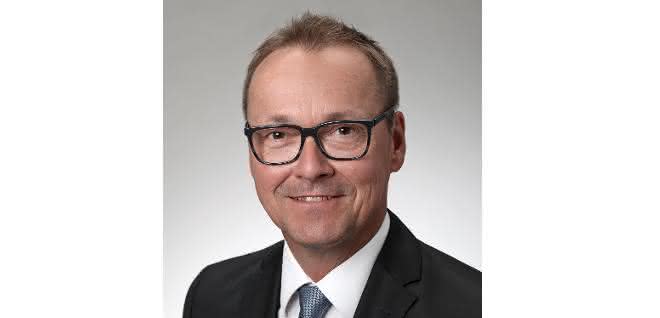
In the course of digitalization, there is rightly a lot of talk about cybersecurity. But safety technologies have also made great progress with this development. Dipl.-Ing. Rainer Lumme, Product Manager Extreme at Steute Technologies, explains these developments in an interview with Andreas Mühlbauer.
Mr Lumme, what changes have safety technologies, particularly machine and plant safety, undergone in the years of increasing digitalization?
In safety technology for general mechanical engineering, many functions that were long solved electromechanically have shifted to the software level. Digitalization is well advanced here - always in accordance with the special rules of machine safety.
With our switching devices, we generally operate in niche markets. In the safety sector, for example, we offer heavy-duty position switches with a safety function, robust safety sensors, emergency pull-wire switches, safety foot switches and, in particular, a wide range of safety switches for potentially explosive areas.
In these specialized application areas, digitalization has not yet made as much inroads as in general industry. In this respect, this trend only applies to us to a lesser extent. There are fewer safety switching devices per system and they are less networked. However, exceptions prove the rule. For example, we supply one manufacturer of tunnel boring machines with heavy-duty emergency pull-wire safety switches with plug-in connections that are equipped with "Dupline Safe" communication modules. This considerably reduces the amount of wiring required for the kilometer-long tunnel boring projects.
How do you see further developments in the safety sector and what does this mean for providers like Steute?
In other business areas such as intralogistics and medical technology, we are seeing real leaps in development towards networking and digitalization - and are also driving this development ourselves. The innovations in these areas and in general automation technology will also seep into the niche applications of machine safety in which we operate with a time lag. We can benefit from the transfer of innovation within the company, for example in the use of highly reliable communication protocols, by cable or wirelessly via radio, which we have developed for medical technology, for example.


You might also be interested in
Helu makes its first trade fair appearance under a new brand name
Helu Kabel will be presenting itself as Helu for the first time at Hannover Messe 2026, showcasing system solutions, Heluchain cables and new industrial luminaires.
 read more...
Strategic realignment with brand relaunch
In future, Helukabel will trade as Helu
The Helukabel Group is parting with part of its name: in future, the company will only operate under the Helu brand. With this step, the specialist for electrical connection technology is underlining its strategic development from a classic cable...
read more...Modular plant construction for corrugated board
Insight into the production of corrugators at BHS Corrugated: Automated, modular and equipped with Helukabel components.
read more...Best quality for the steel
Conditions in the steel industry are harsh and inhospitable. The machines used must be able to withstand the demanding environmental conditions in order to deliver the best quality at all times.
read more...If the standard cable is not sufficient
Lapp offers cables for countless applications - but not for all of them. From time to time, the developers have to modify a standard cable or develop a special cable.
read more...Slight decline in sales, strong investments
The Lapp Group has not been spared from the weakening global economy. However, the company only recorded a slight loss in the past 2024 financial year.
read more...Electrical connection technology
Cables and wires for industrial automation
Heukabel offers system solutions for cable routing from a single source. The subsidiary EKD Systems specializes in tailor-made cable drag chains made of steel, stainless steel and plastic, which are used in moving machines and systems as well as in...
read more...Lapp relies on Ultramid from BASF
Mobile charging of electric vehicles
The automotive industry is currently undergoing the biggest transformation in its history. The boom in battery electric vehicles in particular is presenting the industry with major challenges. Lapp, as a supplier of cables and connection...
read more...Cable handling application
At this year's Motek, ArtiMinds Robotics is showcasing a robot-based automation solution for the sensor-assisted assembly of flexible cables in connector housings.
read more...