
Special cable
If the standard cable is not sufficient
Lapp offers cables for countless applications - but not for all of them. From time to time, the developers have to modify a standard cable or develop a special cable. To do this, they can make numerous adjustments.
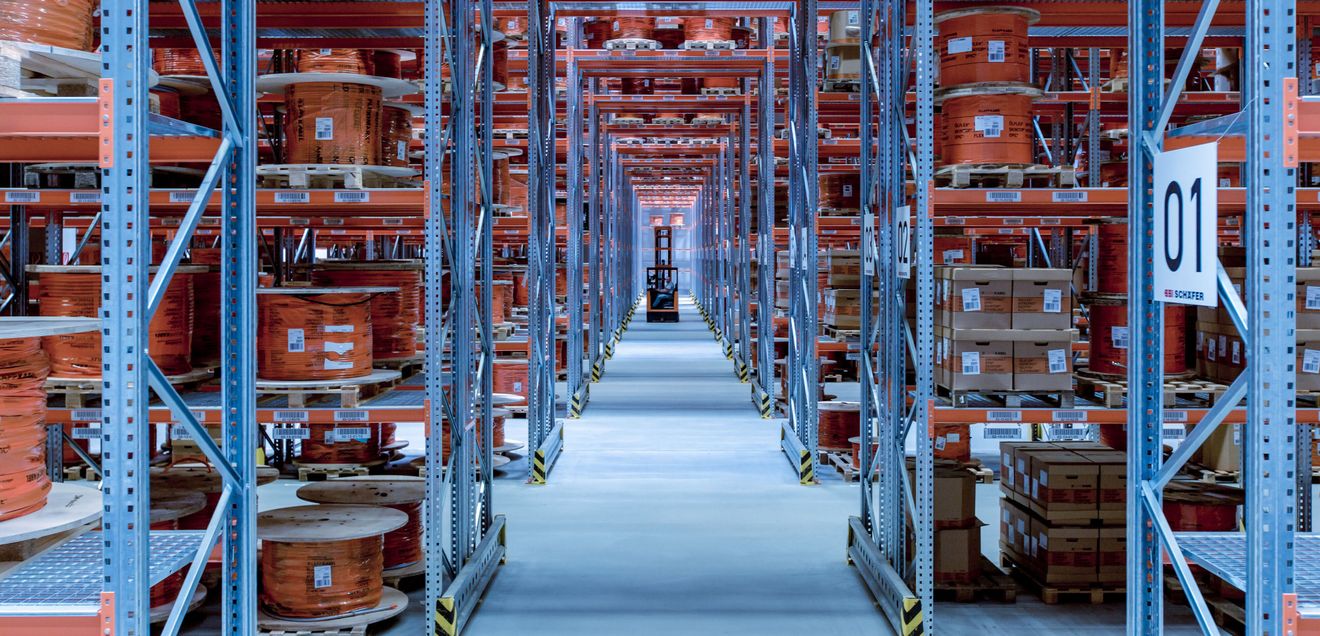
The Lapp catalog lists over 40,000 articles, mainly cables that transmit electrical energy, switching signals or data. But sometimes even the huge range reaches its limits and customers cannot find the right product with the necessary technical properties for their specific applications. Or the properties are right, but the cable lacks certification for the region or industry to which the customer wants to deliver.
In such cases, Lapp's product management team can help. It evaluates product ideas from customers or the requirements of the market or industry and uses these to develop a product requirement. Among other things, it defines the structure and, above all, the functionality of the cable. Lapp engineers draw on their experience from more than six decades of cable design and thousands of customer projects, as well as information from various databases on materials and standards. This is followed by a risk assessment, which determines the parameters within which the product can be operated safely. Product samples are then manufactured, tested and a possible product certification is carried out. The product is then released for production. This usually takes six months, but can sometimes take considerably longer if the product development team has to enter new technical territory or if extensive tests and certifications are required.
Redesign if the certification is missing
In around half of all inquiries, varying norms and standards are the reason for developing a new cable design. Global or continental standards such as IEC, EN and UL standards are usually covered, but there are also special requirements that only apply in one country or market. One example: India has its own standard for photovoltaic cables, which is based on IEC but has a few special features. It prescribes different printing and special tests. Another example: In the industrial environment, products are defined by industry standards for new technologies. This often concerns servo and motor cables, but also Ethernet technology, for example with solutions for Single Pair Ethernet. One advantage is that Lapp has production facilities worldwide and is therefore close to its customers and markets. Special cables are manufactured where they are needed, which avoids long delivery times and is ecologically and economically more sustainable.
But how do you keep track of the multitude of norms and standards? Lapp has set up its own standards office in Stuttgart, which takes care of the globally relevant norms, standards and specifications and maintains a comprehensive database of all requirements. At the same time, Lapp is involved in standardization committees around the world in order to promote practical solutions. Its experience is highly valued there. "Not everything is described in standards, we have certain freedoms that we use in cable design in the interests of the customer," says Alexander Terpe, Head of Product Development Cables. The team always carries out a risk assessment - "because every product has to be safe," says Terpe.
Finding compromises for the application
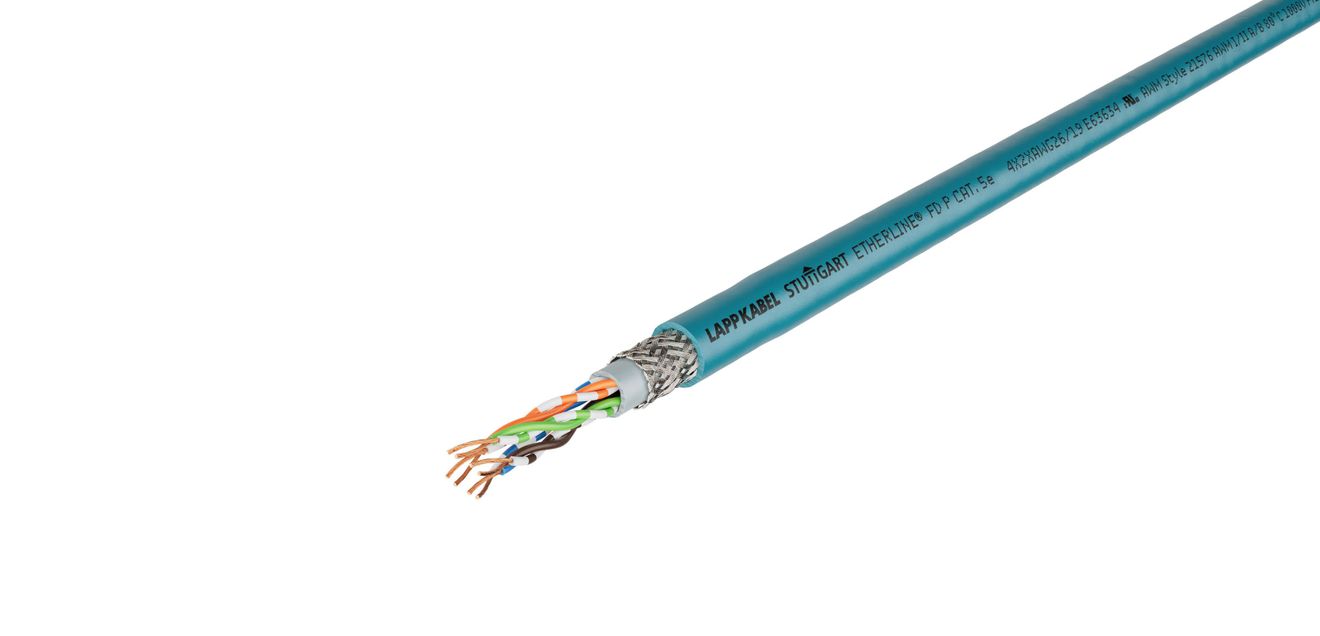
It becomes difficult when customers define challenging specifications that a standard cable cannot fulfill because certain properties are contradictory. For example, a highly flame-retardant cable usually has a sheath with a high proportion of additives. However, such materials are not as mechanically robust, meaning that this cable is not suitable for millions of movements in a drag chain. Developers find a compromise here, for example by recommending a larger bending radius, which reduces the load on the material in the drag chain. Or the customer must ensure that the cable does not come into contact with certain chemicals, as this would further reduce the durability of the flame-retardant plastic compound. "If we reduce the requirements for a cable, this is included in the data sheet and it is a new product," says Terpe. This does not mean that a completely new design is always necessary. Similar designs can fulfill different functions and requirements by using different compounds.
A new design is needed for particularly tricky applications. A team of six employees at Lapp designs special cables according to specific customer requirements. These are often hybrid cables that contain hoses for hydraulics or pneumatics as well as electrical conductors. Lapp manufactures such hybrid cables for oil drilling platforms, for example. But a purely electrical cable can also be a special cable. The request from a fish farm in Norway was truly exotic. To keep away salmon lice, which are harmful to farmed salmon, Lapp developed a cable that generates electric fields in the water, a kind of electromagnetic cage against the parasites. The engineering achievement here lies not only in the cable design, but also in the design of the correct operating parameters.
Lapp also supplies customized cables in small quantities. If customers only need a few hundred meters of cable, for example, they don't have to leave several drums gathering dust in the warehouse.
Cable design with AI
Alexander Terpe says that there will be no future without laboratory tests, even if cable development is becoming increasingly data-driven. For example, Lapp has a material database in which several hundred plastic compounds are described. New ones are constantly being added, while others are being dropped, for example because certain ingredients are no longer permitted due to new regulations. New compounds reflect the trend towards greater sustainability. For example, Lapp recently presented the first cables with partially bio-based jacket materials.
This raises the question of whether artificial intelligence can help with cable design. The data is still too inhomogeneous, but that will change. "I can imagine that we will be designing cables with AI support in a few years' time," says Terpe. This would have one major advantage: "Lapp's expertise is in the minds of its excellent employees. AI could help to make this expertise more easily available within the company."


You might also be interested in
Helu makes its first trade fair appearance under a new brand name
Helu Kabel will be presenting itself as Helu for the first time at Hannover Messe 2026, showcasing system solutions, Heluchain cables and new industrial luminaires.
 read more...
Strategic realignment with brand relaunch
In future, Helukabel will trade as Helu
The Helukabel Group is parting with part of its name: in future, the company will only operate under the Helu brand. With this step, the specialist for electrical connection technology is underlining its strategic development from a classic cable...
read more...Modular plant construction for corrugated board
Insight into the production of corrugators at BHS Corrugated: Automated, modular and equipped with Helukabel components.
read more...Best quality for the steel
Conditions in the steel industry are harsh and inhospitable. The machines used must be able to withstand the demanding environmental conditions in order to deliver the best quality at all times.
read more...Slight decline in sales, strong investments
The Lapp Group has not been spared from the weakening global economy. However, the company only recorded a slight loss in the past 2024 financial year.
read more...Electrical connection technology
Cables and wires for industrial automation
Heukabel offers system solutions for cable routing from a single source. The subsidiary EKD Systems specializes in tailor-made cable drag chains made of steel, stainless steel and plastic, which are used in moving machines and systems as well as in...
read more...Lapp relies on Ultramid from BASF
Mobile charging of electric vehicles
The automotive industry is currently undergoing the biggest transformation in its history. The boom in battery electric vehicles in particular is presenting the industry with major challenges. Lapp, as a supplier of cables and connection...
read more...Cable handling application
At this year's Motek, ArtiMinds Robotics is showcasing a robot-based automation solution for the sensor-assisted assembly of flexible cables in connector housings.
read more...Efficient testing and measuring
At Automatica, Kistler demonstrated how precise test and measurement data can contribute to resource-efficient production. Among other things, the new piezoelectric force transducer 9172CD was on display.
read more...