
Embedded World 2021
Haptic user interface
Candera, Next System and Data Modul have jointly developed an HMI solution with intuitive touch feedback.
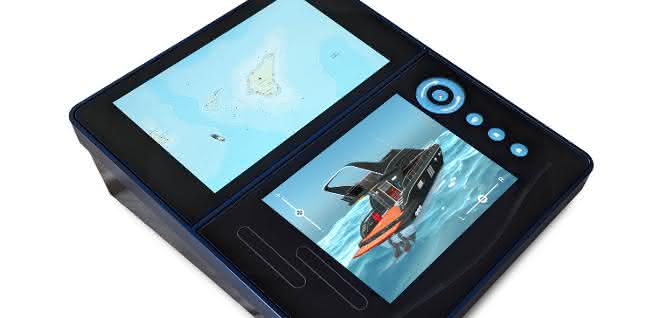
This haptic user interface combines a wide range of applications in areas such as industry, nautics and medicine and includes a haptic pin pad that provides significant support for people with visual impairments in particular. The companies presented the HMI solution at the digital Embedded World.
According to several studies on the hierarchy of the human senses, the sense of touch is often cited as one of the most important perceptions - right after visual and acoustic stimuli. It may therefore come as no surprise that not only our physical world but also the virtual world can benefit significantly from additional touch impulses. The integration of haptics and touch feedback technologies in displays and touchscreens is no longer a future trend; it has already found its way into many application areas such as automotive, industry and medical technology, transforming standard UI solutions into intuitive and lively HMI experiences.
Based on these findings and with combined know-how from the fields of HMI development, haptics and display technology, Candera, Next System and Data Modul have created a UI solution with intuitive touch feedback that provides the user with a next-generation user experience.
As intuitive touch feedback is no longer the sole prerogative of the automotive industry, the project partners were keen to showcase a wide range of applications from industry, medicine, nautics and more. Among other things, an innovative 2D / 3D excavator user interface, a modern nautical interface, an ultrasonic control unit and an interactive ATM were therefore implemented. One special feature is the latter ATM, which has a haptic pin pad to support people with visual impairments in particular. Only the haptic and acoustic stimuli of the device make it possible for them to successfully interact with it and carry out the desired pin entry process.
All of these use cases were created using Candera's HMI design tool CGI Studio, an intuitive and user-friendly GUI design software. Thanks to the tool's powerful render engine, the individual scenes are not only characterized by brilliant graphics, but also include complex 3D elements and numerous animations. CGI Studio's automated workflows, integrated state machines and Candera's Smart Photoshop Importer helped to quickly transform the flood of images and animations associated with these numerous scenes into fully functional HMIs. The joint project was thus implemented within just a few weeks.
Next System's hardware technologies were the perfect complement to Candera's HMI tool. As a pioneer in the field of haptics, next system's goal was to develop a state-of-the-art demonstrator for haptic applications in various areas. The user interface therefore features two 10.1-inch touchscreens with haptic feedback support based on electrostatic and piezo technology. Both screens also work with force-sense (force measurement for targeted and safe triggering on the user interface) to ensure a high-quality user experience. The integrated haptic touch technology can be tailored to almost any touch-sensitive application.
The highly sensitive cover glass of the display, including the latest version of the projective capacitive SITO touch unit, was provided by Data Modul. In addition, the display expert took care of fine-tuning the touch settings and TFT driving. This configuration of all included components supported the perfect combination and integration of Candera's HMI and next system's haptic touch solution.


You might also be interested in
Sustainability Through Simulation
Digital material selection reduces CO2 emissions by 40 percent
The use of digital material simulations can significantly reduce CO₂ emissions during the development and manufacturing of components. A real-world project by Schunk and Cadfem demonstrates how data-driven material selection can yield savings of up...
 read more...
From ERP System to AI Platform
RNA, based in Aachen, manufactures up to 2,000 custom-designed feeding systems annually and handles all order processing through a central ERP platform.
read more...Cybus Brings in Siemens Executive Stefan Schwab to Lead the Company
The Hamburg-based software provider Cybus will have a dual leadership structure going forward: Stefan Schwab will join co-founder Peter Sorowka as co-CEO.
read more...Artificial Intelligence for the Physical Space
Alibaba Expands Qwen Model Family with a Robotics Suite for Physical AI
Alibaba is expanding its Qwen model family with a robotics suite for Physical AI. The three models—for manipulation, navigation, and simulation—are designed to assist autonomous robots with complex tasks in real-world environments.
read more...5 Challenges for AI Projects in Manufacturing
Manufacturing companies have high hopes for AI. IFS highlights the five most common reasons why AI projects fail.
read more...Implementing Manufacturing Software: 5 Practical Tips
To remain competitive in the market in the future, more and more companies are considering digitizing their CNC manufacturing processes. The right software solutions can make process knowledge transparently accessible and significantly reduce the...
read more...AI automation specialist reorganizes...
Generation change at Insiders Technologies
After almost 30 years at the helm, Werner Weiss is handing over the management of Insiders Technologies. Andree Albrecht takes over the management after a transition phase.
read more...Intelligent brownfield networking
Many industrial companies are struggling with established plant structures and proprietary interfaces. Stefan Klaus' presentation will show in a practical way how brownfield environments can be efficiently networked with open technologies and made...
read more...Factory-X in practice
How can set-up processes in highly variant production be automated efficiently? Markus Benndorff from soffico shows how Factory-X, industrial data rooms and modular architectures create new possibilities for flexible production concepts.
read more...