

KHS technology
Heineken opens largest production facility in Mexico
Heineken has opened a new production facility in Mexico. Four of the six lines were supplied and commissioned by KHS. The machine program included almost the entire product range: from cleaning machines to fillers, labelers, pasteurizers, packaging machines and palletizers.
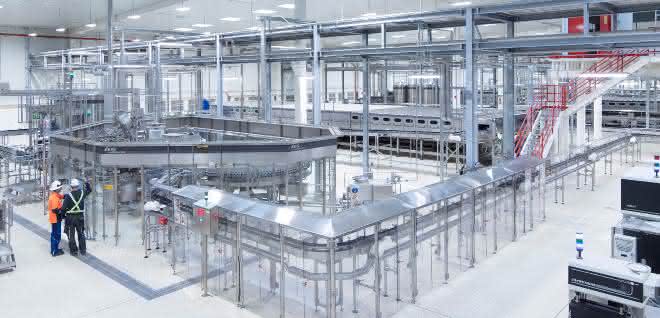
The potential for the launch of one of the most important greenfield projects in the history of Mexican brewing was recognized back in 2006: Cervecería Cuauhtémoc Moctezuma wanted to build its seventh production facility in Meoqui in the state of Chihuahua in the north of the country. Nine years later, the plans were finalized by Heineken México, which had taken over the brewery in the meantime.
By locating in Meoqui, Heineken is closing a geographical gap in northern Mexico. The strategic location is intended to optimize the company's production and distribution network. In addition, the region has a good infrastructure, offers qualified employees and a local government that specifically promotes economic development.
Largest Heineken site in the world
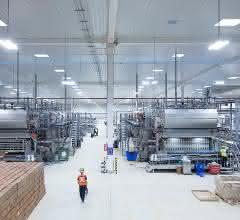
With an annual capacity of five million hectoliters, the Heineken Group's largest production facility in the world has been built on a greenfield site. In addition to the 500 new jobs created in the brewery itself, there are also 1,500 indirect jobs. The site is designed in such a way that expansion is possible in the medium term. The importance of the Mexican market for Heineken is demonstrated by some figures from 2016: the Mexican branch contributed 16% to sales, 12% to turnover and 15% to the Dutch company's profits - even before the new plant was commissioned. In the same period, Heineken México grew by four percent in volume, eight percent in value and even 16 percent in profit. Against this background, the company decided to invest around 400 million euros here.
The showcase project comprises a total of six lines, four of which were supplied and commissioned by KHS: Two glass lines for 355-milliliter non-returnable bottles, one for 325-milliliter returnable bottles - all with an output of up to 40,000 bottles per hour - and another for up to 28,000 947-milliliter non-returnable and returnable bottles per hour. The machine program included almost the entire KHS product range: from bottle washers to fillers, labelers, pasteurizers, packaging machines and palletizers.
The first joint project between the two companies dates back to 1977: a VVF-120D canning line. It is located in Monterrey in the north-east of the country and is still in operation today. However, the particular challenges in Meoqui were not primarily the performance of the lines, but two other aspects: Flexibility and sustainability.
Maximum flexibility
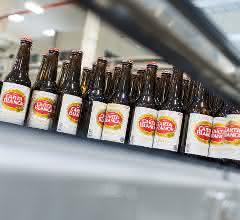
Two types of beer, six beer styles and 13 brands are produced here - in addition to Heineken, these include Tecate, Dos Equis and Indio. In view of this range, which is filled into different containers of various sizes, there is a huge variety of stock keeping units (SKUs) and a large number of possible combinations. This requires the shortest possible changeover times for format changes and maximum flexibility in labeling. There is also a special feature with regard to secondary packaging: instead of plastic crates, reusable cardboard cartons with twelve or 20 bottles each are used, the handling of which presents a certain technical challenge.
Maximum flexibility was also required in other areas: "Due to current market requirements, we were forced to change the originally agreed commissioning sequence of the lines according to the most required SKUs," recalls plant manager Eusebio Reynoso Razo. "This naturally made everyone involved sweat. But the KHS team understood our situation. Despite these changes, the cooperation with the local crew worked great and we were able to complete the process with excellent results."
In the first few months alone, more than 30 different SKUs were processed on the four KHS lines and more than 1.2 million hectoliters were filled and packaged in glass bottles. All in all, Reynoso is highly satisfied with the teamwork. "We've achieved many joint successes - from installation and commissioning to the moment when the first filled product pallets were delivered to the conveyors. The great willingness of the KHS manager on site to get things moving, his cooperation and the excellent communication made it much easier for the team to function."
Sustainable use of resources
The second major challenge concerns sustainability: in line with its commitment to 'Brewing a better world', Heineken México sees itself as a pioneer. Accordingly, the plant in Meoqui was built according to modern principles of the circular economy - with a focus on renewable energy and efficient use of water. The electricity comes from renewable sources. For example, the windows of the brewery contain photovoltaic cells, which alone generate around twelve percent of the electricity required at the entire site - the rest comes from wind power. Wastewater treatment is also used to supply all facilities and green spaces, and biogas is used in boilers. The declared goal is to become the Heineken brewery with the lowest water consumption in the world - by 2020, the plant aims to work with just two liters of water per liter of beer.

Sustainable systems from KHS were also chosen to achieve this goal: The washing machines, which along with the pasteurizers are generally among the largest water consumers in a line, are equipped with the latest technology, which both drastically reduces the amount of water and also noticeably cuts energy consumption. New systems for cooling the vacuum pumps at the filler also result in significantly lower water consumption - more than 300,000 euros can be saved here per line every year. For plant manager Reynoso this is of course a decisive aspect: "By sustainability we don't just mean our ecological responsibility, but also the economic level. Here, KHS has scored over its competitors with the most attractive total cost of ownership (TCO). This also allows us to operate the lines sustainably in the long term."
Qualification on site
It is also helpful that the lines are easy to operate for the personnel on site. To this end, the selection and qualification of the plant's own employees was started at an early stage - with active support from KHS: to ensure that the lines run properly and are efficient, the local maintenance staff of 40 technicians was trained and coached - an important task in the future as well.
Eusebio Reynoso Razo has big plans for the future: "In the future, we will focus on digitalizing the line. The aim is to be able to correlate and predict various process indicators in order to increase performance. By further optimizing materials and resources, we will be able to make our filling and packaging processes even more efficient." as


You might also be interested in
Predictive maintenance in retrofit
Predictive maintenance pays off. This is because early detection of impending failures means that systems can be serviced in a targeted manner before production downtime occurs. But how complex is it to integrate such a maintenance concept into an...
 read more...
Maintenance instead of replacement
The circular economy starts with the machinery
Sustainability in industry starts with machines, says our guest author from Deguma: How maintenance, modernization and the 5R strategy save resources, energy and CO₂.
read more...3D printing for unplanned requirements
The material fails and the machine suddenly stops? Then you need to take the right measures to be able to resume production quickly. Material failure in the form of faulty components or material wear in the frame are a risk for any production.
read more...High demands in terms of safety, application and robustness
Demanding work in the electrical trade and energy supply as well as smooth processes in production require innovative and customized measurement technology that scores points for safety, ease of use and resilience.
read more...Car meets e-bike: riding with lubrication-free polymer bearings
Studies show that the proportion of pedestrian and bicycle traffic is increasing in urban areas. With the JetBike, JetBike GmbH from Braunschweig presents a mixture of e-bike and car and relies on lubrication-free polymer bearings from Igus.
read more...Hydraulic hub for more efficient servicing
Bosch Rexroth presents a digital toolbox for service and maintenance. With a comprehensive range of digital services, the Hydraulic Hub simplifies and accelerates the service and maintenance of hydraulic products and increases machine availability.
read more...Arnold Umformtechnik expands after-sales...
Faster help with VR glasses
Arnold Umformtechnik is expanding the after-sales service for its machines to include digital remote services. The focus is on data security, simple operation and clear processes.
read more...147,000 euros per hour: high costs for German companies due to unplanned downtime
According to the "Value of Reliability" study, 67% of industrial companies in Germany experience unplanned downtime at least once a month. This costs the German economy 147,000 euros per hour. Nevertheless, reactive maintenance concepts are not...
read more...Maintenance starts with a maintenance planner
Legal requirements stipulate that machines and systems must be serviced regularly. The maintenance work serves to ensure occupational safety and economic efficiency.
read more...