
Single-pair Ethernet cables
Data lines on a diet
Data is the raw material of the 21st century. This means that the physical world is merging with the digital world, while at the same time networking is increasing - every machine, every "thing" exchanges information with others. This has an impact on connection technologies.
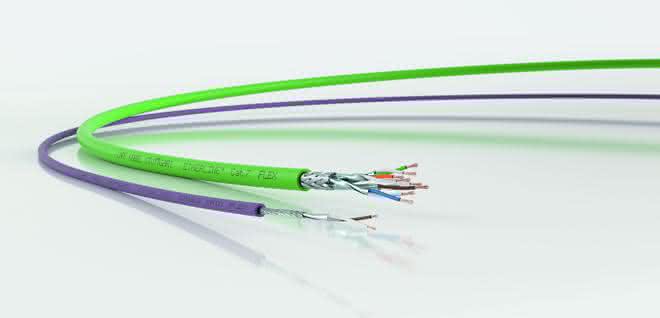
The revolution on the factory floor is also changing connection technologies. When everyone communicates with everyone else, the number of connections is increasing rapidly, as are the demands on their quality and availability. Ethernet cables are supposed to be fast. But the data transmission rate is not always the most important factor in factory networking - sometimes smaller diameters and low costs are even more important. Single-pair Ethernet cables are more suitable than conventional cables for many applications, especially in the fully networked Industry 4.0.
Downsizing will find its way in
High transmission rates can be useful for high-speed cameras for quality control, for example, but not every sensor requires this maximum data transmission rate. Downsizing Ethernet data cables is therefore a trend that is likely to find its way into factories over the next few years. The most important lever is the number of wire pairs. Instead of four pairs of wires, so-called single-pair cables only have one pair of wires. You can't expect record speeds from them, but they can manage one gigabit per second, which is fast enough for many applications.
On the other hand, single-pair data cables score points with their smaller space requirement, low installation effort and low costs. In machines with many sensors, where space is tight, these cables can be a noticeable relief. Another plus point is that such slimmed-down cables can also be longer than the maximum 100 meters that is otherwise usual for Ethernet cables. In principle, interference increases over longer distances and data errors can occur. However, thanks to new developments in semiconductor chips from the automotive industry, it is now possible to correct many of these errors and thus achieve longer ranges of up to one kilometer.
Ethernet is the future
Industrial Ethernet is currently growing at 22% per year, while fieldbus systems are only growing at 6%. In 2018, the number of Industrial Ethernet systems installed in factories will exceed that of fieldbuses for the first time. New concepts such as Single Pair Ethernet will also benefit from this. Although cables are not yet available for this, at least not for use in industry, standards are still lacking. Newly established working groups are taking care of this. "However, the first series products for Single Pair Ethernet will be available in two to three years, naturally also from Lapp," promises Guido Ege, Head of Product Management and Development at Lapp.
Another seemingly contradictory trend towards downsizing is the increasing demand for hybrid cables. The aim here is not to accommodate as few cores as possible in one sheath, but on the contrary to pack as many cables together as possible. Such hybrid cables, also known as single-cable solutions, combine different functions in one sheath, for example connection cables for servo drives plus feedback cables for querying the sensors. Single-cable solutions save a lot of space compared to several separate cables with separate connectors - in this respect, they can also be described as downsizing.
Ready-made assemblies increasingly in demand
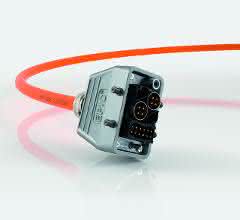
Downsizing in the sense of simplification is also in demand for processing: the Etherline PN Cat.6A FC with ten Gbit per second at 500 megahertz bandwidth is Fast Connect-capable because it does not require foil shielding of the wire pairs, which enables fast and secure assembly. The cable is also certified for the North American market. The Epic MH Gigabit data module, part of the versatile Epic MH modular rectangular connector system, is a perfect match.
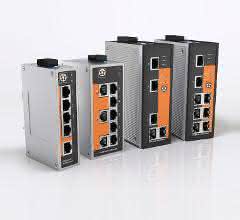
Or the robust Etherline Access Switches for data distribution in harsh industrial environments. These products are manufacturer-independent and tailored to the application. Lapp's Ölflex Connect product line with ready-made assemblies ranging from servo cables to fully equipped drag chain systems was created because customers increasingly want to concentrate on their core competencies and prefer advice, products and service from a single source.
Wireless instead of cable?
Although the market for wireless technologies in factory networking is currently growing at 32 percent per year, it is still at a low level - currently with a small market share of six percent. WLAN, Bluetooth or mobile radio have advantages where flexibility is important, such as when connecting sensors in large systems. Wireless technologies are inferior to wired technologies in terms of range, robust data connection, energy efficiency and, in particular, the delay in information transmission (latency). Cables are also less susceptible to deliberate interference or attacks by hackers. pb


You might also be interested in
Helu makes its first trade fair appearance under a new brand name
Helu Kabel will be presenting itself as Helu for the first time at Hannover Messe 2026, showcasing system solutions, Heluchain cables and new industrial luminaires.
 read more...
Strategic realignment with brand relaunch
In future, Helukabel will trade as Helu
The Helukabel Group is parting with part of its name: in future, the company will only operate under the Helu brand. With this step, the specialist for electrical connection technology is underlining its strategic development from a classic cable...
read more...Modular plant construction for corrugated board
Insight into the production of corrugators at BHS Corrugated: Automated, modular and equipped with Helukabel components.
read more...Best quality for the steel
Conditions in the steel industry are harsh and inhospitable. The machines used must be able to withstand the demanding environmental conditions in order to deliver the best quality at all times.
read more...If the standard cable is not sufficient
Lapp offers cables for countless applications - but not for all of them. From time to time, the developers have to modify a standard cable or develop a special cable.
read more...Slight decline in sales, strong investments
The Lapp Group has not been spared from the weakening global economy. However, the company only recorded a slight loss in the past 2024 financial year.
read more...Electrical connection technology
Cables and wires for industrial automation
Heukabel offers system solutions for cable routing from a single source. The subsidiary EKD Systems specializes in tailor-made cable drag chains made of steel, stainless steel and plastic, which are used in moving machines and systems as well as in...
read more...Lapp relies on Ultramid from BASF
Mobile charging of electric vehicles
The automotive industry is currently undergoing the biggest transformation in its history. The boom in battery electric vehicles in particular is presenting the industry with major challenges. Lapp, as a supplier of cables and connection...
read more...Cable handling application
At this year's Motek, ArtiMinds Robotics is showcasing a robot-based automation solution for the sensor-assisted assembly of flexible cables in connector housings.
read more...