

Electromotive process control valves
Fast and precise control valves
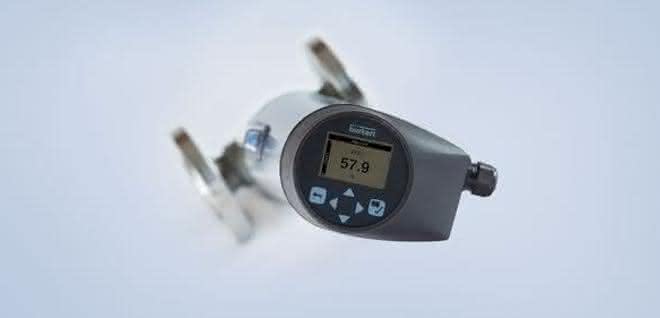
When fast and precise control is required for process automation and compressed air is not an option, Bürkert's electromotive process control valves are the right choice. Designed as seat or diaphragm valves, they are a precise and energy-efficient alternative to pneumatic, spring-balanced valves.
Electromotive process control valves move to the desired position almost instantaneously and without overshooting, keep it stable regardless of the media pressure and thus achieve a high level of control accuracy. They offer many possibilities for process optimization and networking, for example via the device platform EDIP (Efficient Device Integration Platform) from the same manufacturer.
Rules at high speed
The electromotive angle seat and straight seat valves of types 3360 and 3361 operate at an actuating speed of 6 mm/s and a closing time of 3 to 4 seconds. This puts them in the range of pneumatic valves. Depending on the requirements, the actuating speed can be set to suit the application, a stroke and closing limit can be defined and end positions can be approached smoothly. In the event of a power failure, the safety position can be approached via the optional energy accumulator. There is also a manual emergency adjustment. The actuator surface is hygienically designed in accordance with EHEDG guidelines. Applications range from steaming baked goods and water control for bleaching textiles or in dairies to temperature control systems and pressure control in cooling circuits.
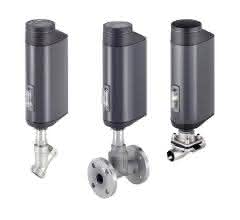
Type 3363 diaphragm valves are ideal for control tasks in areas with media contact, such as the food or pharmaceutical industry and water treatment. They are available in a plastic or stainless steel housing. Their electric actuator with recirculating ball screw positions the diaphragm practically instantaneously, precisely and at an actuating speed of up to 4 mm/s. The actuating speed can be varied. The actuating speed can be varied. Pressure fluctuations in the medium are not transferred to the valve position.
The drive force can be adjusted to the operating conditions, thereby extending the service life of the diaphragm. If necessary, the safety position can also be approached via an energy storage unit in the event of a power failure. Functions for process control, valve diagnostics and preventive maintenance are also available. Demanding environmental conditions are no problem thanks to the high IP protection class and the insensitivity to shocks and vibrations.
According to documents from Bürkert / am


You might also be interested in
Maintenance and Pumps&Valves in February
Final preparations are underway in Dortmund: On February 21, 2024, maintenance will start as the leading trade fair for industrial maintenance and with it Pumps&Valves as the trade fair for industrial pumps, fittings and valves.
 read more...
Cooling and temperature control units
Hygienic packaging sells safely
In few industries are the requirements for hygiene in the production process as strict as in the food sector - the health of consumers has top priority. This results in enormous challenges for all machines and components involved, especially in...
read more...Cooperation between SMC and Yaskawa
Another chapter in the cooperation between Yaskawa and SMC: The new European Yaskawa Europe headquarters is also home to an academy with robots and cobots, to which various SMC solutions are exclusively connected.
read more...Proportional flow control
With the Asco 209 series, Emerson has introduced a proportional valve for flow applications in the medical technology, food and beverage, heating, ventilation and air conditioning (HVAC) industries.
read more...Double piston pump and proportional valve
High-precision gluing of folding boxes
Thanks to their sustainability, cardboard packaging is increasingly replacing plastic packaging. An important production step in the manufacture of folding boxes is the high-precision gluing of the cardboard blanks.
read more...Three leak tests at once
Systems for leak testing modern components for electromobility and hydrogen fuel cells are a key focus of Worthmann Maschinenbau and its subsidiary Maceas.
read more...Bonding and lubricating - precise dosing
Jet valves from Vieweg lubricate and grease electromechanical switches and bond and seal electronic components. More and more customer-specific solutions are being used.
read more...digital networking days Sustainability
Predictive maintenance for semiconductor production
The control valves for ultrapure water are an important supply medium in semiconductor production. While specialists used to check these valves personally on site, an IoT solution now checks the critical components.
read more...Seamless product and process traceability
After exploring the market, a plastics processor decided in 2019 to have WSW Software develop a new MES. The web-based ME system called Valeris is now in productive use and is marketed as an industry-neutral standard solution.
read more...