
Tool Lifecycle Management
The path of the tool
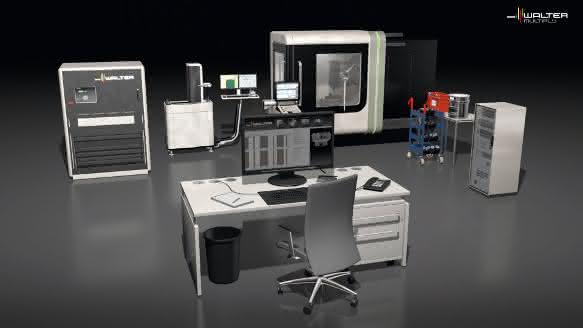
In our linguistic usage and often also in the organization of companies, there is still a clear distinction between the analogue and digital worlds that no longer exists in everyday life. If you look at the digital life cycle of tools, this is particularly noticeable. Metalworking machines are already visually recognizable as a conglomerate of classic analogue hardware and engineering, electronics and software development. The tools that are clamped onto the machines are a different story. Who thinks of digitalization when they see a barcode on a milling tool, for example? Or even Industry 4.0?
For the machining specialist Walter from Tübingen, innovative strength in machining also lies in the area of digitalization. For its classic product, cutting tools and indexable inserts, the company has created a complete digital life cycle step by step - from design to reconditioning. Walter not only uses this to manage and control processes within production and customer service, the company also makes most of the data available to its users as its own digital products and services.
Digital double for every tool
The digital life cycle of a tool, which is also relevant for the user, begins as soon as the tool is released for the market by the engineers. Walter provides the tool data that is relevant for procurement, store floor logistics, clamping and handling in the machine, but above all for design, process planning and NC programming, in the formats and depth of information required by the users. The company not only relies on its own platform, i.e. the Walter online catalog, but also uses the entire range of possibilities. "We are guided by our customers' preferences as to how and where they want to access the relevant data. The faster and easier it is to import product data, the more time our users save," says Konstantinos Bountolas, Manager Product Data Solutions at Walter, explaining the company's own data philosophy. "The only important thing is that our data is where our customers are looking for it," he explains. Walter mainly relies on the "Machining Cloud", the "e-Catalog" for TDM and "Tools United" platforms.
With an average of 20 parameters per tool item, Walter provides all the information required for component and machining planning in a CAD/CAM system. This includes, for example, feature lists (cutting diameter, projection length, cutting edge length, direction of rotation, etc.), 2D drawings, 3D models, photos and descriptions. The Walter TDM e-catalog can also be connected to the user's ERP systems. Bountolas says of this approach: "If customers have to measure important parameters manually and then enter the values into the system by hand, this increases the risk of errors. To ensure the highest possible data quality, Walter therefore offers the option of receiving all data relevant to digital processes from us. At the touch of a button or a mouse click."
Digital practice on the store floor - Walter GPS

Walter GPS, an application that can be used online, offline and on the move, is designed for production: As the abbreviation GPS suggests, the application is used to navigate through the possibilities of machining tools to find an optimized machining strategy for the specific component. It provides tool and cutting data recommendations adapted to the respective machining task and machine, as well as information on the machining strategy. It can also be used to combine several machining specifications, for example to determine the best core drill for the tapping tool. The cost-effectiveness of a machining strategy can also be calculated, for example in terms of cost per hole.
From the manufacturer to the machine: tool management and logistics
However, a cutting tool not only has a digital double that can be used to plan and control design and production processes. Equipped accordingly, for example with a barcode, it continues to produce data during the production process that forms the basis for efficient tool planning or complete tool management. Many tool manufacturers today offer some form of digital-based tool management. Walter also takes care of the entire logistics chain: from procurement, storage and provision through to reconditioning. For many companies, tool management is usually introduced via tool dispensing systems: Instead of a central dispensing point, which also logs incoming and outgoing tools and takes care of reconditioning, automatic tool dispensers are located at route-optimized positions in production, which dispense tools to authorized persons.
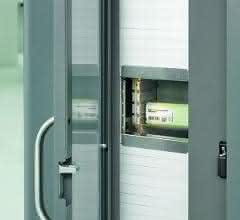
The feedback to the purchasing department is just as automated: depending on the desired mode, reorders are placed as required, either by the company's own purchasing department or the contracted service provider. Walter has already installed this easy-to-implement form of data-based tool management for many customers. And it is manufacturer-independent: Even though Walter Multiply Services contribute to customer loyalty, Walter's automatic tooling machines not only house the company's own cutting tools, but are also equipped individually according to customer wishes and requirements.
The detailed control and analysis of the entire process that a tool goes through in the company is based on specially developed software tools that also process live data from production and tool logistics, depending on the scope of the order. Once the relevant data has been stored, Walter uses the system to calculate, for example, which tools are required in which quantities for the production of the next order. This allows the ordering time for tools to be reduced from days to a few hours, for example - with a corresponding reduction in the strain on the company's logistical and financial resources. The analysis tool can also reveal unusual developments such as consumption peaks at certain machines or machine locations.
The author:
Siegfried Schaal, Technical Writer at Walter


You might also be interested in
ESTIA aims to strengthen Europe's cloud
New tech alliance for EU sovereignty
Twelve companies, including Dassault Systèmes, are founding the European Sovereign Tech Industry Alliance (ESTIA). The initiative aims to strengthen Europe's technological independence and define requirements for sovereign cloud services. The start...
 read more...
Deutsche Telekom and Nvidia launch one of Europe's largest AI factories
With the Industrial AI Cloud in Munich, Deutsche Telekom and NVIDIA are creating one of the largest AI factories in Europe. Companies can train AI models, carry out simulations and access 10,000 GPUs.
read more...Leveraging data potential with AI and streaming
Huge data treasures are still lying dormant in many manufacturing companies. And yet it is high time that these treasures were unlocked. There is often a lack of resources and capacity to make data usable in real time. Streaming production data can...
read more...More awareness of noise
Dematic offers solutions that are tailored to different cloud environments and reduce environmental impact through reduced material consumption and improved energy efficiency.
read more...Generative AI in the automation environment
The mechanical engineering and automation industry is undergoing profound change. This transformation is being driven by more volatile global trade, geopolitical crises and increasing market pressure, which demands greater agility, technological...
read more...Rigid data structures have had their day
The traditional data center is no longer the center of data. A hybrid cloud storage approach enables manufacturing companies to both meet the current requirements of data-intensive processes and future-proof their infrastructure.
read more...Software as a service in three stages
CIM Database Cloud is a new out-of-the-box solution from Contact for end-to-end digital product development.
read more...How production can benefit from AI
Together with AI technology, IIoT networking makes it possible to better control machine parameters and optimize quality with predictive quality. Downtimes and set-up times can also be further minimized. Cloud platforms also make these technologies...
read more...More expertise for digital engineering
Altair, a computational science and artificial intelligence (AI) company, has acquired OmniV, a technology from Michigan, USA-based software company XLDyn.
read more...