
Development of cutting tools
From the concept to the spindle
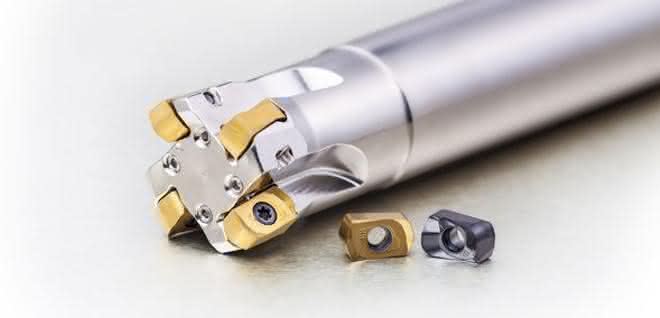
Efficient cutting tools are extremely important for cost-effective production. It can take years from the development of a tool to its market launch. The development of a milling tool, for example, is shown here using the example of the SBN10 milling cutter and BNGX indexable inserts.
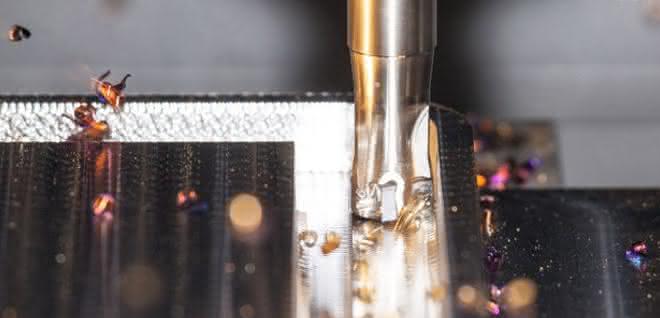
Dormer Pramet 's product management and development department is tasked with developing new tools every year. When Jan Bittner joined the team in Šumperk, Czech Republic, as a product and development engineer in January 2015, his first task was to develop a range of high-performance milling tools. It took almost three years before a completely new product range of SBN10 milling cutters and BNGX indexable inserts could be launched on the machining market. The product development time also shows how high a manufacturer's investment is.
Product management always starts the process of creating a new tool by identifying market requirements and gaps in the company's own product range. Karel Tiefenbach, Product Manager for milling with indexable inserts, had drawn up a concept with clear objectives for the development team. The challenge: The team was to develop a range of tools for double-negative cutting tools in order to provide customers with an additional productivity boost through higher feed rates. The tool design had to be suitable for the double-sided inserts to maximize the economic aspect of the four cutting edges on the tool side and also offer optimized chip control with a higher ramp angle. With a versatile range of milling cutters, the development team also focused primarily on tool and mold making in order to provide highly productive and reliable tools for rough to finish machining.
Checking design concepts for patent infringement
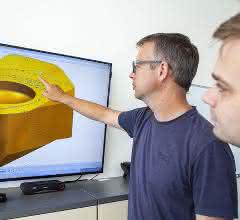
Development engineer Jan Bittner initially sat down with Jan Vlček from the product design and information department. They scouted the market for equivalent milling cutters, determined customer needs and expanded the requirements for the planned high-feed milling cutter range, later named SBN10. Bittner recalls: "We started with preliminary studies and initial prototypes and presented a number of ideas before producing the first samples. With a new development, there are always difficulties and challenges to overcome, but a few small changes at this early stage of development can have a big impact later on." For example, the first sample was found to conflict with a competitor's patent. With many companies constantly developing new WSPs, the market is crowded. "However, we worked closely with the designer to finally change our concept so that it is unique and at the same time fulfills the original task," explains the development engineer. In addition, colleagues in Sweden and North America were closely involved to ensure that the new WSP design did not conflict with any patents.
collided. "We also talked to colleagues in IP (Intellectual Property) about how we could make our design unique, and this was a completely new experience for me." Bittner's development team discussed the design with IP at every stage and made minor changes. "We had to confirm that we were patent pending at every stage of development and that we were not in conflict with other documents that had already been submitted. Eventually we got the go-ahead to proceed."
Comprehensive testing, avoid errors
When the project started in 2015, the target was to launch the new BNGX inserts in November 2017. "However, we had pressure from our sales teams who wanted the inserts sooner! Our aim was to push the process forward as quickly as possible, and we kept to the schedule," says tool development engineer Jan Bittner happily. The test phase ran until mid-2016. Field trials with customers were important. "This is the only way we can check practical suitability. We were confident that it was a good product, but no tests in our own development center in Šumperk can replace practical use cases at the customer's premises." Ultimately, so much was learned from the practical tests that further product improvements were identified. One example was the test at a customer in France, where a titanium-containing, austenitic chromium-nickel stainless steel was machined - an extremely tough and ductile material. The machining process requires a powerful machine that is capable of high feed rates at slow spindle speeds. "We compared it with a competitor's high-feed milling tool, which has similar properties to our SBN10." And the results were impressive: After machining three parts, the cutting edge of the competitor's insert was worn, forcing the operator to check and change the cutting edge in order to continue production. After machining eight parts with the SBN10 and BNGX inserts, the cutting edge showed only minor flank wear and was still in good condition to continue machining. Jan Bittner explains: "In addition to longer tool life, the cutting rate was 20 percent higher. The customer was so impressed that he immediately bought one of the new milling cutters and pre-ordered seven more at the beginning of 2018."
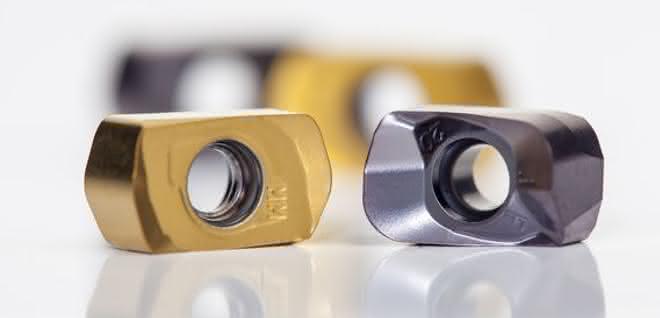
In the end, the development team had conducted over 20 practical tests with customers in France, Brazil, Poland, China, Italy, the Czech Republic and Germany. A total of five of these tests did not meet expectations, but helped the team to further improve the product. "The tests are an important process for us, as they contribute directly to improving product performance and reducing restrictions." It is crucial to react as quickly as possible during the testing process, eliminate problems and improve the design of the tool in a timely manner before it is used again for further tests. "In July 2017, we returned to Germany to a customer where one of the tests didn't go so well. When we return to the same location, we can create exactly the same test conditions. This is important to check whether the improvements we have made are having an effect. The use case went very successfully and it was great to present the new and improved version to the customer."
This was also the time to launch the new product on the market. Beforehand, it was once again clarified with the IP that the patent was available and that everything was ready for the market launch. Production ensured that enough indexable inserts could be produced for the launch.
Launching products on the market
Dormer Pramet was finally able to present its product range of BNGX indexable inserts and SBN10 milling cutters in November 2017, almost three years after the initial design preparation. By the end of 2018, the plant in Šumperk, Czech Republic, will have produced more than 30,000 BNGX indexable inserts in various sizes and chip breakers as well as 450 milling cutters in three different variants: end mills with threaded shank, end mills with cylindrical shank and shell end mills.
Jan Bittner sums up: "Product development is very much a team effort. Many colleagues around the world are involved in the development of our new cutting tools. From product management to design, the technology teams, production, test phases through to sales and marketing. No department is independent of the others. We are all interconnected, no department can be successful without the support of the others. Everyone has to pull together to successfully launch a product on the market. Our job in product management at a precision tool manufacturer is to look to the future, what do customers need, what will be important in five to ten years' time."
According to documents from Dormer Pramet / ag


You might also be interested in
In-house exhibition Bielefeld 2026
How DMG Mori thinks about the factory of the future
DMG Mori will be showcasing turning and milling expertise, automation solutions and additive manufacturing along the Machining Transformation (MX) at the Bielefeld 2026 in-house exhibition.
 read more...
Up to 50 percent higher cutting speeds
The current market situation is putting pressure on companies that rely on carbide tools: Rising raw material costs, volatile supply chains and limited predictability are putting pressure on the industry. Fette Werkzeugtechnik, a member of the LMT...
read more...A robot for all occasions
Industrial robots take on many tasks. Even milling with accuracies in the sub-millimeter range is now possible.
read more...High metal removal rate for high maneuverability
Large module gears for ship drives place high demands on machining. Switching from skiving to 5-axis simultaneous milling with high-feed tools considerably shortens the roughing process. Process parameters and a well thought-out tool selection are...
read more...Schunk shows flexible systems for electronics production
Schunk Electronic Solutions will be exhibiting modular, flexible systems for electronics production at Productronica 2025 - from stand-alone depaneling systems to fully integrated inline solutions.
read more...Hydraulic 4-jaw chuck for automated workpiece clamping
HWR Spanntechnik presents a hydraulically actuated 4-jaw chuck for automated workpiece changing. The clamping device is designed to enable short set-up times, precise clamping and high productivity in automation.
read more...Corner, face and plunge milling
Paul Horn is expanding the DA milling system for corner, face and plunge milling. With the DA65 variant, the system offers a larger cutting insert compared to the existing DA62.
read more...World premieres at the EMO 2025
From September 22 to 26, 2025, Grob will be presenting several innovations at EMO Hannover. The focus of the trade fair appearance will be on the latest 4- and 5-axis universal machining centers and the associated automation solutions.
read more...Flexible and efficient processing
New high-performance CNC series
Fanuc's presentation at EMO will focus on the new FS500i-A CNC series. The new CNC generation offers high user-friendliness, process optimization as well as digital and network technologies.
read more...