
Mobile energy sources
What is the state of the European battery market?
The battery industry has developed into a key supplier for many sectors. With the demand for mobile energy sources, the number of players along the battery value chain is growing - also in Europe. This strengthens the local market for battery integration and recycling as well as in the upstream steps.
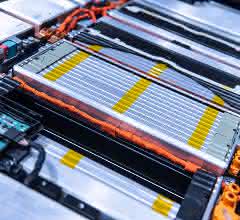
Rising raw material prices and the goal of sustainable production have triggered a trend towards increasingly looking for European raw material sources to produce battery cells. These offer a number of advantages, such as cost-effective and more environmentally friendly production, faster delivery, security of supply and the possibility of creating regional value chains. In addition, the scarcity of primary raw materials and efforts to establish a circular economy for battery cell production in Europe have increased the need to obtain secondary raw materials from recycling. Accordingly, there are a large number of activities in the Re-X sector involving collaborations between OEMs, established technology companies and established recycling companies on the European market.
Battery production requires industrial plant technology that can meet the high requirements in terms of throughput, process quality and degree of automation. Due to the increasing demand for lithium-ion batteries from the mobility sector, but also for stationary applications, the market segment has developed rapidly in recent years. Asian companies currently dominate the global market for battery cell production in the field of systems engineering.
The environment report on the European battery innovation system 2022 looks at how the European industry is responding to this situation through innovation and by taking trends and European requirements into account. By 2030, 20 new gigafactories from European and non-European operators are to be built in Europe. The battery cells produced there will be used in the field of electromobility in particular. In addition, cell manufacturers with no direct connection to the automotive industry are focusing on particularly innovative or sustainable technologies.
The innovation paths of the Fraunhofer Research Institution for Battery Cell Production FFB aim to support industrial partners in finding solutions to R&D challenges. To this end, production lines and laboratories are being set up that make it possible to investigate technologies at the appropriate level of production scaling. In addition to the physical infrastructure, digital twins of the cell production lines will bundle the data, generate further process understanding and thus contribute to accelerating technological development times.
The study was carried out as part of the "FoFeBat" project funded by the German Federal Ministry of Education and Research (BMBF). The aim of the project is to establish the FFB battery cell research production facility in Münster, a Fraunhofer institution that will enable research and development on battery cell production up to the GWh scale.
|
on
Fraunhofer FFB, www.forschungsfertigung-batteriezelle.fraunhofer.de


You might also be interested in
Research at the Intersection of Fiber...
New Fiber-Optic Technology Reduces Energy Consumption in Photonic Computers
Frozen at -196 °C: A new liquid-core fiber combines light and sound with high efficiency, opening up new avenues for quantum computing and photonics.
 read more...
A quantum computer that performs calculations using oscillations
When it comes to storing information, quantum computers have so far run up against technical limitations. Instead of electromagnetic storage, researchers are now using mechanical vibrations. Their vibrating memory can store significantly more...
read more...Hydrogen Pipelines Put to the Test
New real-world lab tests safety and resilience
The Federal Institute for Materials Research and Testing (BAM) is opening a real-world laboratory to study pipelines and components for the safe operation of future hydrogen networks.
read more...Research Platform for the Energy Supply of the Future
For the first time, the Karlsruhe Institute of Technology (KIT) is bringing together key hydrogen technologies in a single research environment. The facility is intended to demonstrate how the production, storage, transport, and use of hydrogen can...
read more...When the quantum computer arrives
The Research Race to Ensure the Security of Critical Infrastructure
How can we protect our critical infrastructure from attacks by quantum computers in the future? As part of the QUEST project, Darmstadt University of Applied Sciences is researching new methods—post-quantum cryptography—designed to withstand even...
read more...VDE study on electrical engineering
More retirements than graduations
According to a VDE analysis, more than 30,000 electrical engineers will retire by 2029 without enough graduates to replace them. This is due to falling student numbers and high drop-out rates.
read more...Giving lightweight construction a profile
Pultrusion: A process that forms fibers under tension
Pultrusion is developing from a niche process into a key process for lightweight construction and sustainable fiber composite structures. The Fraunhofer IWU shows applications from energy to mobility.
read more...Green hydrogen directly from the sun and water
A start-up project at the Karlsruhe Institute of Technology (KIT) aims to fundamentally simplify the production of green hydrogen: Mass-produced photoreactor panels are to be used to produce hydrogen directly from sunlight and water - without...
read more...Fraunhofer shows industrial future between AI, data and new materials
At Hannover Messe 2026, the Fraunhofer-Gesellschaft will be presenting solutions for a resilient industry: from AI and data rooms to hydrogen technologies and material and recycling innovations.
read more...