
When the quantum computer arrives
The Research Race to Ensure the Security of Critical Infrastructure
How can we protect our critical infrastructure from attacks by quantum computers in the future? Professor Fabio Campos of Darmstadt University of Applied Sciences is researching new methods of post-quantum cryptography as part of the international "QUEST" project, which are designed to withstand even sophisticated side-channel attacks. The project aims to help protect vital social and economic sectors—such as the financial and transportation sectors and the energy supply—from new cyber threats.
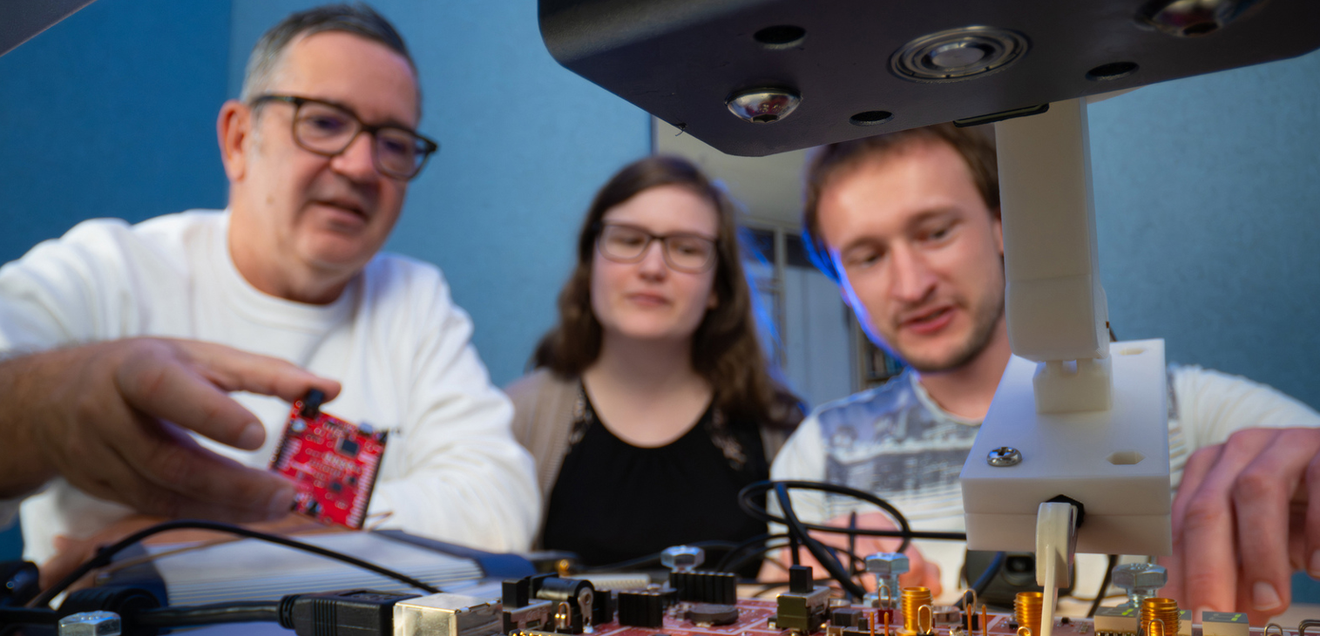
Fabio Campos likes to explain his research using the example of a pot. More specifically: using rice. “Imagine you’re cooking rice. The recipe is clear, but the outcome depends on many factors: what kind of stove I use, what kind of rice or water, how much energy is consumed, and how long it takes to cook.”
Side Channels: Gateways for Attackers
The professor of cybersecurity at Darmstadt University of Applied Sciences is working on a topic that sounds far less mundane than cooking rice: side-channel resilience in cryptographic methods. The principle behind it, however, is similar. Even if the recipe is clear, small deviations arise during implementation. In cryptography, these deviations are called side channels.
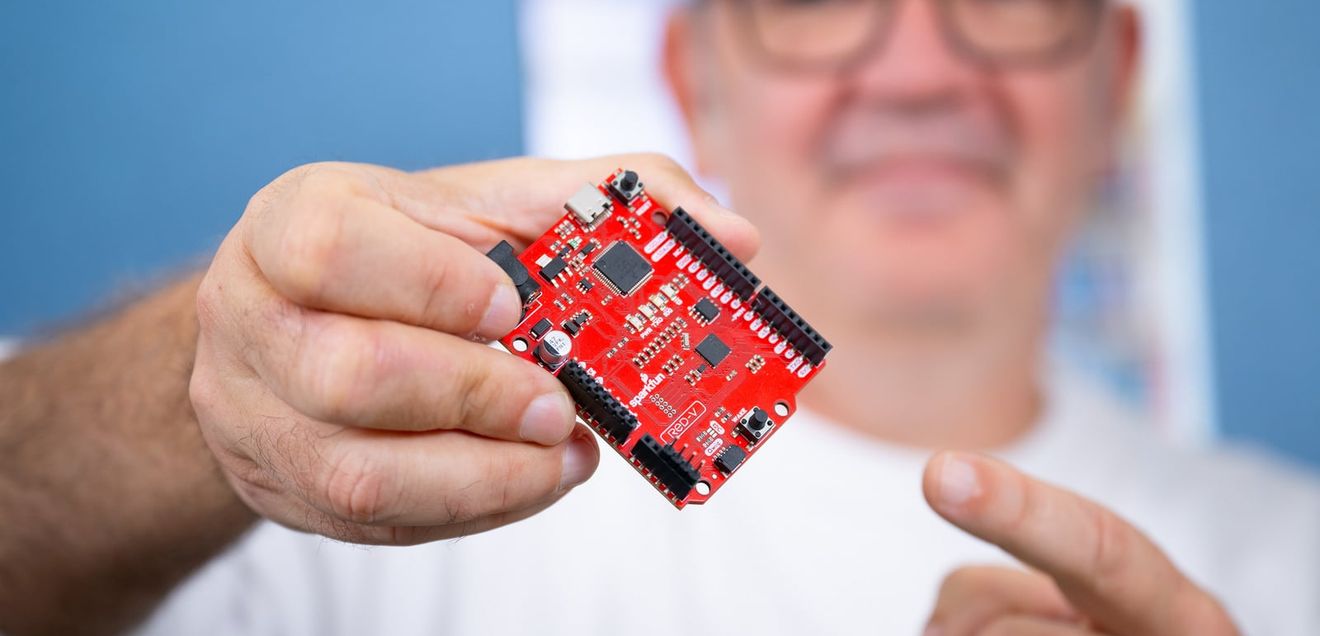
They can become entry points for attackers. This is because modern cyberattacks are by no means always aimed at weaknesses in algorithms or mathematical methods. Instead, they exploit physical properties—such as a system’s power consumption, electromagnetic emissions, or the time required for a cryptographic operation.
"With our research project, we want to make these attacks much more difficult in the future," says Campos.
"When the quantum computer arrives, we'll face an unimaginable problem."
Together with international partners, he is therefore working on new methods of post-quantum cryptography. The research project is called “Quantum-safe Embedded Systems with Side-channel Tolerance” (QUEST). It is funded by the Federal Agency for Innovation in Cybersecurity, or Cyberagentur for short. The project will receive substantial funding through 2029/2030. The goal is to achieve strong side-channel resilience in post-quantum cryptography and thereby provide greater protection for the social and economic lifelines of society, such as finance, transportation, and energy supply.
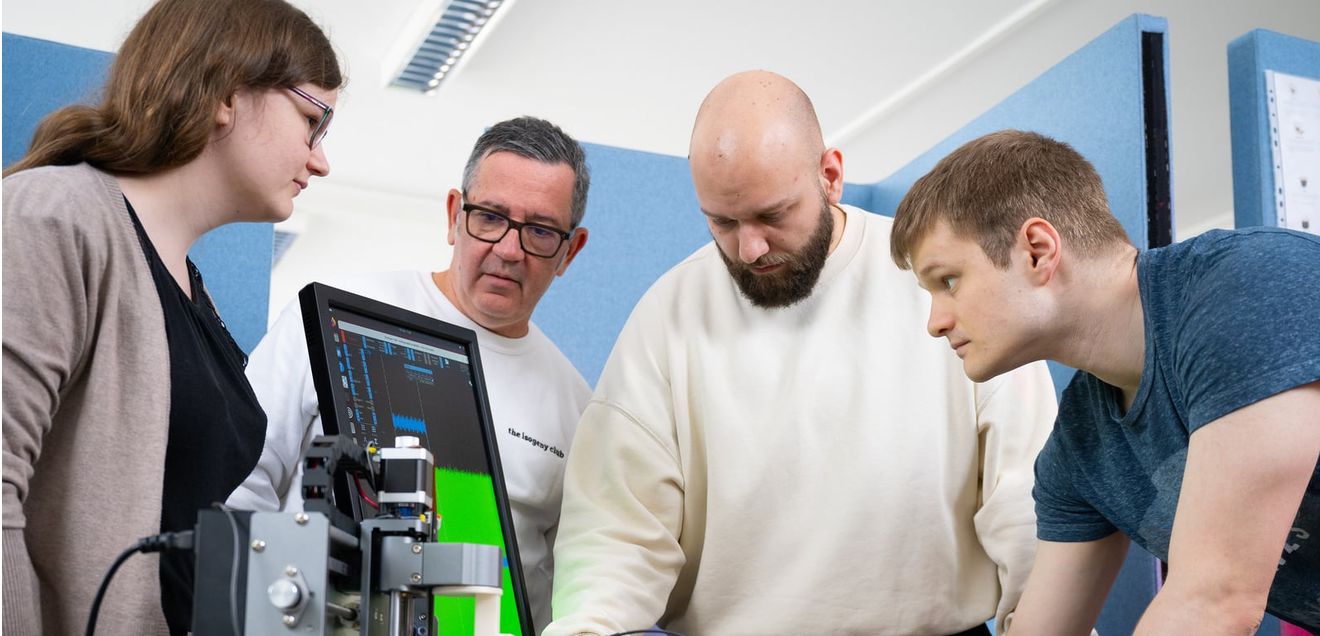
Darmstadt University of Applied Sciences is leading the project. Other partners include RheinMain University of Applied Sciences, Nanyang Technological University (NTU) in Singapore, and Chelpis, a cybersecurity company from Taiwan that specializes in post-quantum cryptography.
“This international constellation, which extends beyond Europe’s borders, is very unusual,” the 51-year-old emphasizes.
It came about through long-standing academic ties. Even as a doctoral student, Campos collaborated with researchers from the participating institutions. The global community of cryptographers working on side-channel resilience and error injection is relatively small.
"We have a 'good guy' team and a 'bad guy' team in the project."
Campos leaves no doubt that this research is urgent.
"When the quantum computer arrives, we'll face an unimaginable problem," says Professor Campos.
After all, nearly everything modern societies do today relies on effective cryptography: banking transactions, mobile communications, emails, messaging services, critical infrastructure, and the digital technology in vehicles, airplanes, and other modes of transportation. Powerful quantum computers could overcome a significant portion of today’s security mechanisms in a very short time.
No one knows exactly when that point will be reached. But Campos is certain that it will happen.
“We don’t know exactly when we’ll be able to build quantum computers with a large number of qubits—the basic unit of computation in quantum computers. But it will happen,” he is convinced.
Major technology companies such as Google and IBM have been investing in the development of these systems for years. Google has set 2030 as the target date by which the transition to quantum-secure methods should be completed.
"Who's faster and better? There's a lot of money at stake."
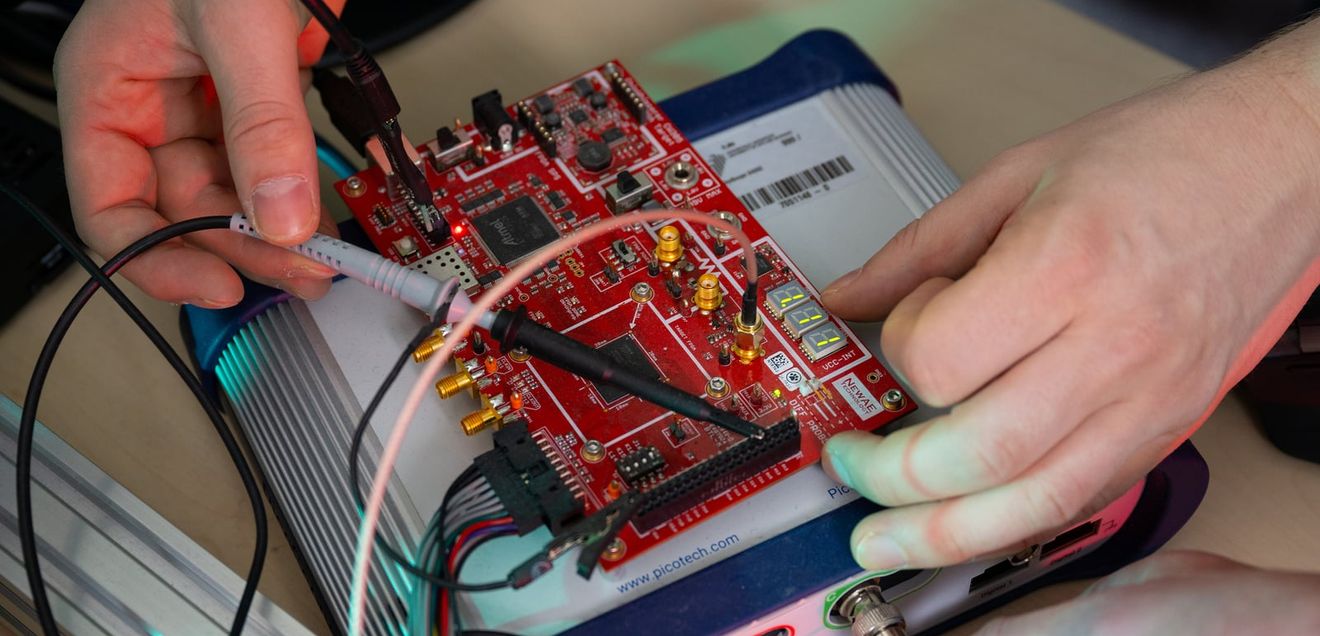
For Campos, however, the challenge lies not only in the technology companies' publicly known activities.
"However, we cannot rule out the possibility that others are keeping their activities secret. That is why our research is more than urgent. We must be prepared."
The QUEST project follows a principle that has long been established in the cyber world: the constant race between attackers and defenders.
"We have a 'good guy' team and a 'bad guy' team in the project," says Professor Campos.
While one team develops new defense mechanisms, the other attempts to target them specifically. Campos, along with a doctoral student and researchers from Taiwan, forms the blue team. Scientists from RheinMain University of Applied Sciences and Nanyang Technological University in Singapore take on the role of the red team.
First, the project partners intend to identify and analyze all available post-quantum methods. The focus is on determining how well these methods are already protected against side-channel attacks and error injections.
"Defining the status quo is very time-consuming," said the expert.
Only then does the actual cat-and-mouse game begin. The blue team develops new security measures, while the red team tries to break through them. The goal is to identify vulnerabilities in existing standards and procedures and develop appropriate countermeasures.
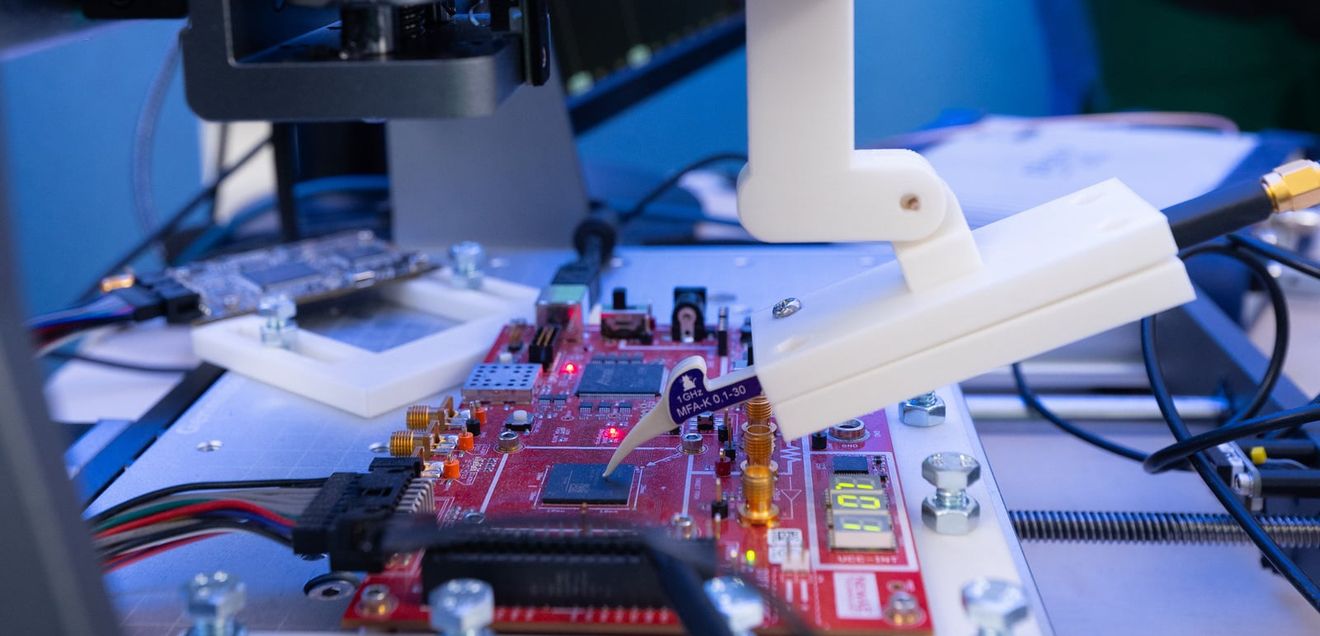
The researchers rely on what are known as cryptoprimitives. These are fundamental building blocks and algorithms required for complex security mechanisms and cryptographic protocols. These building blocks are universally applicable and form the basis of many applications.
"We want to develop an efficient and secure library of post-quantum computing primitives," says Fabio Campos.
The goal is to ensure security for a wide range of platforms and applications that will require quantum-secure methods in the future. Priority will initially be given to particularly critical areas.
“First, we want to establish safeguards against post-quantum attacks for the most critical, high-risk sectors—such as financial transactions, public infrastructure, and transportation,” explains Fabio Campos.
The smart refrigerator and the robot vacuum can wait for now. From the researchers’ perspective, something else is crucial: that chaos doesn’t break out on Day X. Instead, society, politics, and the economy need to be prepared.


You might also be interested in
Cybersecurity provider strengthens top...
Frank Kölmel becomes CRO in Bitdefender's B2B business
Bitdefender has appointed Frank Kölmel as Chief Revenue Officer of the Business Solutions Group. The experienced cyber security manager will assume responsibility for global growth, sales, marketing and the partner strategy in the company's...
 read more...
Kisters at the Hannover Messe 2026
Protection of 3D CAD data in product development
The protection of design data is becoming increasingly important in cross-company exchange. Today, modern software solutions offer a wide range of technologies to effectively protect 3D CAD data from unauthorized access and reverse engineering.
read more...How companies can prevent cyberattacks
Instead of using traditional malware, attackers use legitimate programs and system tools within their victims' IT environments. Malicious behavior can hardly be distinguished from normal user behavior. For companies, this means that security...
read more...Statement on the European Data Protection Day
How companies protect digital identities and data
On European Data Protection Day 2026, Christian Kubik, Manager Field Advisory Services Team EMEA at Commvault, explains why digital identities are at the heart of data protection. He shows how companies can prevent cyberattacks, secure data and...
read more...Interview with Franco Polo from Wago on cyber security and virtualization
Franco Polo, Vice President System Sales Germany at Wago, explains in an interview with Industrial Production which technologies the company is currently driving forward - also with regard to the upcoming PLC -, which trends are shaping the industry...
read more...Making increasing complexity manageable
Interview with Adrian Matenia from ABB on SPS 2025
In an interview with Industrial Production, Adrian Matenia, Product Marketing Director Smart Power at ABB Electrification, talks about current trends in industrial power distribution: networked systems, digital solutions, cybersecurity and...
read more...'TÜV Cybersecurity Study 2025'
Number of successful attacks increases significantly
The cyber security situation in the German economy is coming to a head: according to the new 'TÜV Cybersecurity Study 2025', 15% of companies reported at least one IT security incident in the last twelve months.
read more...AI integration and cyber security
Eurotech, an edge AI and IIoT company, and its subsidiary InoNet Computer, a German manufacturer of customized industrial PCs, will be presenting their extensive hardware and software portfolio at SPS.
read more...New approaches for a secure networked future
Analog Devices will be presenting 16 different demos at embedded world 2024. These are intended to show the company's ability to deliver system solutions that enable it to differentiate itself in the market
read more...