
Energy meter
Save the EEG surcharge with smart meters
A clearly documented delimitation of electricity costs not only provides a detailed overview of consumption, but was also introduced by the EEG in Germany to promote renewable energies.
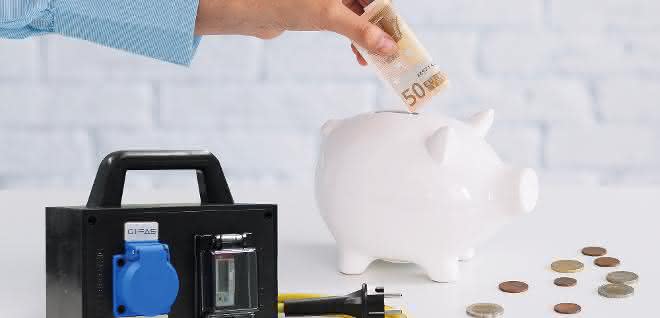
The German Renewable Energy Sources Act (EEG) stipulates that all electricity consumption is subject to a surcharge and forms the regulatory basis for levying the EEG surcharge. This leads to high sums if consumption is high. In order to be exempt from the levy for own consumption or to benefit from a partial waiver, the quantities of electricity passed on to third-party companies must be reported separately. However, the EEG offers various ways to be exempted from this levy or to receive a partial waiver.
This includes the case of self-suppliers and companies with high electricity costs. In order to be entitled to a cap on the EEG surcharge, electricity cost-intensive companies and self-suppliers with third-party supply must be able to prove the electricity consumed by third parties using calibrated electricity meters. To this end, the applicant must also be able to prove the electricity consumed by third parties using calibrated electricity meters.
However, the exemption or partial relief only applies to own consumption, which is interpreted very strictly. Third-party companies, such as suppliers, tenants or subsidiaries, are excluded from the privilege. As a result, the EEG surcharge must be paid for electricity that is passed on to third parties. This means that all electricity quantities passed on must be measured and reported to the Federal Office of Economics and Export Control (BAFA).
The amount of the EEG surcharge varies depending on the electricity consumer. Savings are possible under the following conditions: electricity-intensive companies in certain sectors have the option of limiting the EEG surcharge if they purchase more than 1 GWh of electricity per year. Self-suppliers who generate part of their electricity requirements themselves can reduce the EEG surcharge obligation under certain conditions - even to zero for existing installations.
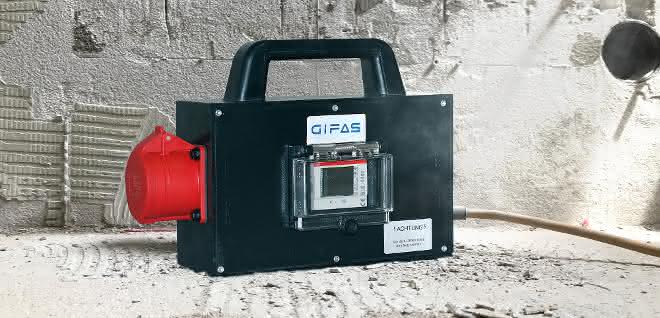
The metering devices that comply with calibration law are available in different versions: From quarter-hourly meter readings to load profile measurements, companies can choose energy meters with MID approval. The implementation deadline has been set by the legislator as January 1, 2021. If the metrological separation of electricity volumes with different EEG surcharge charges from January 1, 2021 is not successful, there is a risk of losing the surcharge reduction and, in the worst case, the "retroactive repayment" of the exemption from the highest EEG surcharge rate for the company's total electricity volume.
Requirement in the area of application
As a manufacturer of power distribution and lighting systems,Gifas Electric offers system solutions for every area of application. The company's mobile and stationary solid rubber distributors record the consumption of third parties precisely and separately. They ensure precise logging, whether with roller counters or intelligent meters with data transmission and data analysis. By using appropriate Gifas EEG distributors with integrated calibrated electricity meters with MID approval, companies can comply with the required verification obligation. The customer-specific distributors are already being used in a practical example from industry. The equipment and fittings were implemented in line with the customer's special requirements, including the installation of additional equipment. The stored measured values can be called up at the touch of a button without the need for additional measuring devices. This allows the meters to be seamlessly integrated into the existing infrastructure.
Solid rubber for demanding areas
In addition, the power distributors fulfill important characteristics such as piece-tested quality, easy handling and high quality of the solid rubber housings. The material plays a central role in the distributor housings: solid rubber made from butyl rubber. The elastomer has numerous properties that make it a suitable material for products subject to heavy loads. These include, for example, excellent damping of vibration and impact energy, good resistance to acids and bases, very good weather, UV and ozone resistance and high electrical insulation capacity. Of course, the distributors with energy meters can also be used for general consumption or optimization monitoring in other areas of application, for example as part of an energy management system in accordance with DIN EN ISO 50001.


You might also be interested in
Highly Automated Injection Molding
Six-axis robots automate the entire handling process
From part handoff to loading and unloading the injection molding machine to quality inspection: Yaskawa six-axis robots automate the entire handling process in a highly integrated production line for safety-critical sight domes.
 read more...
Conveyor systems that adapt
Modern conveyor systems must reliably transport different product sizes, shapes and materials. The new modular product system from Kipp offers flexible, modular solutions for this: Adjustable side guides ensure precise alignment and gentle...
read more...Handling and production logistics
Speed beats planning
Unpredictable fluctuations in demand pose new challenges for fulfillment logistics. Viral trends, political decisions and changing customer behavior are making traditional planning models obsolete.
read more...Loading and unloading machines
Artificial intelligence and ergonomic lifting
Loading and unloading machines ergonomically and efficiently - Schmalz supports metalworking companies in this. At Euroblech, the company will be presenting solutions for intelligent and ergonomic handling with vacuum.
read more...Products of the year 2025: the competition starts again
The INDUSTRIAL Production Products of the Year are entering a new round. This year, our readers can vote in eight categories. We are also awarding a special prize.
read more...Josko relies on vacuum technology from Schmalz
Lifting 80 kilograms 80 times in 8 hours: Vacuum expert Schmalz has developed a solution for the highly automated industrial company Josko that solves this task in the blink of an eye with the help of a suction spider.
read more...Interview with Dietmar Schlenker from Indeva
"Logimat is our in-house exhibition"
Indeva presents its latest products at Logimat 2024. However, Managing Director Dietmar Schlenker also looks further into the future in an interview.
read more...Efficient palletizing and depalletizing of KLT boxes
At Logimat 2024, the company from Gescher-Hochmoor in Münsterland will be demonstrating the palletizing and depalletizing of KLT containers within a line.
read more...INDUSTRIAL Production Products of the year...
3rd place, metalworking category: Schmalz
Schmalz automates sheet metal handling with the ivOS Sheet Metal Solution Kit. Companies can use it to automate the loading of machines - simply, flexibly and economically. The kit was awarded 3rd place in the metalworking category.
read more...