
Dormant production facilities
Electrical tests before restarting
In recent months, many production facilities have been temporarily shut down due to the coronavirus situation and are now slowly starting up again. Before restarting, however, the production plant should be electrically checked. A guide. By Lukas Göck
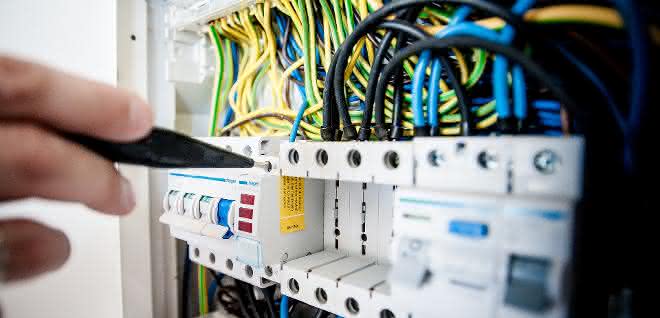
In recent weeks and months, many production facilities have been temporarily shut down due to the pandemic and the associated protective and hygiene measures. Contrary to what one might think, this shutdown has led to changes in the condition of the machines and systems used. As the old saying goes: "He who rests, rusts." This concept also applies well to this situation, as downtime causes so-called standstill damage, which can impair operational safety and occupational health and safety. This is why they must be identified and rectified before a production facility is restarted.
A special focus should be placed here on testing electrical safety. According to the DGUV (German Social Accident Insurance), employers are obliged to ensure the electrical safety of production facilities. In addition to the annual inspection of electrical systems in accordance with ZFgA 81b, § 13, clause 3602, the DGUV also states that the entire electrical system of a production plant must be checked before initial commissioning, after a modification or repair and before recommissioning.
The tests before recommissioning must be carried out in accordance with DGUV regulation 3. The exact requirements for the procedure can be found in the accident prevention regulation for electrical systems and equipment. As the document is somewhat too general, some tried and tested procedures are described below and the tools used are discussed.
Inspection and visual inspection of the production facility
Traffic routes and entrances and exits, escape routes
First of all, the production facility must be inspected. Has equipment and material been placed in the traffic routes during the shutdown or has the production facility been used as a storage area? If so, tidy up and remove anything that is obstructing the paths and put it in a new place so that it does not endanger work safety.
The same applies to entrances, exits and escape routes. These must also be freely accessible.
Cable routes
Before starting to check the electrical system, it is essential to check the cable routes. The main concern here is animal lodgers that may have made themselves at home during the break, bitten into cables or built a nest for their offspring. Another recurring problem is wasp nests in de-energized CEE connections or in electrical distribution boards. All of these things must be cleaned up before voltage is applied to the electrical cables again. Failure to do so can lead to serious short circuits and even fires.
Electrical tests
The aforementioned checks may be carried out by any member of the factory maintenance team as long as the system is not yet energized. The checks and measurements described below may only be carried out by a qualified electrician. This requires electrical engineering training (journeyman/skilled worker, state-certified technician, industrial or craft master or graduate engineer) with an additional examination to become a qualified electrician. This is a further training course that must be refreshed at fixed intervals. The VDE 1000-10 standard specifies the corresponding "Requirements for persons working in the field of electrical engineering".
The tests described below begin with the supply of electricity from the energy supply company and end with the end consumer. The entire process can be seen as a string of pearls. One test point follows the next and they all depend on each other. As not all production facilities are structured in the same way, one or other test point will of course not be relevant. For this reason, the description is kept as general as possible.
Transformer station
If the production facility is supplied by its own transformer station, this must be checked first. For all test steps, the transformer station must be disconnected from the power supply and secured against being switched back on. How this is done depends on the type of transformer station.
The first test step is a structural inspection:
- Is there any damage to the building fabric?
- Are the roof and rainwater drains in order and undamaged?
- Is the floor dry and undamaged?
- Are there no foreign objects (e.g. leaves / branches) or animals in the station?
Cleaning may only be carried out dry, without the use of water.
The second test step relates to the high-voltage side of the transformer. Before starting the check here, an insulation mat must be placed on the floor of the transformer station to ensure personal protection. Wearing protective gloves is also recommended.
Caution: We strongly recommend that you repeatedly check that there is no voltage!
All supply cables and rails are checked for damage and dirt. Any necessary cleaning must not be carried out with water-based cleaning agents. Special cleaning agents are available for this purpose. After all, 10,000 V to 20,000 V are present at the transformer station feed. Moisture can cause a huge fireworks display when it is switched on again.
The cables and copper busbars of the feed are screwed, so it is necessary to check the torques of the screw connections. However, this should only be done once the system has been checked again to ensure that it is voltage-free. The torques are described in the system documentation and must be checked with a suitable torque wrench.
All work should be documented with before and after photos in order to be able to prove the correctness of the work carried out in the event of an accident.
What applies to the high-voltage side of the transformer is also relevant for the low-voltage side of the station. Although you are usually "only dealing with 3 x 400 V" here, these are also sensitive to water and life-threatening.
The third test of the transformer station can only be carried out once the entire system has been switched on again. In addition to checking the outgoing low voltages, the uniform utilization of L1 / L2 / L3 must be checked and documented.
After the station has been operated under load again, it is advisable to check all live parts with a thermal imaging camera. The images taken should be included in the commissioning documentation. If red zones (excessive temperature) are detected, appropriate measures must be taken immediately to rectify the fault. The station must be switched off immediately.
Network quality
Another test is to check the power quality. A special measuring device must be available for this purpose.
The measured total harmonic distortion(THD) of the sine wave voltage must not exceed five percent. In the case of an audio amplifier, this measured value is called the distortion factor to make it easier to understand. If the value of 5 percent is exceeded, the cause must be found and eliminated. Causes can be defective frequency converters, lighting with electronic ballasts, switching power supplies, etc. An increased current flow in the protective conductor may indicate that the leakage currents of various mains filters are too high. This can also lead to distortion (THD) of the sine wave voltage.
The following standards are defined for the different device classes and specify the permissible limit values per device / installation environment:
- Standards for equipment
- Standard IEC 61000-3-2 for low-voltage equipment with a rated current of up to and including 16 A
- Standard IEC 61000-3-12 for low-voltage equipment with a rated current greater than 16 A and not exceeding 75 A
- Standards for the quality of distribution networks
- Standard EN 50160
- IEEE 519
- Directive G5/4
- Standard D.A.CH.CZ
- Standards relating to compatibility between the distribution network and products
- Standard IEC 61000-2-2 for public low-voltage networks
- Standard IEC 61000-2-4 for low-voltage and medium-voltage industrial installations
The limit values of the individual classes corresponding to the standards are already checked during manufacture and installation. The measurements taken for the restart only serve to check whether they are still being complied with.
Emergency power supply and emergency lighting
If the power supply is interrupted anyway because the transformer station is being overhauled, this is a good time to check the systems for mains backup operation, if available. There are basically two types:
- Systems that can bridge a short-term outage
- Systems that enable continuous operation
Bridging short-term absences
The emergency power systems for short-term operation are usually battery-powered systems. The DC voltage supplied by the battery is converted into 3-phase AC voltage using an inverter, making it possible to keep production running for a short time, for example to enable an orderly shutdown.
The cleanliness of the system and the measurement of all electrical parameters specified in the system documentation must also be checked. Furthermore, the condition of the batteries must be checked for leaks and correct screw connections. The quality of the sine wave voltage output must also be checked. This is where the mains analyzer mentioned above comes into play again.
Bridging for continuous operation
The second form of emergency power systems are engine-generator systems. A diesel or petrol engine drives a generator and continuously supplies electrical energy - until the fuel is used up. Such systems are usually installed outdoors and initially require a thorough inspection of the structural condition:
- Is everything permanently installed?
- Are there no nesting animals?
- Are all operating materials available?
The SFAO is not required for these tasks; this is the area of responsibility of the mechanical plant maintenance team. The EFK is in demand again when it comes to switching on the emergency power system. As with the battery-supported emergency power system, the level and quality of the electrical energy output must be checked after the motor-generator combination has started up. A check must be carried out in accordance with the system documentation and any deviations must be documented and possibly rectified if values are outside the tolerance.
The emergency lighting can be checked when the transformer station is still switched off and the emergency power system is not yet switched on. After longer periods of standstill, it will be found that the batteries of the emergency lighting are either empty or deeply discharged and therefore defective. This means that all lamps that are intended to illuminate escape routes and traffic routes must be checked for functionality and replaced if necessary.
Main low-voltage distribution
The main low-voltage distribution board is connected directly to the transformer station and the emergency power system, if present. The following also applies here: Before starting the test work, the distribution board must be disconnected from the power supply and secured against being switched on again.
After visually inspecting the distribution board and cables for damage, all screw connections and plug-in terminals must be fully checked. Loosening can occur during a standstill. In the worst case, the resulting contact resistances can lead to a fire in the system. Once the visual and mechanical inspection has been completed, the system is reconnected to the power supply and the electrical functionality of the components in the cabinet is checked.
The circuit breakers and load-break switches are tested. If these do not work, they must be replaced immediately.
Any existing switchover devices for emergency power supply operation were already taken care of beforehand by testing the emergency power supply.
All voltages and circuits must also be measured at the distribution board in terms of voltage level and the quality of the sine wave voltage. The measuring devices already mentioned are used. The complete documentation of the system must be consulted for this purpose. In particular, circuit diagrams of the distribution system must be available and correct. Any deviations must be documented. The uniform utilization of L1 / L2 / L3 is also important. This must be entered in the system documentation. This applies to all measured values.
Before and after photos should be included in the documentation.
Earthing test
The functionality of the personal protection devices in the distribution boards essentially depends on the earthing resistance of the electrical system. This is determined during the creation of the electrical distribution boards and depends on the type of network used (IT, TT, TN). The measurement procedure is very complex and requires special measuring equipment.
A detailed description of the measurement methods is compiled in this document "Guide to earthing tests" (download below).
For the recommissioning test, it is important that the value determined during the installation of the electrical systems is still achieved and does not deviate upwards. If this is the case, the cause must be sought. One common reason is that the soil is too dry. Especially in our dry summers, increased earth resistance can occur very quickly. If this is the case, the new environmental conditions must be taken into account by changing the earthing method. The relevant standard is DIN VDE 0100-410, which specifies a maximum value of 100 Ω for the earthing resistance. In the old version of the standard, a minimum value of 2 Ω was defined, which is no longer valid today.
Checking the sub-distributions
In a large-scale production plant, there is not only the main distribution board, but also many downstream sub-distribution boards. They generally contain the direct personal protection (RCD/FI). It is important to trigger the RCDs (FIs) responsible for personal protection using the test button. If malfunctions occur here, the switches must be replaced.
The circuit breakers for the end users must also be checked and replaced if defective. The visual inspections and cleaning described above must also be carried out on the sub-distribution boards when the system is de-energized.
Testing of permanently installed electrical systems
All power supply connections of the permanently installed systems must be checked for damage and tight fit of the cable entries. If possible, the permanently installed systems should be put into operation briefly to check their function. Permanently installed systems also include lighting, sockets and terminal boxes. These must be tested with a test device that allows testing in accordance with DIN VDE 0100-600.
Damage and malfunctions must be rectified before the production system is commissioned. Here too, it is advisable to take before and after photos in order to have proper proof of the work carried out. Any deviations in labeling from the existing documentation must also be corrected.
Testing of mobile electrical systems
Movable electrical appliances in production (screwdrivers, drills, monitors, PCs, printers, etc.) are checked for damage to plugs and cables. A protective earthing test is also required. The aforementioned measuring device for measuring the protection class is used for this purpose. A short function test is also useful. Devices with damage to the insulation must be taken out of service.
Audit of the IT facilities
As far as the data connection is concerned, IT equipment is not covered by DGUV Regulation 3, but as we are also dealing with cables and connectors, it does no harm to check them. If the inspection reveals any damage, it is advisable to check with a cable tester.
The check prevents damage to the end devices and ensures proper operation.
Photographic, digital and written documentation of the test results
The "DGUV Regulation 3" does not specify any requirements regarding the documentation of the restart test. However, it is advisable to create your own restart documentation in addition to the prescribed documentation for the annual inspection and the general technical documentation of the production system (circuit diagrams, etc.).
In addition to the general data such as:
- date
- Time of day
- Place
- Duration
- Subject of the inspection
include those already mentioned several times:
- Before and after photos
- measured values
- Names of the persons involved
in such a document.
At the latest when an accident or damage to the production plant occurs, insurance companies and courts will ask for documentation. If this is available, it will be much easier to settle the claim.
The question remains: In what form is the documentation archived? In this day and age, digital form is of course the best option. However, the documentation should not be archived on an internal IT system, because in the event of a total loss of buildings and systems, the archived data will also be lost. Outsourcing to an external cloud is generally not recommended, as these documents contain highly security-critical information.
There are two solutions to this question:
- The pure paper form, which is stored outside the company under lock and key. "Old school", but tried and tested.
- USB sticks that are kept by the responsible employees. A master stick can also be stored outside the company under lock and key.
Both forms have advantages and disadvantages and it is up to the management to decide which form to choose.
If all these steps have been carried out correctly, the basis has been created for a safe restart of production. The work safety of the electrical system has been checked and the production machinery can start up.



 1.9 MB
You might also be interested in
Helu makes its first trade fair appearance under a new brand name
Helu Kabel will be presenting itself as Helu for the first time at Hannover Messe 2026, showcasing system solutions, Heluchain cables and new industrial luminaires.
 read more...
Strategic realignment with brand relaunch
In future, Helukabel will trade as Helu
The Helukabel Group is parting with part of its name: in future, the company will only operate under the Helu brand. With this step, the specialist for electrical connection technology is underlining its strategic development from a classic cable...
read more...Modular plant construction for corrugated board
Insight into the production of corrugators at BHS Corrugated: Automated, modular and equipped with Helukabel components.
read more...Best quality for the steel
Conditions in the steel industry are harsh and inhospitable. The machines used must be able to withstand the demanding environmental conditions in order to deliver the best quality at all times.
read more...If the standard cable is not sufficient
Lapp offers cables for countless applications - but not for all of them. From time to time, the developers have to modify a standard cable or develop a special cable.
read more...Slight decline in sales, strong investments
The Lapp Group has not been spared from the weakening global economy. However, the company only recorded a slight loss in the past 2024 financial year.
read more...Electrical connection technology
Cables and wires for industrial automation
Heukabel offers system solutions for cable routing from a single source. The subsidiary EKD Systems specializes in tailor-made cable drag chains made of steel, stainless steel and plastic, which are used in moving machines and systems as well as in...
read more...Lapp relies on Ultramid from BASF
Mobile charging of electric vehicles
The automotive industry is currently undergoing the biggest transformation in its history. The boom in battery electric vehicles in particular is presenting the industry with major challenges. Lapp, as a supplier of cables and connection...
read more...Cable handling application
At this year's Motek, ArtiMinds Robotics is showcasing a robot-based automation solution for the sensor-assisted assembly of flexible cables in connector housings.
read more...