
Interview
Trend towards sustainability
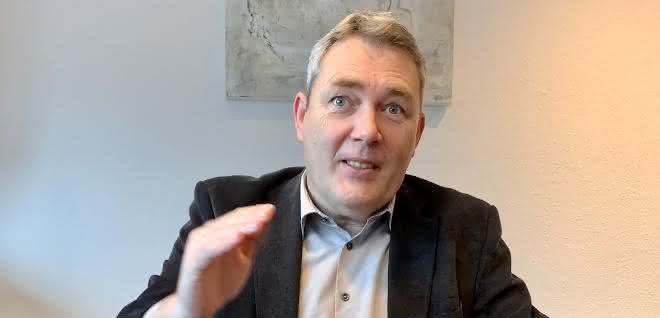
At Stabilus, Jürgen Roland is responsible for business with industry. In an interview with INDUSTRIAL Production editor-in-chief Daniel Schilling, he reveals the most important technological trends in linear technology and shock absorbers, which industries are strong again and how Stabilus has positioned itself for the future.
Mr. Roland, you are responsible for the industrial business at Stabilus. What new technical trends do you see in linear technology and damping technology? How are the requirements of industry changing in this area?
I see three important trends that are currently occupying us. The first is sustainability and, more specifically, savingCO2. We support our customers in reducing their energy consumption and increasing their energy efficiency. The second trend is definitely linked to this: There is a trend towards higher dynamics in applications thanks to modern linear and servo drives; at the same time, however, we are also developing damping technology to absorb these dynamics in a low-wear and resource-saving way. The third trend is the integration of sensor technology into our components, which not only provides up-to-date data but also allows us to forecast maintenance requirements. The use of our products as braking elements or isolators allows measurements to be taken at critical points in the application.
For a few years now, companies such as ACE and Hahn Gasfedern, which are all ultimately active in the field of linear and damping technology, have been under the Stabilus umbrella. What does Stabilus plan to do with the brands?
The merged "Industrial" division, for which I am responsible, has now been in existence for a year and we successfully completed the first fiscal year at the end of September. Our expert brands such as ACE and Hahn Gasfedern will continue to exist in the future. Each expert brand is characterized by its own business model, which is reflected as a strength in the bundled offering. However, we will mark our affiliation with Stabilus with an "endorsement" in the logo. It is important for our customers to have a single point of contact who can provide them with competent advice on all of our expert brands and technologies. Of course, our developers also work internally on joint, cross-brand products and solutions.
Stabilus recently acquired a stake in the technology company Synapticon and entered into a partnership. Does this also mean a technical cooperation with Stabilus subsidiaries or is it initially more about rounding off the portfolio in the area of drives and control software?
Digitalization is a clear growth driver for us. Our motion control solutions of the future will be more intelligent, offer a higher level of connectivity and interact with the environment using state-of-the-art sensors. That's why the cooperation with Synapticon makes sense: our industrial know-how and Synapticon's software and digital expertise fit together very well.
Which industrial sectors among your customers are currently developing best?
For us, this is the Mobility division, which includes construction and agricultural machinery as well as commercial vehicles. Agricultural machinery manufacturers in particular are growing strongly. Mechanical engineering as such is on the rise again, but to a lesser extent. The aerospace sector remains subdued. What has picked up strongly for us, however, are e-commerce, the spare parts market and our sales partners at home and abroad.
Perhaps the most striking change in German industry is the transition of the automotive industry from combustion engines to electric drives - how does this affect Stabilus?
This has little effect on our role as a supplier to the automotive industry: Applications with gas springs are not directly related to the drivetrain. What is changing for us in the industry are the assembly processes, for example. New solutions are needed here, and we are working closely with machine and plant manufacturers. We are seeing increased demand for vibration isolation of shakers for material testing of large batteries.


You might also be interested in
Sustainability Through Simulation
Digital material selection reduces CO2 emissions by 40 percent
The use of digital material simulations can significantly reduce CO₂ emissions during the development and manufacturing of components. A real-world project by Schunk and Cadfem demonstrates how data-driven material selection can yield savings of up...
 read more...
From ERP System to AI Platform
RNA, based in Aachen, manufactures up to 2,000 custom-designed feeding systems annually and handles all order processing through a central ERP platform.
read more...Cybus Brings in Siemens Executive Stefan Schwab to Lead the Company
The Hamburg-based software provider Cybus will have a dual leadership structure going forward: Stefan Schwab will join co-founder Peter Sorowka as co-CEO.
read more...Artificial Intelligence for the Physical Space
Alibaba Expands Qwen Model Family with a Robotics Suite for Physical AI
Alibaba is expanding its Qwen model family with a robotics suite for Physical AI. The three models—for manipulation, navigation, and simulation—are designed to assist autonomous robots with complex tasks in real-world environments.
read more...5 Challenges for AI Projects in Manufacturing
Manufacturing companies have high hopes for AI. IFS highlights the five most common reasons why AI projects fail.
read more...Implementing Manufacturing Software: 5 Practical Tips
To remain competitive in the market in the future, more and more companies are considering digitizing their CNC manufacturing processes. The right software solutions can make process knowledge transparently accessible and significantly reduce the...
read more...AI automation specialist reorganizes...
Generation change at Insiders Technologies
After almost 30 years at the helm, Werner Weiss is handing over the management of Insiders Technologies. Andree Albrecht takes over the management after a transition phase.
read more...Intelligent brownfield networking
Many industrial companies are struggling with established plant structures and proprietary interfaces. Stefan Klaus' presentation will show in a practical way how brownfield environments can be efficiently networked with open technologies and made...
read more...Factory-X in practice
How can set-up processes in highly variant production be automated efficiently? Markus Benndorff from soffico shows how Factory-X, industrial data rooms and modular architectures create new possibilities for flexible production concepts.
read more...