
DC technology from Lapp
Direct current: A turnaround without change
Direct current is becoming increasingly important, and the long-term phase-out of fossil energy sources can only be made efficient if there is a consistent switch to DC electricity in order to avoid conversion losses.
Electricity comes from the socket. That's right. But it's not quite as simple as that. Especially when the source for generating electricity comes from renewable energies such as photovoltaics or wind power. These produce direct current (DC), which must first be converted into alternating current (AC) via inverters. However, if the end consumer is also a digital device such as a laptop, smartphone, an LED light, the charging point for electric vehicles or the intelligent production unit in a factory, it must be converted twice, as these end consumers only work with direct current (DC). This results in conversion losses.
"We are increasingly living in a DC world. The long-term phase-out of fossil fuels can only be achieved efficiently if we consistently switch more and more to direct current and avoid conversion losses. In short, we need a turnaround without change," emphasizes Guido Ege, Head of Product Management and Product Development at Lapp.
The advantage of direct current: direct current eliminates the losses that occur today when converting between alternating current (AC) and direct current (DC) and vice versa. An energy grid consistently designed for direct current would achieve an overall efficiency of 90 percent - compared to 56 percent today. Several large lignite-fired power plants could then be shut down.
However, the big turnaround without change is yet to come. So far, there have only been niche applications in industry. Large automotive companies, for example, have installed test cells that want to take advantage of these efficiency gains, which can be as high as 30 percent.
Need for action on many levels
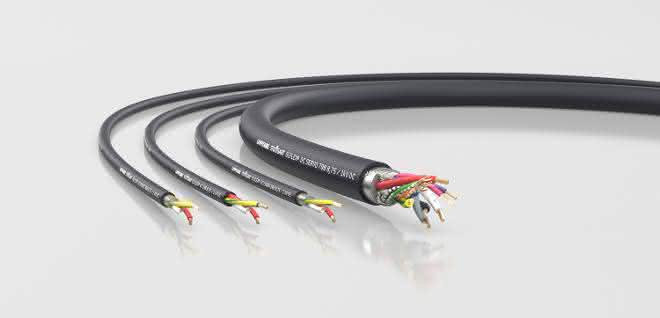
There is still a need for action on many levels. Lapp is actively developing cables and already has a cable portfolio for various applications. These include the Ölflex DC 100 with new color coding of the cores according to the 2018 updated standard DIN EN 60445 (VDE 0197):2018-02 for DC cables: red, white and green-yellow. Other cables include the Ölflex DC Servo 700 for stationary applications and the Ölflex DC Chain 800 made of TPE for moving applications. Or the first DC robot cable Ölflex DC Robot 900 with TPE core insulation and PUR sheath.
There are further areas of work in standardization, and DC-compatible components still need to be made available, for example for plugs and switches. More research needs to be done in this area, because with direct current, for example, an arc fault does not go out on its own. This can be life-threatening.

There are still many unanswered questions. Lapp is therefore a funded partner in the DC-Industrie2 research project and is investigating the long-term stability of insulation materials for cables and wires. Lapp and the Ilmenau University of Technology have discovered in tests that the insulation materials exhibit different aging behavior in a DC voltage field than in an AC voltage field. Guido Ege: "We see great economic opportunities in direct current. Not only for the automotive and process industries. Many consumers are already using direct current today. By reducing conversion losses, we are increasing efficiency. By eliminating converters, we need fewer components and therefore less space. Regenerative and decentralized energy sources can be integrated more easily. Kinetic energy is also fed back via DC. The electric motor becomes a generator," says Guido Ege, listing the advantages.
Lapp is already a sought-after partner when it comes to direct current. The company has had a DC-compatible portfolio for photovoltaic and wind power systems for years.
DC in the shaft power plant
DC is also used to avoid conversion losses in wave power plants. For example, a wave power plant from the Munich-based company Sinn Power is in operation in the port of the Greek city of Heraklion. In future, the Ölflex DC 100 DC line for the 800 V DC bus will be used there for the decentralized mini-grids. The cable will bridge a distance of around 700 meters to the feed-in point. The Ölflex DC 100 is permanently laid in installation pipes on the harbor wall and runs to the grid inverter for feeding into the public power grid.
Although medium voltage and high voltage (HVDC) is not Lapp's area of business, it is very often the case that the company is nevertheless the partner of choice for special infrastructure projects. Lapp has developed a customized solution for the Sortimo Innovation Park in Zusmarshausen. Here, the specialist developed the complete DC BUS for connecting the charging stations, including hybrid DC cables for control and online monitoring.
The cable structure is sophisticated: the cable, specially designed for the charging park, consists of an aluminum conductor with a cross-section of 30 square millimeters. The core insulation is radiation cross-linked and made of polyethylene. The shielding is achieved using copper wires spirally applied over the core. The special feature: The structure is supplemented by two stainless steel tubes, each fitted with six fiber optic cables. These are used to measure the temperature and raise the alarm if the temperature at the charging points becomes too high. The BUS is then used to control where alternative free charging capacities are available. The outer sheath is made of PVC in accordance with IEC 60502.
Conclusion: "DC technology will decisively change industrial production and the energy supply of cities and urban districts. It therefore represents an important element of the energy transition," emphasizes Guido Ege. as


You might also be interested in
Switch makes network status transparent
Gigabit Ethernet is becoming increasingly important in mechanical engineering. The scalable infrastructure enables a step-by-step approach in which the backbone is first implemented on Gigabit.
 read more...
Motto "Sustainable!"
Schmersal also wants to support customers in reducing their carbon footprint along the value chain. This starts with the material that most safety switches are made of: Plastic.
read more...Wireless industrial switching devices
Radio-based communication as added value in the industry
The Steute Technologies business unit Controltec presented itself at the Hannover Messe with wireless industrial switching devices in a suitable environment - at the Industrial Wireless Arena + 5G Networks & Applications at the VDMA joint stand.
read more...Guard locking devices for harsh environments
The transponder-coded CTS safety switch with guard locking from Euchner has the highest level of safety and can be used in a variety of applications thanks to its dimensions of 135 mm x 31 mm x 31 mm, a maximum locking force of 3,900 N and flexible...
read more...Liquid separator keeps pumps dry
Vacuum clamping minimizes distortion and enables five sides to be machined in one clamping operation. The use of cooling lubricants poses a challenge: If they get into the vacuum generator, they can cause serious damage.
read more...It started with a timer for X-ray machines
In 2023, the automation expert Omron can look back on 90 years of innovative company history, in which many technological boundaries have been crossed and milestones set.
read more...Protection against cooling lubricant
Liquid separator from Schmalz keeps pumps dry
Anyone clamping with a vacuum during CNC machining must protect the pump from cooling lubricant. The NLS liquid separator from Schmalz separates the cooling lubricant and returns it to the running process - without interrupting the vacuum.
read more...Euchner at the automatica 2023
Euchner presents future-proof safety solutions for automation
Euchner is presenting its latest new developments for communication via IO-Link, via AS-i Safety at Work and via the common fieldbus systems at automatica under the motto "Smart Safety".
read more...Network maintenance
In terms of Overall Equipment Effectiveness (OEE), it is essential to proactively identify and eliminate the causes of system downtimes.
read more...