
Ash conveyor
Drive chain solves ash problem in waste incineration
In a waste incineration plant in the Netherlands, the service life of the drive chains installed on an ash conveyor was doubled because the plant operators use special chains from Tsubaki.
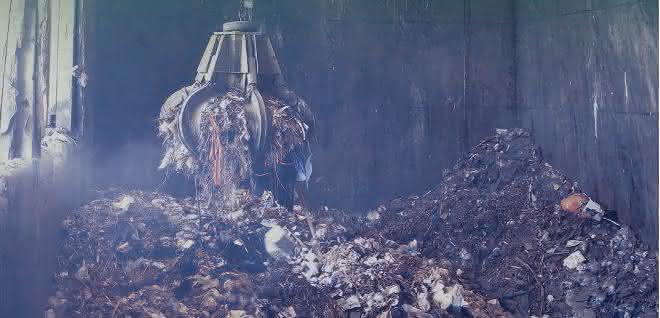
The amount of energy generated from waste worldwide is growing noticeably: from an estimated 28.4 billion US dollars in 2017 to an expected 43 billion US dollars by 2024, according to analysts at Statista. By incinerating the waste at very high temperatures of more than 1,000 degrees C, modern incineration plants also produce very little air pollution. In some cases, the resulting ash can even be reused as a building material or fertilizer.
One of the operational challenges that all energy plant waste has to overcome is the handling of this ash. Until about 25 years ago, it was washed by passing it through several sluices. However, this was very inefficient. This is why most operators now prefer bottom ash handling systems. Plant manufacturers have developed standardized, tailor-made systems for this purpose.
Water-cooled ash
Because the ash is so hot during combustion, it would take too long to cool down naturally. It is therefore cooled with water, which is used to recover heat energy. The wet ash can be very abrasive and is difficult to handle.
The waste incineration plant in the Netherlands produced considerable amounts of energy with low emissions and good air quality. Initially, the operators accepted the fact that the chains of the ash conveyor had to be replaced every twelve months due to the abrasive particles found in the environment, even though this severely impaired operations.
One day, however, the process needed to be optimized, so the managers asked the experts at Tsubaki about ways to reduce the downtime caused by replacing the worn chains. The specialists from the leading manufacturer of drive technology products were confident that they could develop a new chain that would better meet the needs of the system. They took samples of the worn chain, dry ash and ash sludge for analysis.
Corrosion and mechanical damage
The analysis of the samples showed that the chain had two major recurring problems: the chain corroded during use and heavy dirt accumulated - particularly in the area between the pins and the eyes of the outer plates. The metal parts of the chains were therefore severely chemically attacked. There was also evidence of considerable mechanical damage. The ash penetrates into the joint areas of each chain link, especially when it is wet. This meant that the chain links could no longer move without friction. As a result, the chain became stiff and therefore inefficient. In many cases, the chain links remained completely immobile and could no longer align themselves. This also caused the rollers to become immobile, which then wore on the contact surface. This further reduced the efficiency and service life of the chain.
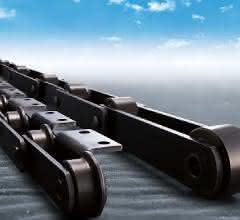
Special chain as a problem solver
The drive specialist had already solved similar problems in other industries and therefore had a wealth of solutions ready for the waste incineration plant. Although there were also standard products that could withstand the ash environment well, the experts recommended a customized solution in order to achieve the best possible result.
This includes additional hardening of the rollers and bushes. This significantly reduces wear and simultaneously increases the service life of the chain. The material composition of the pins has also been improved in order to reduce pitting caused by corrosion. With the additional increase in the distance between the moving parts of the chain, the ash particles can now pass through more easily and thus cause less damage.
Works like clockwork
The new chain was installed and everything worked as predicted: wear is even and predictable. But the Tsubaki technicians went one better: they analyzed and compared the wear on a series of chains at regular intervals over their entire service life. This enabled them to determine the average degree of wear and make a number of assumptions about how the new chains would behave. This enabled them to optimize maintenance and each individual chain was given its own schedule.
As a result, the power plant now only has to replace its conveyor chain every two years - half as often as before. Meanwhile, Tsubaki continues to work with the plant operators, continuously analyzing the worn chains and refining the service. as


You might also be interested in
Lifting oven grates
Bharat Forge CDP is a supplier of forged chassis and engine components as well as non-automotive systems. Since 2020, the company has been working with Kito-ER2 electric chain hoists to lift furnace grates in the production hall.
 read more...
Mobile and intelligent handling solutions
Scaglia Indeva has been developing and producing industrial manipulators and handling solutions for more than half a century. The company will be presenting its latest products for logistics at LogiMat.
read more...Mink at the Hannover Messe 2023
Transportation on brushes
Technical brushes from Mink are suitable for the gentle transportation of sensitive workpieces. According to the manufacturer, the adaptability of the brushes to different surfaces ensures part quality and avoids rejects.
read more...Partial automation in wood processing
Rescue from the staff shortage
The Schnurr company in Nordrach in the Black Forest has been processing wood for almost 170 years. Today, the company is a sought-after partner when it comes to individual wooden packaging or sawn and planed wood.
read more...Products for better ergonomics
At Intec, Scaglia Indeva will be presenting innovative ergonomic products for intralogistics. The focus is on products for better ergonomics, smoother work processes and protection of employees against overload.
read more...New pallet roller for the warehouse
Conveyor technology specialist Rulmeca is expanding its range of conveyor rollers for pallets and other heavy goods with the XPS series.
read more...Individual energy management
When a Festoon cable carrier system for a crane system with a travel distance of 30 meters was to be replaced, Tsubaki Kabelschlepp designed a complete package consisting of chain and cables, guide channel including substructure and an individual...
read more...Plan and manage maintenance
The health and safety regulations and statutory inspection guidelines for operating equipment in companies are strict and extensive. As a result, it is not easy to keep track of all inspection regulations and periods in day-to-day operations.
read more...Fully automated conveyor system for battery systems
With a fully automated and flexibly expandable conveyor system for truck loading, a manufacturer of battery systems in the electric automotive industry is meeting the increasing demand.
read more...