
Security strategies
Cybersecurity: safe is not safe
If you want to participate in the value creation potential of smart industry solutions in the future, you need to rethink security. Because as the complexity of the supply chain ecosystem increases, so do the potential risks. Cybersecurity is therefore no longer an end in itself, but a crucial prerequisite for maintaining competitiveness in times of digital transformation.

When it comes to the digitalization of the economy, growth forecasts are now coming thick and fast. According to leading economic experts, German industry has untapped value creation potential in the three-digit billion range. A study conducted by the Bitkom association in 2014, for example, estimates that Industry 4.0 could generate additional added value of around 50 billion euros by 2025 in the automotive, mechanical engineering and electronics manufacturing sectors alone.
However, the need for action does not yet exist to the same extent in all sectors of the economy. Industry, and high-tech manufacturing in particular, is already facing enormous pressure to digitize. Ever shorter product cycles and increasing competitive pressure are making the digital factory one of the decisive factors for the future, if only because of its high optimization potential for increasingly complex supply chains. Especially as the production process of an aircraft, car or smartphone no longer consists of a single supply chain, but rather the sum of hundreds of interlinked, coordinated value creation processes and production steps. Under these circumstances, abandoning Industry 4.0 would mean giving up hard-earned technological advantages and thus slowly but surely losing market relevance.
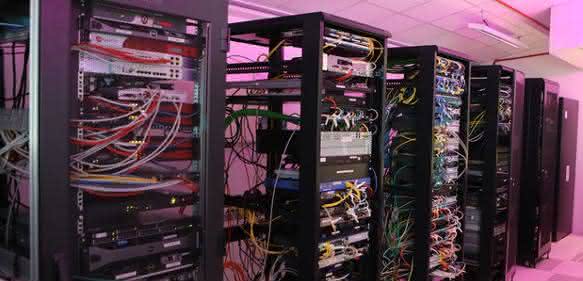
Even if every technology manufacturer has to develop and implement its own unique strategies as part of the digital transformation, all smart industry concepts ultimately share a common paradigm: the production of the future is data-driven, networked and transparent. The production process, material flow and ERP information are merging, while the number of real-time data streams and connections is growing exponentially - and with it the number of potential security gaps. It is already clear that "classic" security concepts, which are mainly based on the separation of production systems and office IT, will no longer be able to meet the challenges of the digital factory. A digital transformation strategy must therefore also include the prerequisites for the secure operation of new technologies, in which the boundaries between the IT level and production systems are increasingly disappearing. The technological realignment offers an ideal starting point for a fundamental security assessment and the evaluation of potential security risks, particularly with regard to planning one's own digital agenda.
Security problem due to established structures
Even though industrial digitalization is often portrayed as a revolution, it is actually a continuous process that began back in the 1980s and 1990s. When modern automation technology began, the Internet was still in its infancy. At the time, nobody seriously considered the possibility of connecting production systems to the Internet. Industrial control systems were regarded as isolated units - security functions such as authentication mechanisms, password management or access restrictions were therefore not necessary and simply not provided for at protocol level. It was sufficient for a production subsystem to be connected to a higher hierarchy such as a PLC system via a two-wire line or radio, as practical advantages such as real-time capability and reliability were the decisive parameters in the production network.
However, despite the high real-time requirements, the age of the Internet has not left the production level unscathed. Where the flexibility of TCP/IP was of benefit or costs could be saved, many connections have been converted to the IP protocol in recent years - but not always with the necessary systematic approach and only rarely with the corresponding IT security awareness.
One of the main drivers was the provision of remote access. Technicians and maintenance personnel from plant manufacturers needed to be able to access the management interfaces of production systems quickly in order to make configuration changes, view the status of machines or install important updates - without incurring high labor or travel costs. This resulted in organically grown networking structures with a heterogeneous architecture of industry-specific protocols, local network nodes with a connection to the office IT and more or less open Internet access - mostly poorly documented, insufficiently segmented and, due to a lack of available guidelines, without uniform standards for access management and password security.
From silo thinking to interdisciplinary consensus
For production specialists and automation engineers, the mix-and-match state of many industrial networks may not initially raise any concerns. After all, functions that could jeopardize the operational safety of systems are executed separately at field level and designed redundantly. Safety-relevant limit values such as maximum pressures or pump speeds are hard-coded anyway. In addition, the industry-specific protocols used represent a major technical hurdle for potential attackers. However, in view of developments in recent years, these aspects alone are no longer sufficient. Not only has the number of IP connections increased significantly, but the threat situation itself is completely different today than it was five years ago. At the latest since the emergence of Stuxnet and other malware variants specializing in industrial networks, the discussion about security in production systems has become increasingly public. In addition, there are now also specialized search engines that can specifically search for open Internet connections with production-specific protocols.
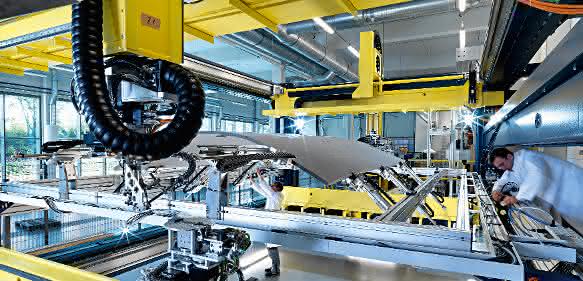
A recent ICS security study by security specialist Kaspersky Lab recently revealed around 26,000 insecure ICS components that were easily accessible via the internet in Germany alone. This is not a desirable state of affairs for the smooth operation of a production environment.
The original silo mentality between IT managers and production managers is also disappearing more and more thanks to increasing reporting, more education in research and teaching as well as standardized security guidelines (IEC 62443). Professionally coordinated security initiatives are now welcomed or even actively demanded by most production managers. After all, they are ultimately responsible for a smooth production process and efficient plant output. A complex hacker attack or a malware that specializes in industrial plants jeopardizes this objective. According to the BSI, it takes 227 days for a targeted attack on a company to be noticed - on average, this is how long the attacker sits in the company, can spy and prepare manipulations without anyone knowing that there is a problem.
Protecting intellectual property
Even a single security incident can lead to long-lasting production downtimes or the disclosure of sensitive trade secrets - especially in high-tech manufacturing and when setting up the production environment itself, as the architecture of fieldbus levels and MES systems as well as the parameterization of programmable logic controllers sometimes contain decades of development know-how and therefore intellectual property that must be protected at all costs. According to a study by Bitkom, cyber attacks cause up to 51 billion euros in damage to companies every year. ICS security is therefore no longer seen as an obstacle to production, but rather as one of the key prerequisites for reliable production planning.
This rethink was absolutely necessary, because without the expertise of production technicians and process control engineers, production environments cannot be secured in a practical manner. Only an interdisciplinary approach, in which the perspectives of IT and production specialists are brought together in a meaningful way, is able to combine real-time requirements and security mechanisms into a balanced security concept. IT security specialists must also review their views and, if necessary, make a sustainable change of perspective, as an exaggerated use of IT security measures at field level is also not expedient. It would ultimately result in a rigid production network that fails to meet the practical requirements of the production environment. This is why the following applies when it comes to securing production environments: "one size fits all" solutions are usually out of place; the individual requirements of the individual operator are decisive.
Targeted risk assessment
For a security provider, the main challenge in securing production environments is therefore to find tailor-made security concepts that can be seamlessly integrated into the existing production processes, both technically and organizationally. This requires not only basic theoretical knowledge and a well-trained team of specialists, but also a high level of practical experience. As one of Europe's leading high-tech companies, Airbus can look back on a long tradition of manufacturing high-tech products with high protection requirements. Many of the CyberSecurity division's empirical values and analytical methods come directly from the company's own operational ICS environment and have already proven themselves in practice many times over.
Industrial security, like digital change as a whole, is not a defined end state, but a continuous process. A fundamental first step on the way to a valid ICS security strategy must therefore be a detailed risk analysis. This approach is also recommended by the German Federal Office for Information Security (BSI). The BSI's ICS Security Compendium states: "The implementation of a recurring (regular or event-driven) risk analysis is considered mandatory". As part of its security services, Airbus CyberSecurity develops holistic security strategies that are based precisely on such an analysis. The aim is to identify and document the five top risks in direct cooperation with the operator's IT and production teams and to recommend practicable countermeasures.
Securing production facilities is a complex challenge, especially for high-tech companies, and can sometimes be very costly. Against the backdrop of Industry 4.0 and IoT, however, a security assessment is essential in order to put the digital transformation on a solid footing. A security assessment offers a sensible starting point and is the cornerstone for all further recommendations for action and the development of a long-term security strategy. The costs of the analysis remain manageable and quickly pay for themselves through the minimization of downtime risks and an overall more reliable production network. cs


You might also be interested in
ebm-papst is growing again thanks to AI and data centers
ebm-papst returned to a growth trajectory in fiscal year 2025/26. Air Technology, data center applications, and artificial intelligence are driving revenue and investment.
 read more...
SPE on the Verge of a Market Breakthrough
Single Pair Ethernet (SPE) has moved beyond the conceptual phase and is increasingly being implemented in industrial settings. The focus here is not only on higher data rates and simplified cabling, but above all on the issue of system integration...
read more...More than 900 exhibitors already registered
Around six months before the start of the trade fair, more than 900 companies have registered for SPS 2026 in Nuremberg. The trade fair focuses on industrial AI, cyber security and digital transformation.
read more...Virtual PLCs in practice: How vPLCs make production systems more flexible and scalable
The increasing networking of IT and OT is fundamentally changing industrial automation. The IT/OT Integration Summit shows how modern technologies can make production environments more efficient, flexible and future-proof. The event will focus on...
read more...Sales growth in a turbulent market environment
Thanks to innovations and a focus on strategic industrial markets, Sick was able to moderately increase its sales in the 2025 financial year. In a turbulent market environment, the company was able to maintain its position and gain market share with...
read more...Siemens presents new AI agent
Siemens is launching 'Eigen Engineering Agent', an AI for automation technology. The solution is integrated into the TIA Portal, has been tested with over 100 companies and is designed to significantly accelerate engineering processes.
read more...Schaeffler keeps sales almost stable
Schaeffler generated revenue of EUR 23.5 billion in 2025 and increased EBIT before special items to EUR 936 million. At 266 million euros, free cash flow was significantly above the prior year and forecast. Net income remained negative due to high...
read more...Advancing artificial intelligence together
Helukabel is stepping up its activities in the field of artificial intelligence and is now a member of the IPAI. The innovation and collaboration platform for companies, research facilities, institutions and administration has set itself the goal of...
read more...New impetus for ifm sales
Two new positions were filled at ifm at the start of 2026: Markus Wolf becomes Managing Director Sales Germany, Sven Quant takes over the position of Central Managing Director in the Process Sensors division within the ifm Group.
read more...