
Weidmüller
SPE on the Verge of a Market Breakthrough
Single Pair Ethernet (SPE) has moved beyond the conceptual phase and is increasingly being implemented in industrial settings. The focus here is not only on higher data rates and simplified cabling, but above all on the issue of system integration into existing automation environments. Standardization, interoperability, and real-world applications are setting the pace for market penetration.
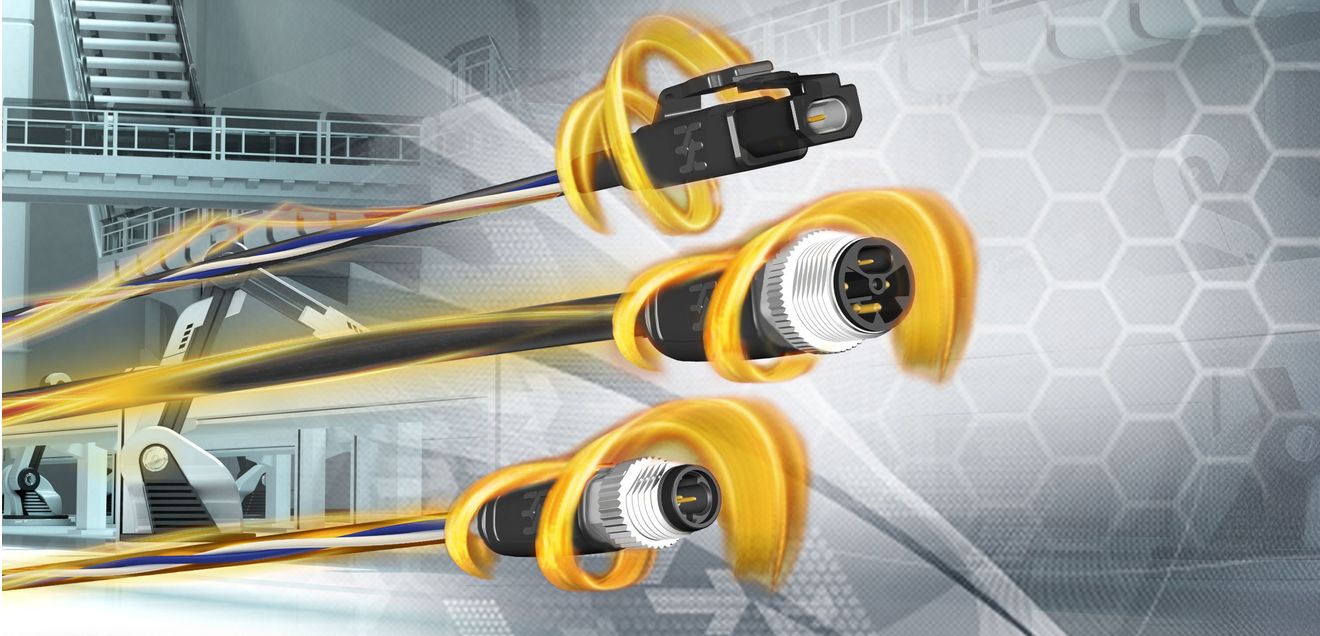
Single Pair Ethernet (SPE) is on the verge of widespread industrial adoption. As an Ethernet-based transmission technology for the field and sensor levels, SPE bridges the gap that has existed until now between traditional fieldbus systems and end-to-end IP communication. This development is being driven by a broad industrial alliance: More than 140 companies from the automation and semiconductor industries are now active in the Single Pair Ethernet Association (SPEA). At the same time, other interest groups and user organizations—including PI (Profibus & Profinet International), ODVA, and ZVEI are driving industrial integration. A key technical factor is that SPE is based on IEEE 802.3cg, specifically 10BASE-T1L, while its industrial implementation is only fully realized through corresponding application profiles and system integration.
Standardization as the Basis for Industrial Applicability
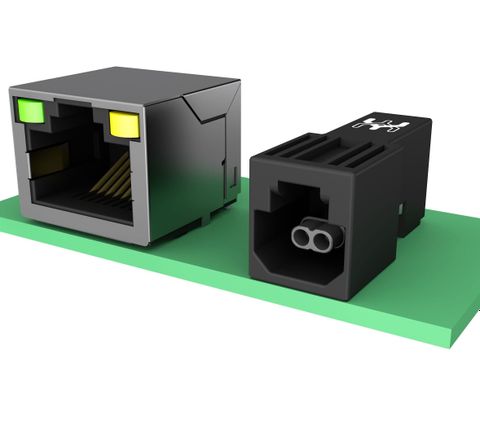
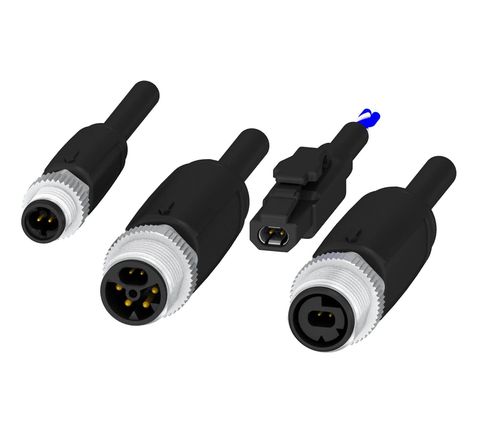
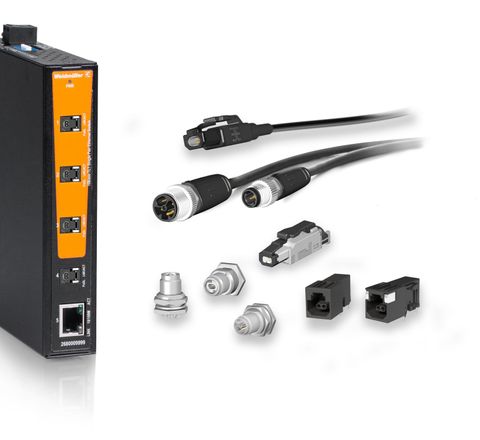
A key component for industrial use is the standardization of connector interfaces. The IEC 63171-7 series of standards defines connectors for Single Pair Ethernet in industrial applications, particularly for the transmission of data and power over the same interface, as well as for hybrid configurations. Through close collaboration between the Profinet user organization and connector manufacturers, IEC 63171-7, Edition 2, is being developed as a standardized interface specifically designed for harsh industrial environments. The standard is in its final phase, with publication expected in fall 2026. It addresses mechanical robustness as well as EMC requirements and interoperability. Only the combination of the IEEE physical layer, a harmonized connector system, and standardized cabling enables a consistent, vendor-neutral infrastructure for industrial Single Pair Ethernet applications.
Seamless Ethernet communication all the way down to the field level
The increasing digitization of industrial processes is leading to an ever-denser landscape of sensors and actuators, which must be directly integrated into higher-level IT and cloud structures. SPE enables, for the first time, end-to-end Ethernet communication from the field level all the way to the cloud without the need for additional gateways. Depending on the configuration, transmission distances of up to 1,000 m at 10 Mbit/s can be achieved over a single wire pair. In addition, Power over Data Line (PoDL) according to IEEE 802.3bu enables simultaneous power and data transmission.
Miniaturization and Performance in Robotics
In robotics, SPE opens up new possibilities in terms of design and system integration. Thanks to reduced cable size and smaller bend radii, it is possible to implement more compact motion axes and end-of-arm tools. At the same time, SPE enables significantly higher bandwidth compared to traditional fieldbus-based solutions. Data rates of up to 1 Gbit/s over distances of up to 40 m enable the connection of high-resolution 2D and 3D vision systems as well as the efficient processing of large data frames. The combination of data transmission and power supply via PoDL also simplifies cabling along the robot’s body and reduces the number of separate power and data lines.
Ethernet-APL in the Process Industry
For the process industry, Ethernet-APL is a specialized variant of Single Pair Ethernet. Technically, Ethernet-APL is based on 10BASE-T1L and is designed for use in hazardous areas as well as for long distances of up to 1000 m. In addition to data transmission at 10 Mbit/s, it also enables the power supply of field devices in hazardous areas via two-wire cables thanks to 2WISE. Direct Ethernet access down to the field and device level significantly simplifies the integration of IIoT applications. Production data can be collected and analyzed without media breaks and used for condition monitoring or predictive maintenance, which contributes to higher plant availability.
SPE in Building Automation, Infrastructure, and Energy
SPE is also gaining importance outside of traditional industrial applications. In building automation, Ethernet-based communication is increasingly replacing proprietary fieldbus systems. SPE enables the seamless integration of lighting, HVAC systems, security, and energy management solutions into a unified IP network. The combination of long ranges, variable data rates, and PoDL supports energy-efficient device architectures and simplifies installation and maintenance.
In infrastructure and energy applications, range and cabling complexity are of particular concern. Applications such as traffic control systems, tunnel monitoring, and power distribution benefit from the ability to connect and power sensors and actuators via a single pair of wires. At the same time, however, system integration into existing control systems is a crucial factor for practical implementation in these applications as well.
SPE and the EU Cyber Resilience Act (CRA)
The CRA requires manufacturers of "products with digital elements" to adhere to "Secure by Design/Default" principles and to implement consistent vulnerability management throughout the entire product lifecycle.
SPE provides the standardized Ethernet physical layer all the way down to the field level, enabling sensors and actuators to be integrated into a common security domain ("last mile"). Profinet 2.5 supports this with scalable security mechanisms and a defined transport channel for engineering access, parameterization, and firmware updates, as well as through the integration of SPE into Profinet over SPE.
Consistent Ethernet Communication

Single Pair Ethernet is evolving from a vision of the future into a standardized communication platform for industrial applications. International standardization, broad support from manufacturers and user organizations, and concrete use cases in industry, infrastructure, and energy supply mark the transition to market penetration. With standardized connectors and end-to-end system solutions, SPE lays the groundwork for consistent Ethernet communication all the way down to the lowest field level, thereby becoming a central building block of the next generation of automation.
Editor: Andrea Gillhuber


You might also be interested in
More than 900 exhibitors already registered
Around six months before the start of the trade fair, more than 900 companies have registered for SPS 2026 in Nuremberg. The trade fair focuses on industrial AI, cyber security and digital transformation.
 read more...
Virtual PLCs in practice: How vPLCs make production systems more flexible and scalable
The increasing networking of IT and OT is fundamentally changing industrial automation. The IT/OT Integration Summit shows how modern technologies can make production environments more efficient, flexible and future-proof. The event will focus on...
read more...Sales growth in a turbulent market environment
Thanks to innovations and a focus on strategic industrial markets, Sick was able to moderately increase its sales in the 2025 financial year. In a turbulent market environment, the company was able to maintain its position and gain market share with...
read more...Siemens presents new AI agent
Siemens is launching 'Eigen Engineering Agent', an AI for automation technology. The solution is integrated into the TIA Portal, has been tested with over 100 companies and is designed to significantly accelerate engineering processes.
read more...Schaeffler keeps sales almost stable
Schaeffler generated revenue of EUR 23.5 billion in 2025 and increased EBIT before special items to EUR 936 million. At 266 million euros, free cash flow was significantly above the prior year and forecast. Net income remained negative due to high...
read more...Advancing artificial intelligence together
Helukabel is stepping up its activities in the field of artificial intelligence and is now a member of the IPAI. The innovation and collaboration platform for companies, research facilities, institutions and administration has set itself the goal of...
read more...New impetus for ifm sales
Two new positions were filled at ifm at the start of 2026: Markus Wolf becomes Managing Director Sales Germany, Sven Quant takes over the position of Central Managing Director in the Process Sensors division within the ifm Group.
read more...Digital twin meets product passport
Future-proof end-to-end solution at SPS 2025
At SPS, conplement and R. STAHL will present how the digital twin works end-to-end along the entire value chain: from creation and provision to productive use.
read more...Changes in the management of Endress+Hauser
Endress+Hauser strengthens its management team: Mirko Lehmann, Katja Windt and Helena Svensson take on central management roles. What is changing in technology, production and personnel.
read more...