
PLC programming
Individual assembly - precise timing
A supplier to the automotive industry for exhaust and silencer systems has found a solution for assembling and welding individual configurations "Just in Sequence" (JIS). This makes PLC programming considerably easier.
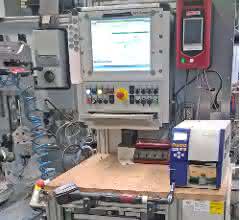
Fast and efficient automation is a basic prerequisite for successfully implementing the "just-in-sequence" production strategy. The automotive industry in particular demands this type of production from its suppliers in order to be able to fulfill individually configured customer orders in line with demand. In view of the almost unlimited number of these individual configurations, traditional warehousing of pre-produced products has become almost impossible, yet customers still expect prompt and punctual delivery of their individual goods. This also poses major challenges for suppliers when it comes to assembly and connection. A manufacturer of exhaust system and silencer systems meets this demand from car manufacturers with control software from ATS System GmbH.
Simplified programming
The heart of the control software is a Windows application called ATS Editor. It enables PLC programming in a classic Windows environment. All parameters relevant to the welding device are programmed outside the PLC code using the ATS Editor application. The database-based codes created with the editor are loaded into the PLC as required and depending on the product. This technology enables the user to react quickly to changing customer requirements. Changing devices and the associated set-up processes can be carried out within a very short time using the ATS system control software.
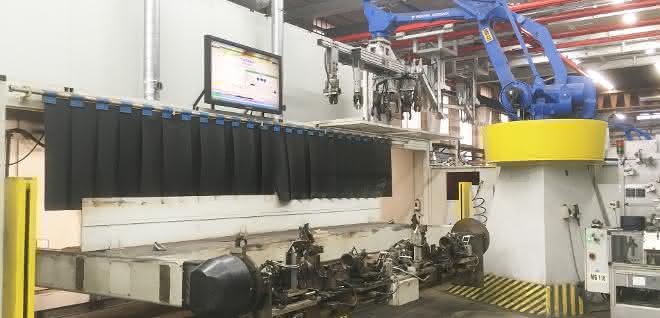
All the work involved in creating the clamping program for the fixtures can be carried out quickly and easily by a specialist who does not need to have any PLC knowledge. For the company, the central argument for implementing this solution was therefore the simplified deployment of personnel. The paver can create and manage 255 fixtures with 255 functions and 255 clamping sequences (programs) for each robot welding cell. This performance is made possible by the aforementioned external storage of all parameters relevant to the welding fixture in the aforementioned file formats. The corresponding program code for a fixture is only loaded into the PLC when required.
Flexible assembly stations
As well as being used in robotic welding systems, the solution from ATS System GmbH is also used at the customer's assembly stations. Here, the challenge for this user is to quickly replace and commission assembly tables in line with "just-in-sequence" production. As in robot welding systems, the employee is guided safely through the process by means of image-guided assembly dialogs. The software monitors all system components and generates a message if conditions are not right.
Easy handling
The ATS Editor software enables the employee to fully operate the application after a very short introduction and to supervise cells for robot programming (pre-teaching) and clamping program creation. For robot welding systems, a robot programmer and a PLC programming specialist are usually required to convert the respective cell to new products or to set it up initially. This can now be done by other employees who are familiar with the process.
Robot requirements
The company in this practical example has up to 32 robot requirements per clamping program available for each fixture. Like all other parameters relevant to the welding fixture, the robot requirements can be programmed quickly and easily using the ATS Editor.
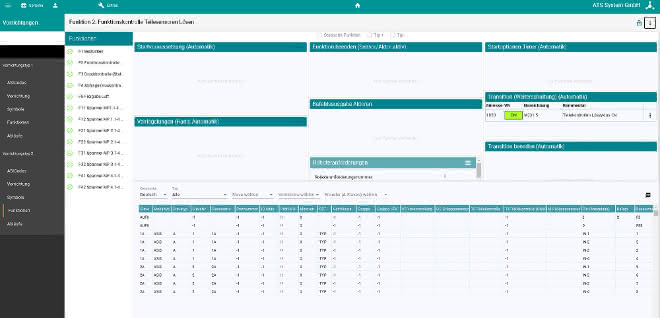
As in other Windows applications, drag & drop is used within the ATS Editors to simplify handling during programming. For example, functions can be dragged and dropped into a sequence matrix and placed accordingly. Each sequence matrix allows up to 512 clamping sequence steps. Especially for future complex products with many clamping steps, the software offers sufficient performance to quickly create or change clamping sequences.
Combination with ASi-Master and ProfiNet
The ATS Editor allows the advantages of ASi-Master and ProfiNet to be used together. ProfiNet as the main bus system enables short bus cycle times. Connecting the device to the ProfiNet bus system via an ASi master ensures fixed addressing of all input and output slaves installed on a device and eliminates the need to intervene in the hardware configuration of the PLC when changing devices. The ASi master records all signals from the installed modules and transfers them to the main code of the PLC via a defined ProfiNet interface. A minimum of 12 input signals via ASi slaves are required to identify the device.
The respective devices are assigned a type number and a serial number for clear identification.
This ensures that the device is recognized by the system in coordination with the production order. The solution thus exploits the full potential of using the ASi master, as each input/output signal of the ASi master can be individually addressed and parameterized via the ATS Editor. Since 2020, the control solution from ATS System has also been able to integrate the new ASi5 master (Bihl & Wiedemann) into the system. Another argument in favor of ASi field modules in conjunction with welding equipment is their robustness and reliability with regard to welding processes thanks to EMC electromagnetic compatibility.
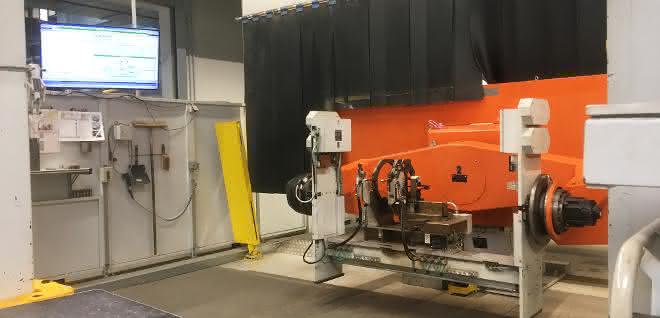
The use of the ASi master for integrating the fixture with the ProfiNet system is recommended by the supplier ATS System GmbH and has proven itself in practice. A solution for fixtures that have been equipped with ProfiNet or ProfiBus modules is also possible without having to forego the convenient and simple programming of the fixture and its clamping sequences. For new systems, however, the company recommends the combination of ASi-Master and ProfiNet.
Web browser application
A web application called "WebStudio i4.0" is now also available to take account of the networking of production systems. This extension of the ATS Editor makes it possible to access the corresponding robot welding cell via a web browser and edit its clamping program management. All welding fixture programs can be managed centrally on an MS-SQL server. A prerequisite for connecting the production system and using the application is the integration of the robot cell into the company's Ethernet so that the robot cell can be accessed and operated from anywhere in the world.
Conclusion
The solution from ATS System offers the user comparatively easy-to-use control software. With the integrated editor, it is possible to easily program fixtures and their functions and clamping programs outside the PLC in order to efficiently meet the requirements of car manufacturers with regard to "just-in-sequence" delivery.
Michael Sigl / dsc


You might also be interested in
ebm-papst is growing again thanks to AI and data centers
ebm-papst returned to a growth trajectory in fiscal year 2025/26. Air Technology, data center applications, and artificial intelligence are driving revenue and investment.
 read more...
SPE on the Verge of a Market Breakthrough
Single Pair Ethernet (SPE) has moved beyond the conceptual phase and is increasingly being implemented in industrial settings. The focus here is not only on higher data rates and simplified cabling, but above all on the issue of system integration...
read more...More than 900 exhibitors already registered
Around six months before the start of the trade fair, more than 900 companies have registered for SPS 2026 in Nuremberg. The trade fair focuses on industrial AI, cyber security and digital transformation.
read more...Virtual PLCs in practice: How vPLCs make production systems more flexible and scalable
The increasing networking of IT and OT is fundamentally changing industrial automation. The IT/OT Integration Summit shows how modern technologies can make production environments more efficient, flexible and future-proof. The event will focus on...
read more...Sales growth in a turbulent market environment
Thanks to innovations and a focus on strategic industrial markets, Sick was able to moderately increase its sales in the 2025 financial year. In a turbulent market environment, the company was able to maintain its position and gain market share with...
read more...Siemens presents new AI agent
Siemens is launching 'Eigen Engineering Agent', an AI for automation technology. The solution is integrated into the TIA Portal, has been tested with over 100 companies and is designed to significantly accelerate engineering processes.
read more...Schaeffler keeps sales almost stable
Schaeffler generated revenue of EUR 23.5 billion in 2025 and increased EBIT before special items to EUR 936 million. At 266 million euros, free cash flow was significantly above the prior year and forecast. Net income remained negative due to high...
read more...Advancing artificial intelligence together
Helukabel is stepping up its activities in the field of artificial intelligence and is now a member of the IPAI. The innovation and collaboration platform for companies, research facilities, institutions and administration has set itself the goal of...
read more...New impetus for ifm sales
Two new positions were filled at ifm at the start of 2026: Markus Wolf becomes Managing Director Sales Germany, Sven Quant takes over the position of Central Managing Director in the Process Sensors division within the ifm Group.
read more...