
Fraunhofer study
Future opportunities for visual assistance systems
Digital assistance systems are becoming increasingly important in manufacturing for the networking of man, machine and product. This is also confirmed by a study by the Fraunhofer IAO.
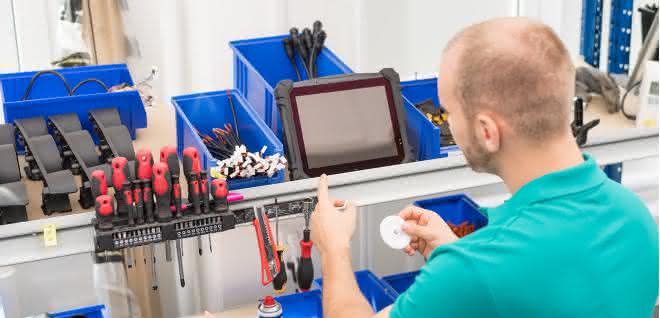
The study by the Fraunhofer Institute for Industrial Engineering was conducted as part of an implementation project by the SME 4.0 Competence Centre Stuttgart in collaboration with Memex. The aim is to reflect the current use of digital assistance systems in the production environment and also to determine their prospects for the future. Production managers from a total of 144 companies were asked about their expectations as to which assistance systems will become established on their production lines in the future. This refers to techniques and/or technologies designed to help workers adapt to an ever-increasing variety of products as a result of Industry 4.0 and the trend towards "batch size 1".
One of the key findings of the study: almost all respondents see digital assistance systems in the form of visualization being used in companies over the next five years. Almost 95% of participants are even planning to use digital visualizations in their own company.
Rising demand also among providers
Memex has been active in the field of video instruction for 15 years. Over the years, the company has become an established name, particularly in the field of visualization. In the meantime, well-known companies from the mechanical and plant engineering, medical technology and automotive sectors have joined the constantly growing customer base.
One of the product highlights is the "Utility Film", which can be used to visually communicate production processes in a time-saving and comprehensible way. The company has not only technically established this form of instructional video, it also trains companies to create such utility films themselves and integrate them into their respective environments.
The environment can be, for example, the assembly workstation on the store floor or on the production line. "With the Utility Film and the associated web-based platform, we provide users with the best possible support for their upcoming tasks and ensure that processes of any complexity can be carried out error-free from the very first application," says Robert Rothenberger, Managing Director at Memex. Referring to the survey results, he emphasizes: "We have noticed a growing interest in our applications and training courses in recent years, which is now also reflected in the study." This is why a new version of the clip editing software was launched in the fall of 2019. The web-based platform makes it easier to create and manage utility films.
Visualization: More than 90 percent plan with this technology
Showing workers the right methods directly on the production lines with tailored videos - many companies see this as the way forward. According to the study, digital visualization as an assistance system is very popular with the majority of companies. Of the 144 companies surveyed, more than 90 percent plan to use this technology in their companies in the next five years. This is considered particularly useful in the production and assembly divisions. "A strong sign that visual instruction is becoming increasingly important for qualification in times of digitalization," says Rothenberger.
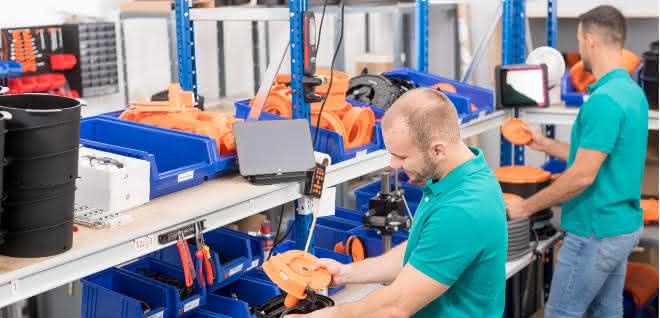
The visualization of data helps workers and fitters on the store floor to make the right decisions and gain an overview of the current process situation. Visualized assembly instructions also provide employees with precise information on the actual assembly process. And last but not least, the didactically structured utility films save manufacturing companies lengthy training times and also avoid errors in production and assembly.
The Memex utility film also acts as a kind of digital work instruction, guiding the user step by step through the processes. This new form of knowledge transfer not only allows work processes to be carried out without errors the first time, but new employees in particular benefit from the fast and reliable visual learning method. The presentation of the real environment works without language, step-by-step and replaces the classic work instructions with pictures and text. Further advantages include the uniform standards for learning new processes and the communication of the best known methods for the individually applied procedures.
Visualization also prevails against augmented reality
Finally, the Fraunhofer scientists asked the companies about their expectations regarding the use of other technologies such as augmented reality. It is true that this technology is considered to have great potential for future use in all areas. However, if the current use of assistance systems is weighted against this, "visualization would also be the winner here", the authors of the study conclude. In addition, almost 95% of the companies surveyed had already made concrete plans to use digital visualization - this technology will therefore "continue to be a key digital assistance system."
For Robert Rothenberger, the study by the Fraunhofer Institute is positive confirmation that he is on the right track with his in-house development "Utility Film" and is aligning the product more closely with the technologies of the Industrial Internet of Things. "Memex already combines work instructions based on 3D animations, augmented reality and other visualizations," emphasizes Robert Rothenberger. "We focus on the user and their learning and work results. To this end, the technologies are combined in such a way that they can take qualification in your company a decisive step forward." as


You might also be interested in
Electromobility and the supplier industry
Bosch wins major order from Mercedes-Benz for electric motors
Bosch receives a major order from Mercedes-Benz to supply electric motors for new electric drives until the 2030s. The supplier is thus further expanding its position in the growth market of electromobility.
 read more...
Production of high-voltage batteries
Electrically mobile - sustainable on the road
High-voltage batteries for electric cars are produced at the BMW plant in Leipzig. SEW-Eurodrive supplies proven and new drive solutions from the Movi-C modular system for all process steps - from cell preparation to end-of-line testing.
read more...Thyssenkrupp and Novelis cooperate
Platform for the circular economy
With a platform for the circular economy in the automotive industry, the two companies Thyssenkrupp Materials Services and Novelis want to set new standards for the recycling of used materials. The open platform will enable access to larger...
read more...85 years of precision technology from the...
Anniversary at Kammerer Gewindetechnik
Kammerer Gewindetechnik, manufacturer of screw drives in Hornberg in the Black Forest, is celebrating its 85th anniversary this year. The family business was founded in 1938 and is now managed by the third generation with 160 employees.
read more...Hydraulic brake cylinders from ACE: Easier handling even in critical environments
For active air sampling in highly sensitive cleanroom areas, special samplers are used for maximum protection of people and materials. The British company Pinpoint Scientific, which specializes in laboratory equipment, uses hydraulic brake cylinders...
read more...Expansion of the business units
Ulrich Engenhardt new CBO at Rittal
New on the Rittal Management Board: Ulrich Engenhardt has been responsible for the business units at the enclosure, IT and energy system specialist since June 1, 2023.
read more...Lifting oven grates
Bharat Forge CDP is a supplier of forged chassis and engine components as well as non-automotive systems. Since 2020, the company has been working with Kito-ER2 electric chain hoists to lift furnace grates in the production hall.
read more...Digital twins are the key to sustainability
Altair has published the results of an independent survey that shows a high level of acceptance of digital twin applications in the automotive industry. Furthermore, the use of these technologies is expected to increase as a means of achieving...
read more...Balluff remains consistently on course for growth
Balluff achieves a record result for the second time in a row. Total sales in the 2022 financial year amounted to 567 million euros. The sensor and automation specialist sees further growth opportunities for products in the field of image processing.
read more...