
Powder bed process
3D metal printing for power electronics

Modern electronics require ever smaller components, resulting in a higher power density with the same efficiency in a smaller space. This is a major challenge for conventional heat sinks, as their own structures require a lot of space, but at the same time they have to dissipate an increasing amount of heat. "For this reason, we have developed a 3D metal printing process with a powder bed that can be used to produce microcoolers in any shape," reports Dr. Thomas Ebert, Managing Director of IQ evolution. "The heat sinks produced with our selective laser melting process dissipate enormous amounts of heat in the smallest of spaces."
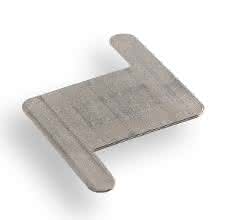
"First, a CAD model of the component is created for the SLM. Thanks to their experience in the field of thermodynamics, our experts quickly identify the critical hotspots and can set the required values," says Ebert. Conventional heat sinks use finned structures, whereas with microcoolers the heat is dissipated via highly turbulent flows created by special design parameters on the inner surfaces. A computer simulation supports the selection of the necessary parameters, whereby the mechanical properties such as turbulence or flow velocity are transferred 1:1 from development to production.
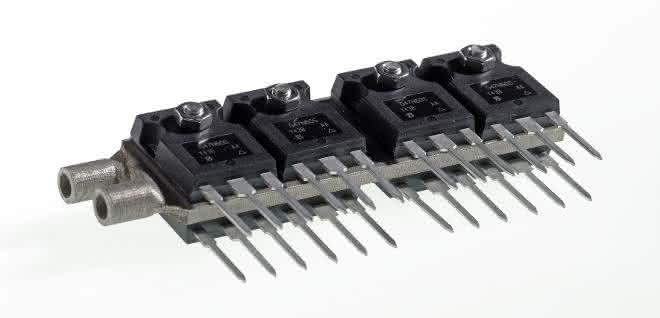
Once the model has been created, the metal powder is applied to a substrate plate in layers of around 0.03 mm in an insulated chamber. Nickel powder is usually used for this. Depending on the application, however, other metals or copper alloys can also be used.

IQ evolution tailors each microcooler to the area of application. "We offer standard products for common applications; so-called 2, 4 or 8-piece coolers. But the specialty of our 3D printing process is unusual cooling structures," says Ebert. "Unfortunately, power electronics are often only thought of in two-dimensional shapes, but round or even more unusual space-saving geometries are also conceivable." These flexible design variants open up numerous new application possibilities - for example, ultra-thin microcoolers that are integrated into a circuit board during production.
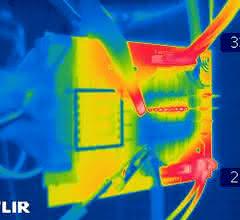
The process can also be carried out with different materials. This also results in new functions for the microcoolers. "In power electronics, electrical contact with the metal surface of the microcooler is often undesirable," explains Ebert. "We have therefore developed a combination of electrical insulation and electrically conductive layers, which are applied to the metal cooling surface. This means that all hotspots on the circuit board are cooled, but at the same time the microcooler is not electrically connected to the circuit board."
According to documents from IQ evolution / ag


You might also be interested in
New Resin Opens Up 3D Printing for the Optics Industry
With BMF Clear, Boston Micro Fabrication has introduced an optically transparent photopolymer resin for micro-precision 3D printing that achieves a light transmittance of over 90 percent at layer heights of 10 micrometers or more and is suitable for...
 read more...
3D Printing in the Defense Sector
Formnext Launches 2026 Defense Summit
Formnext is expanding its program to include the security and defense sector and will host the first Formnext Defense Summit in 2026. The event will focus on the potential of additive manufacturing for resilient supply chains, industrial...
read more...UltiMaker Doubles Speed in Industrial 3D Printing
With the Factor 4 Plus, UltiMaker is introducing a new version of its industrial desktop 3D printing platform, which operates at up to twice the print speed of the standard model. The platform is designed for use in manufacturing and defense...
read more...Stratasys takes over MarkForged
Stratasys is acquiring MarkForged from Nano Dimension for USD 42.5 million, thereby expanding its portfolio in the field of fiber-reinforced composites. The acquisition also strengthens the company's software and materials expertise in industrial 3D...
read more...Timo Göbel, Head of BMW Additive Manufacturing
"Clearly on course for broad industrialization"
The BMW Group's Additive Manufacturing Campus (AMC) is setting the course for the next stage of industrialization. Under the leadership of Timo Göbel, additive manufacturing is being further integrated into all stages of the vehicle life cycle. In...
read more...Real-time control to make recycling materials economical
The Fraunhofer IAPT is researching AI-based closed-loop processes for industrial 3D printing with recycled plastics. The aim is to achieve less waste, greater process stability and profitable printer farms.
read more...Forum Solutions 4AMIndustry shows ways into industrial application
Additive manufacturing has developed dynamically in recent years and has long outgrown its status as a purely innovative technology in many industries. Nevertheless, companies still face the challenge of integrating AM into their production...
read more...Alliance aims to drive forward industrial 3D printing
Machine components, electrostatically shielded transport containers, large components for the automotive, rail and aviation industries or specific medical products straight from the printer - the potential applications of additive manufacturing are...
read more...Photonic microchips with 3D connector
How a 3D system makes photonic chips industrially viable
A research team from Heidelberg is developing a 3D-printed "connector" for photonic microchips. The solution promises a low-loss, standardized coupling of glass fibre and chip - and could fundamentally simplify the production of photonic integrated...
read more...