

Mechanical engineering network
Qesar networks machine manufacturers and suppliers
Qesar is an independent industrial cooperation for the mechanical engineering industry and its suppliers and has set itself the task of further expanding the "network of excellent suppliers" (Nexel) and supporting all partners.
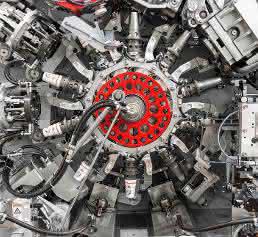
The mechanical and plant engineering sector is increasingly made up of companies that are tightly focused on their core competencies. In order to realize this strategy, it is necessary to build up external know-how and to expand the existing supplier-customer relationship. The aim is to bundle the entire know-how of both the supplier industry and the machine and plant manufacturers within the framework of long-term stable relationships.
Cooperation for better strategic positioning
In order to professionalize this interaction, a group of independent machine and system manufacturers has initiated the "Network of Excellent Suppliers", Nexel. The network is supervised and managed by Qesar from Bensheim. The focus is on open communication about solutions, jointly finding approaches and sharing experiences in order to achieve an improved strategic positioning in the international competitive environment.
"Our task is to organize best-practice cooperation between the partners and their suppliers with the greatest possible benefits for everyone involved," says Jochen Latz, Managing Director of Qesar. The initiators are 26 mechanical and plant engineering companies from Germany with a total of more than 12,000 employees and a procurement volume of around €500 million per year. The network's cooperation partners also include 130 suppliers.
Joint projects between machine and system manufacturers and their suppliers are initiated throughout the network. These relate to different areas such as design, production, marketing, service, administration or management in order to establish a transfer of know-how between all participants. Qesar's task is to further expand the network and support all partners. The central event for communication is the Nexel Symposium, which took place for the first time on September 21, 2017.
Networking on many levels
"We work on a wide variety of levels to improve the results of our cooperation partners both quantitatively and qualitatively," adds Matthias Schäfer, Managing Director of Qesar. In quantitative terms, this is achieved by structuring and bundling volumes and supporting procurement marketing between machine manufacturers and suppliers.
In terms of quality, we work towards the strategic further qualification of all participants by recognizing important trends and reacting to them in good time. In response to suggestions from the network, topics of overarching interest are taken up, dealt with jointly by the machine and plant manufacturers and their suppliers in the form of projects and the results made available to interested partners.
IT threats in industrial plants
Jens Wiesner from the Cyber Security in Industrial Plants department of the Federal Office for Information Security presented an overview of today's IT threats. Numerous case studies show that many companies are not sufficiently prepared for such threats and take inadequate measures to defend themselves and limit the damage. The damage is sometimes enormous. Nowadays, attacks can also be carried out via channels other than the Internet. All kinds of "intelligent" systems from aquariums to copiers, pumps, USB sticks and employees' laptops to machine control systems can be misused. Remote maintenance is also an important gateway. Management must be prepared for the fact that the threat of such attacks is permanent. Setting up and adapting adequate defensive measures is therefore an ongoing task. Companies must prepare themselves in terms of personnel and organization. All too often, an attack is either not detected at all or only detected very late.
For manufacturers of systems with their own controls, there are other aspects that come into play, as they are also responsible to their customers for any vulnerabilities of the product to cyberattacks. It must be clarified which guidelines apply, which certifications and security tests are required and which obligations are incumbent on the operator. It is advisable to follow BSI recommendations and standards such as ISO/IEC 62443.
Your own approach to system control
As an innovative medium-sized company, you can also go your own way when it comes to machine control. Ralf Schubert, Managing Partner (Technology) of Gerhard Schubert Verpackungsmaschinen in Crailsheim, demonstrated this with his presentation. The company dispenses with control cabinets for its modular packaging machines. Depending on the requirements profile, the sub-machines are lined up next to each other and connected electrically, pneumatically and mechanically - that's it. The individual mechatronic systems are controlled centrally via a bus, into which the image recognition systems are also integrated. For example, systems consisting of up to 26 modules and capable of recognizing, sorting and packaging up to 1,000 coffee capsules per minute can be implemented according to this scheme.
What does China want - and what opportunities are there?
Silke Besser from the Sino-German Business Association explained that China is developing into a modern industrial nation that is striving to match the technical and scientific level of advanced Western nations. By 2025, the aim is to reach the Western level in the fields of IT technologies, robotics, aerospace and biotechnology, among others. The share of R&D expenditure in GDP has been growing for years and now exceeds two percent. At the same time, patent applications and the participation of Chinese companies in companies all over the world are continuously increasing. Germany is a center for Chinese investment, which has also included the takeover of a number of mechanical engineering companies. China will certainly become more and more noticeable as a competitor in the future. However, the Chinese megatrends - qualitative economic growth, ecological sustainability and technological modernization - also offer German companies opportunities. The country will continue to have a high demand for technology in the future and will act as a financially strong customer. There are also opportunities for cooperation with Chinese partners as well as with players in third countries along the so-called OBOR corridors - the new Silk Road from China to Europe and Africa.
Machine integration of robots
Modern machinery increasingly includes the corresponding automation. Robots are key components of these solutions. Machine manufacturers must therefore address the question of how they can procure them and integrate them into their other system technology. Prof. Dr.-Ing. Thomas Pospiech from Heilbronn University presented current concepts and solutions for this.
In principle, interested parties have the choice between developing their own robot, purchasing and completing a robot mechanism, purchasing a finished robot system or a complete integration. The main hurdle is obtaining the transformations required for a given mechanism, the specifications for the synchronous movements of the individual axes so that the gripper moves along a specific path. These complex mathematical solutions have to be developed once as a library for each robot type. They are often obtained from the PLC supplier. With regard to integration, a distinction must be made between "copied integration" - with the robot manufacturer's own hand-held control unit or programming unit - and complete integration. The latter means that the robot can be interpreted by the machine controller in the form of six individual, mechanically coupled servomotors. am


You might also be interested in
ebm-papst is growing again thanks to AI and data centers
ebm-papst returned to a growth trajectory in fiscal year 2025/26. Air Technology, data center applications, and artificial intelligence are driving revenue and investment.
 read more...
SPE on the Verge of a Market Breakthrough
Single Pair Ethernet (SPE) has moved beyond the conceptual phase and is increasingly being implemented in industrial settings. The focus here is not only on higher data rates and simplified cabling, but above all on the issue of system integration...
read more...More than 900 exhibitors already registered
Around six months before the start of the trade fair, more than 900 companies have registered for SPS 2026 in Nuremberg. The trade fair focuses on industrial AI, cyber security and digital transformation.
read more...Virtual PLCs in practice: How vPLCs make production systems more flexible and scalable
The increasing networking of IT and OT is fundamentally changing industrial automation. The IT/OT Integration Summit shows how modern technologies can make production environments more efficient, flexible and future-proof. The event will focus on...
read more...Sales growth in a turbulent market environment
Thanks to innovations and a focus on strategic industrial markets, Sick was able to moderately increase its sales in the 2025 financial year. In a turbulent market environment, the company was able to maintain its position and gain market share with...
read more...Siemens presents new AI agent
Siemens is launching 'Eigen Engineering Agent', an AI for automation technology. The solution is integrated into the TIA Portal, has been tested with over 100 companies and is designed to significantly accelerate engineering processes.
read more...Schaeffler keeps sales almost stable
Schaeffler generated revenue of EUR 23.5 billion in 2025 and increased EBIT before special items to EUR 936 million. At 266 million euros, free cash flow was significantly above the prior year and forecast. Net income remained negative due to high...
read more...Advancing artificial intelligence together
Helukabel is stepping up its activities in the field of artificial intelligence and is now a member of the IPAI. The innovation and collaboration platform for companies, research facilities, institutions and administration has set itself the goal of...
read more...New impetus for ifm sales
Two new positions were filled at ifm at the start of 2026: Markus Wolf becomes Managing Director Sales Germany, Sven Quant takes over the position of Central Managing Director in the Process Sensors division within the ifm Group.
read more...