
Quality control
Real-time KPIs of global supply chains
The cross-plant and cross-company implementation of a digital supply chain and business intelligence solution can be demonstrated using a real-life case study in the European automotive supply industry.
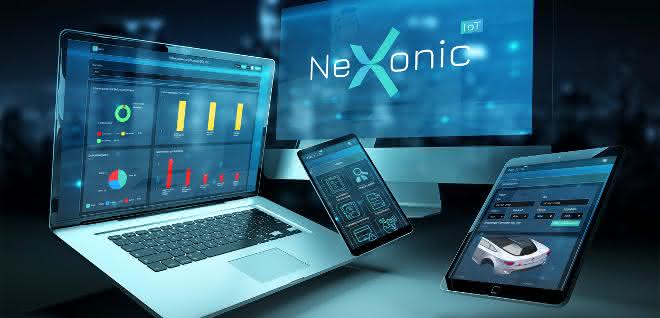
Digital and transparent supply chains are becoming the industry standard and are the control instrument for global value streams. This is not a result of the changes brought about by the Covid pandemic, which has challenged the robustness of global production chains. In addition, real-time data and the highest quality of information are becoming increasingly important in order to be profitable and efficient in international competition. Proactive agility is now the industrial standard, but is not implemented throughout many companies. The management consultancy P3 Group supports its clients in the operations sector with the digital transformation of their supply chains for suppliers and producers in the automotive, mechanical engineering, process industry and food sectors. P3 has developed a digital store floor management system, the NeXonic Software Suite, incorporating the knowledge and experience gained from numerous customer projects.
The following use case illustrates the requirements and implementations based on a completed P3 project. The customer is a Tier 1 automotive supplier from Germany with a turnover of more than 3 billion euros and around 20,000 employees. The supplier's core competence is plastics processing for exterior components. The end products are various painted body attachments, such as front and rear bumpers and sills. The supply chain can be summarized in three main production steps. In the first step, the raw part is produced using plastic injection molding and then painted in vehicle color fully automatically in the second step. These two steps are carried out in a German plant. The semi-finished product is then shipped via intralogistics to a sister plant in another European country. This is where the third process of assembly takes place, in which small parts and add-on parts are assembled on article- and customer-specific assembly equipment. This also includes the complete headlight unit, sensors and radar electronics. The finished body components are then delivered via a sequencing center just in time directly to the OEM's vehicle plant, where they are installed after a maximum of 12 hours in order to keep stock levels as low as possible.
Requirements in production and logistics
This supply chain presents numerous challenges. The product is completed in various factories across several European borders. Small parts and add-on parts come from Eastern European factories. There are also other purchased parts from Tier 2 sub-suppliers. The complete bumper consists of several hundred individual parts. Customer-specific variants and different paint finishes mean that no two bumpers are the same. Furthermore, the Tier 1 supplier runs products from different OEMs on the same production lines and production facilities. Added to this is the logistical challenge of just-in-time sequencing at the sister plant. The body parts are sensitive due to the paint finish, which harbors potential for errors. The challenges of the value stream can therefore be summarized as a large number of different players in the production process, time pressure due to delivery logistics and a sensitive product with a high level of variant complexity and therefore a large number of potential errors. Based on these challenges, P3 was commissioned to set up the NeXonic store floor management suite to create a fully transparent value stream. This business intelligence software was to provide KPIs on production and delivery performance in real time. In addition, key figures were to be used to uncover potential for quality improvements and process optimization.
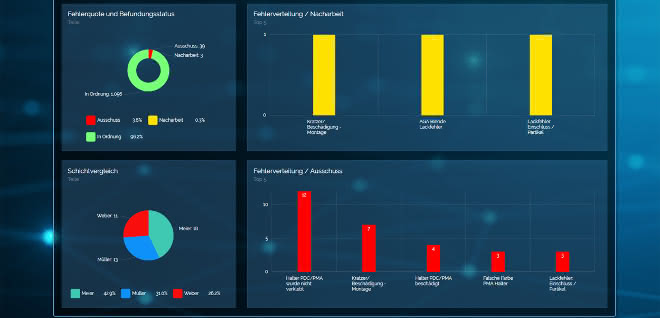
In the first step, the various stations (quality gates, systems and logistics) of the value stream were recorded in an as-is analysis. NeXonic offers the advantage of generating real-time data from a wide range of control systems and system sensors, regardless of the system manufacturer. The systems are tapped directly. The real-time data provides operations management with the previously missing KPIs in a dashboard to support production control. Due to the large number of different players, a pure monitoring solution without direct intervention in the value stream was expedient here, as it is not desirable for the plants to be controlled by a single system. In view of the conglomerate of several companies, there were also legal aspects. An NDA agreement and special visibility profiles were used to set up the software and the KPI dashboard in such a way that internal production data is not visible outside the company, but the transparency of the current value stream and the current products provides the necessary information for all parties at all times.
Additional camera solutions
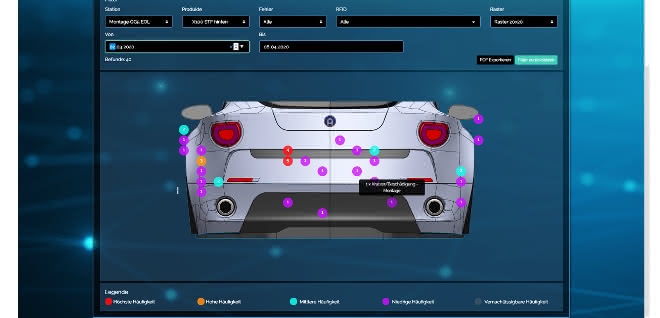
However, the existing systems, plant data and infrastructure sensors were not sufficient to generate the quality KPIs. Up to now, the existing KPIs were evaluated by the visual inspection of the operators in various Q-gates of the individual production steps. Additional camera solutions with tablets have now been implemented for systematic quality reporting. These real-time images supplement the performance indicators and enable the supplier's quality department to systematically process defects. The identification of causes and processing could now be carried out agilely and quickly across all plants and boundaries. The visual images of the defective parts were supplemented by headmaps in the software. This makes it possible to identify system errors. The elimination of these errors was then also visible in the same dashboard through the improvement in production performance.
The dashboard in conjunction with the automatic monitoring of the NeXonic Suite also significantly reduced the reporting effort for the quality and production departments, as the dashboard functions as real-time reporting. The Q personnel were supported by the P3 consultants. Through training and corresponding standards, more agile quality work was rolled out and gradually handed over to the existing Q organization. Operational production improvements according to lean standards were introduced and implemented by the consultants. The new control loops were also able to access NeXonic as an interface. Furthermore, the use of a single reporting source from real-time data led to faster communication channels and less effort in various management committees. NeXonic is a standard solution that is adapted through individual customizing scopes during implementation. During the course of the project, additional scopes were implemented in the software in weekly feedback loops in an agile manner in line with the value stream. One advantage of this approach is the high speed of implementation and the low training and integration costs.
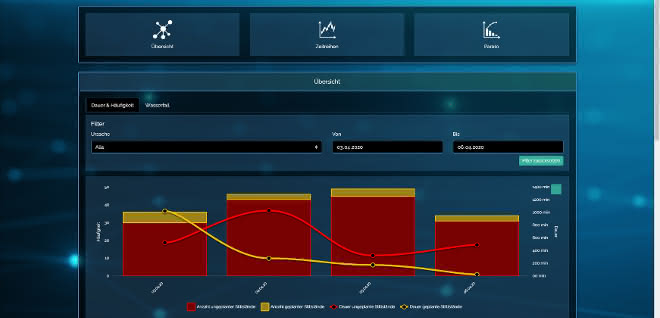
The implementation from the start of the project to the commissioning of the KPI dashboards on real-time data took two weeks. The three main production processes were prioritized for implementation. Further peripheral production processes were integrated into the Business Intelligence Cockpit during the remaining three months of the project. This was accompanied by the adaptation of the corresponding quality work. The reject rate was reduced from around 10 percent at the start of the project to 3 percent in the fourth week of the project. Three months after the start of the project, the reject rate was kept constant at around 1.5 percent. Production capacities and cycle time improvements increased by 34 percent after two months. The optimizations are primarily due to the ability to intervene quickly thanks to real-time data, simpler and more agile production and accompanied logistics planning thanks to greater transparency across all plants and suppliers. Through the operational use of NeXonic, the supplier independently maintains the production and quality level at the same level as at the end of the project without P3 support.
Jan Hinrichs, Managing Director P3 Automotive; Sebastian Weber, Head of Digital Operations; Niklas Broch, Senior Consultant Operations & Supply Chain


You might also be interested in
Android tablets from the ET6x series
For demanding applications
Zebra Technologies has developed the robust Android tablets of the ET6x series for use in warehouses, production, field service and public safety.
 read more...
Interview with Gabriele Zocchi
A single software for AR and VR
Augmented and virtual reality differ in the degree of virtualization, but can now work with one and the same software - and in multi-user applications. Gabriele Zocchi, Technical Product Owner at Holo-Light, explains how it works.
read more...Robust computer solutions and an autonomous robot dog
Getac, provider of computer solutions, is once again presenting innovative technologies for industrial applications at this year's Hannover Messe. Getac has several robust new products in its luggage. Visitors to the Getac stand in Hall 15, Stand...
read more...Process control with traceability
RS Components has added a new 300 W manual soldering platform to its range with the WXsmart from Weller. The soldering station uses TLS encryption and two-factor authentication to protect against cyber attacks and data skimming.
read more...Highly automated into the future
The classic production line is a discontinued model. Increasingly complex and fully digitalized value chains require a well thought-out and flexible approach to automation.
read more...Process control with traceability through soldering tips with microchips
RS has added a new 300 W manual soldering platform to its range with the WXsmart from Weller. The station combines all soldering applications in a single device and comes with a new range of intelligent soldering tips. In this way, the WXsmart...
read more...Determine position in real time
Vehicle tracking through precise real-time localization: At the Mercedes-Benz Türk bus factory in Hoşdere, time-consuming searches and long search routes on the 36-hectare site are a thing of the past.
read more...Fit for Zone 1/21
The Tab-Ex 03 tablet from the Pepperl+Fuchs brand ECOM Instruments is now the third generation of Samsung devices in variants for industrial use in harsh environments. From November 2022, the Tab-Ex 03 will be available in the DZ1 variant for use in...
read more...Increasing productivity in industrial manufacturing
Transparent production planning and control for the digital factory - 5thIndustry presents the real-time app 5i.Progress. The latest development from the software experts enables intuitive order management for employees in production.
read more...