
Increase system availability
Productivity boost through MES
In order to be and remain competitive, companies must design their processes, organization and production efficiently. An MES can help on the way to high plant availability, low waste and less organizational work.
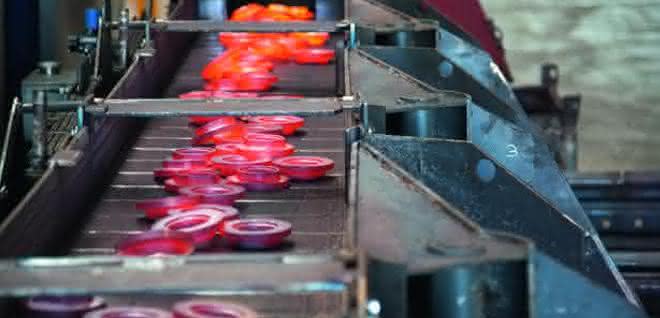
Regular orders, secure income and without economic fluctuations - that is what all managing directors want, as it means the continued existence of the company. For this reason, the metalworking company Penn GmbH from Krems an der Donau in Lower Austria has continuously expanded and realigned its portfolio. While the company started out manufacturing agricultural equipment in the 1960s, in recent decades it has become a high-tech forging company, specializing primarily in the construction industry and the automotive sector. Both target groups present the company with very specific challenges: The construction industry has to contend with high economic fluctuations, which always affect the upstream and downstream supplier companies as well. The automotive industry, on the other hand, does not suffer as much from economic ups and downs. However, it demands products that have to meet the extreme quality requirements of the automotive sector. In addition, the market demands enormous delivery reliability and flexibility.
Penn from Senftenberg-Imbach in Lower Austria produces and processes forged parts for both industries and offers a broad portfolio of different metalworking processes, including metal forming in a multi-stage hot press as well as turning and milling. With the "centerpiece" of production, a high-performance hot press from Hatebur, the company is able to produce up to 4,000 precision forged parts per hour with a part weight of up to 3 kg. For the finishing of the forged parts, the company has 41 lathes, 6 CNC milling machines, systems for robot welding and thread rolling as well as workstations for assembly. Thanks to the variety of processes and machining technologies with state-of-the-art machinery, Penn is not only able to offer its customers a wide range of products, but also to generate a high level of added value in-house.
In addition to quality, flexibility and short throughput times, the company is valued for its high reproducibility of tools and devices. Among other things, it processes alloyed and unalloyed steels as well as non-ferrous metals such as copper and aluminum.
MES ensures competitiveness
The metal processing company operates at three sites in Austria and one site in the Czech Republic with a total of around 1,000 employees. Many new projects have led to major growth since 2014, which is why it was necessary to record plant downtimes more easily, optimize the response time of production planning and switch from Excel, make work easier for each individual employee and improve plant availability. Based on these plans and the main objective of remaining competitive on the market in the long term, the company management decided to implement a Manufacturing Execution System (MES). As such software solutions record and process precise data from production, they offer the opportunity to intervene in production in a controlling and optimizing manner. Above all, unplanned downtimes, which cause considerable costs for machines and systems, can be reduced.
Once the decision to introduce an MES had been made, Production Manager Mechanical Production Andreas Fabian and his colleagues looked around for suitable systems. Of all the products, the MES solution from Proxia appealed to the decision-makers the most because, on the one hand, it was hardware-independent and, on the other, it best met their individual requirements. The modular software with an intuitively understandable user interface particularly appealed to Fabian. Proxia organized a visit to a reference customer so that those responsible at Penn could experience how the system works. "I'm still of the opinion that you have to see a system like this live," reports Fabian. "It's the only way to understand what it can do. We immediately realized that the Proxia software itself is very easy to understand. And we also noticed the joy with which the employees handle this system. That ultimately led to the decision."
Three-month test phase at pilot plant
The subsequent cooperation with Proxia also proved to be extremely effective and satisfactory for the production manager of the mechanical production department. In order to test how the system could be implemented, Andreas Fabian and his colleagues initially started using the MES on a pilot plant for three months. During the test phase, Proxia responded promptly to requests for changes. The configuration settings were simplified and the connection to the ERP system AS400/XPPS was implemented. Andreas Fabian emphasizes the good cooperation with Proxia: "As a customer, you can and should raise your objections. This is the only way to find the optimum solution that really fits. Proxia was very cooperative and responded to our wishes at extremely short notice. That was also very important to me."
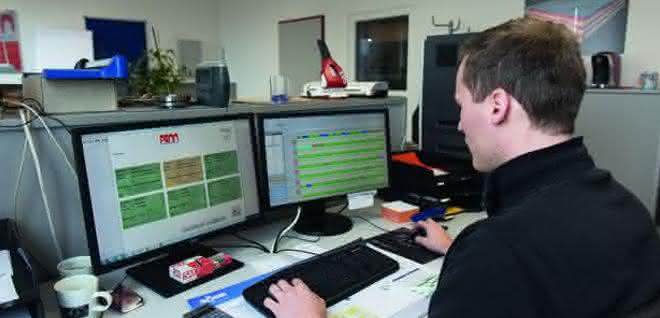
A series machine with little set-up effort was used for the pilot operation. Proxia provided a BDE loan terminal for operation. All modules were activated for the trial operation of three months. All machine and production data acquisition (MDA/PDA) times were entered into the data acquisition software. During the three months of test operation by Penn key users, the MES proved itself on the pilot plant. Due to this success, Fabian decided to roll out the system to other plants as well. In cooperation with Proxia, those responsible specified the overall project: in the first step, the MES was to include automatic machine data acquisition (MDA) and production data acquisition (PDA).
Communication as the key to success
The Proxia MDE was extended to all new series machines with low set-up effort. Proxia BDE production data acquisition was introduced for manual workstations. To shorten the familiarization phase, the employees were given their own manual explaining how to operate the MES. In addition, various roles with corresponding rights were defined in the system. Depending on the application, the machines were equipped with tablets or PCs for recording data. Newer systems provide the digital signals for an MDC as standard; older machines had to be upgraded accordingly by the technicians. Proxia received messages regarding signals and IP addresses in order to adapt the system communication accordingly. Where this was not possible, Penn worked with Proxia to develop an independent configuration, including a hardware concept with PLC. A total of 19 machines were then connected with MDE software. For production data acquisition, the machines were equipped with 12-inch tablet PCs, which are connected to the company network via WLAN. Fabian explains his decision in favor of the mobile solution as follows: "Everyone has tablet PCs at home, the employees know how to use them. And even the older ones know it from their grandchildren." Andreas Fabian was also able to allay employees' fears of being completely monitored: "What we evaluate, we also show here. The visualization is visible to everyone on the info boards. Anyone who needs additional information can access further data at any time. That's how we handled it from the very beginning and that was the key to success."
MES promotes CIP: reject rate below 1.5 percent
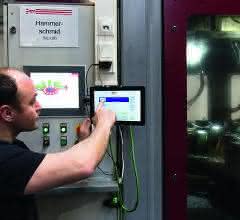
As the data was accessible to everyone, a small competition arose among the employees as a positive consequence. As soon as someone fell significantly below the average, the system helped them to find and rectify the reasons in the shortest possible time. In addition, employees were able to play an active role in configuring the system: If an employee needed a certain button in the software, he came to Fabian's colleagues with the suggestion and they set it up for him. This also promoted acceptance.
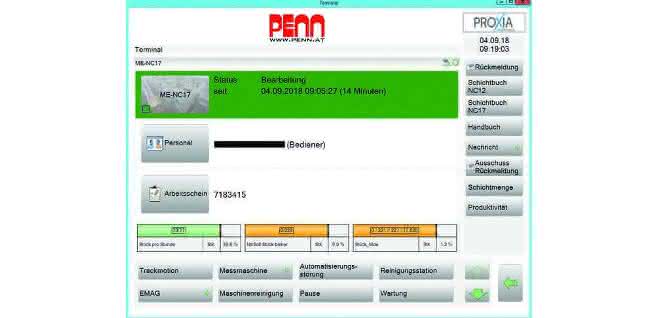
The positive results were not long in coming: as soon as a fault occurs, maintenance and production management are automatically notified by email. In this way, the causes of faults can be localized, evaluated and, above all, rectified more quickly, so that the systems are up and running again within a very short time. This has enabled Penn to increase its machine availability to 97 percent. The automatic evaluation of machine data has helped to integrate newly commissioned systems into productive operation more quickly. As machine and production data is not only automatically recorded but also evaluated, working time in the organizational area has been reduced by around 50 percent. Set-up times have also been significantly reduced. All of this has contributed to a significant reduction in production and process costs. But it was not only the purely economic aspects that played a role. The active involvement of employees in the design of the MES has led to the fact that employees are now driving the continuous improvement process (CIP) at Penn with their own suggestions, which is reflected in the quality of the products: The reject rate is below 1.5 percent. This puts Penn below the expectations of car manufacturers, who consider a value below 2 percent to be ideal. The calculated OEE (Overall Equipment Effectiveness) of around 90 percent also speaks volumes. Now that working with Proxia's MES has led to a consistently positive development, Penn is planning to expand the system: the entire mechanical production with around 50 systems and machines will be fully integrated into the MES, communication with the ERP system will be expanded so that employees can call up all order data and scrap figures electronically via their PC terminals at the machine. The process data of the systems, for example vibrations or temperature, are to be continuously and automatically monitored so that faults can be detected and rectified even sooner. In addition, the MDC and PDC modules are to be supplemented by the Proxia detailed planning and personnel resource planning modules. With these measures, Penn is well positioned to further reduce throughput times and increase its own competitiveness.
According to documents from Proxia


You might also be interested in
ebm-papst is growing again thanks to AI and data centers
ebm-papst returned to a growth trajectory in fiscal year 2025/26. Air Technology, data center applications, and artificial intelligence are driving revenue and investment.
 read more...
SPE on the Verge of a Market Breakthrough
Single Pair Ethernet (SPE) has moved beyond the conceptual phase and is increasingly being implemented in industrial settings. The focus here is not only on higher data rates and simplified cabling, but above all on the issue of system integration...
read more...More than 900 exhibitors already registered
Around six months before the start of the trade fair, more than 900 companies have registered for SPS 2026 in Nuremberg. The trade fair focuses on industrial AI, cyber security and digital transformation.
read more...Virtual PLCs in practice: How vPLCs make production systems more flexible and scalable
The increasing networking of IT and OT is fundamentally changing industrial automation. The IT/OT Integration Summit shows how modern technologies can make production environments more efficient, flexible and future-proof. The event will focus on...
read more...Sales growth in a turbulent market environment
Thanks to innovations and a focus on strategic industrial markets, Sick was able to moderately increase its sales in the 2025 financial year. In a turbulent market environment, the company was able to maintain its position and gain market share with...
read more...Siemens presents new AI agent
Siemens is launching 'Eigen Engineering Agent', an AI for automation technology. The solution is integrated into the TIA Portal, has been tested with over 100 companies and is designed to significantly accelerate engineering processes.
read more...Schaeffler keeps sales almost stable
Schaeffler generated revenue of EUR 23.5 billion in 2025 and increased EBIT before special items to EUR 936 million. At 266 million euros, free cash flow was significantly above the prior year and forecast. Net income remained negative due to high...
read more...Advancing artificial intelligence together
Helukabel is stepping up its activities in the field of artificial intelligence and is now a member of the IPAI. The innovation and collaboration platform for companies, research facilities, institutions and administration has set itself the goal of...
read more...New impetus for ifm sales
Two new positions were filled at ifm at the start of 2026: Markus Wolf becomes Managing Director Sales Germany, Sven Quant takes over the position of Central Managing Director in the Process Sensors division within the ifm Group.
read more...