
Digitalization and networking
Digital twin brought to life on the store floor
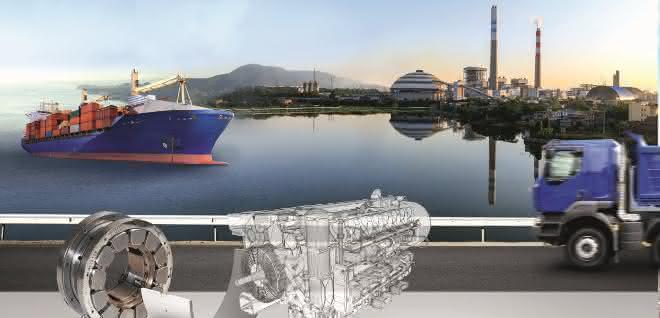
With the introduction of an end-to-end software process solution from the ERP to the machining center, Miba's toolmaking department proves that a savings potential of 10 to 25 percent is realistic for series production. On special machines, it is even possible to achieve a 300 percent increase in efficiency.
The Austrian Miba Group produces engine and industrial bearings, friction materials, sintered components and coatings, among other things. As part of the "Miba 2020" strategy, the company is making long-term investments in global growth, innovation, technology and people. The end-to-end digitalization and networking of production plays a major role in unlocking untapped potential.
Series production and toolmaking: different and yet the same
Miba's series production for engine bearings and toolmaking are located at the site in Laakirchen, Austria. At first glance, these two areas could not be more different. On the one hand, there is toolmaking with its 40 highly qualified specialists and, to a certain extent, a manufacturing character. On the other hand, there is series production, trimmed for maximum throughput, with ten times as many employees, around 60 percent of whom are semi-skilled.
There are also differences in the IT infrastructure. Before the Coscom solution was introduced, EspritCAM from DP Technology and machine simulation with CheckitB4 from Pimpel were already used in toolmaking. In contrast, there is an SAP connection and an MES system for store floor control in series production and the work preparation department uses Vanc from GNT Systems as CAM software.
The toolmaking department produces equipment for the company's own plain bearing production. In addition, around a third of the machines and devices are manufactured on a contract basis for external companies in the surrounding region. The machine park includes 13 CNC machines for mechanical processing. Series production, meanwhile, manufactures engine bearings for the Miba Bearing Group on a large scale, including for high-performance gas and diesel engines and for mechanical and plant engineering, such as for turbines, compressors and pumps. The company's machinery currently includes 64 machines, 27 of which are CNC machining centers. Although the tasks, the IT infrastructure and the established processes are very different, the two areas have something in common. "All of us here at the site are driven by the increasing complexity of processes and machining. This needs to be mastered," says Martin Holzinger, who is responsible for toolmaking at Miba as project manager.
Huge potential through data clarity and consistency
A good five years ago, an external consultant analyzed the benefits of introducing a dedicated tool management system as part of a return-on-investment analysis. In the final analysis, savings appeared to be possible across both areas, particularly through the reduction in tool set-up costs - a considerable sum. "The study only made clear what was already obvious: due to organizational growth and increasing complexity, we had lost transparency in our processes. It was clear that we needed a new, future-proof infrastructure system for the store floor," says Holzinger.
So Miba began the system selection process. It soon became clear that it had to be a software-based central data platform, a bidirectional solution that on the one hand would supply the two CAM systems in the work preparation department with the necessary tool data and transfer the NC programs to the machines in a process-safe manner. On the other hand, this infrastructure solution should also be able to centrally archive an NC program generated directly at the machining center, so that its reuse in the case of repeat parts represents a process-safe push-button solution.
At no point in the process should there be duplicate data storage or input; clarity and consistency in the data structure was an essential factor. Thomas Schernthaner, responsible for pre-setting/tool technology and project member for the process design of plain bearing series production, remembers the benchmark: "In the end, only the Coscom solution and that of a competitor were left on the shortlist." The differences in the solutions presented seemed minor, but the competitor would have resorted to a partner for the connection of the CAM program management because it did not offer such a solution itself. "We wanted an end-to-end solution from a single source," emphasizes Schernthaner. And only Coscom was able to offer this with ToolDirector VM and FactoryDirector VM. So it's no wonder that the contract was awarded to the renowned manufacturing IT solution provider. Stefan Kühn, the responsible project manager at Coscom, explains the decision succinctly: "The decisive factor for Miba was the possibility of deep integration into the existing, very heterogeneous infrastructure."
Toolmaking acted as the pilot application for the implementation of the new Coscom data platform "We were initially able to concentrate fully on the store floor, as there is no networking to SAP ERP or the MES system, as would be the case in series production," explains Holzinger. "Under no circumstances did we want isolated solutions that might be perfect for one application but could not be rolled out to other areas. Our aim was quite clearly that the new solution should be a model for all machines and other production departments," says Schernthaner, setting the direction.
Digital twin for the virtual machine at the touch of a button
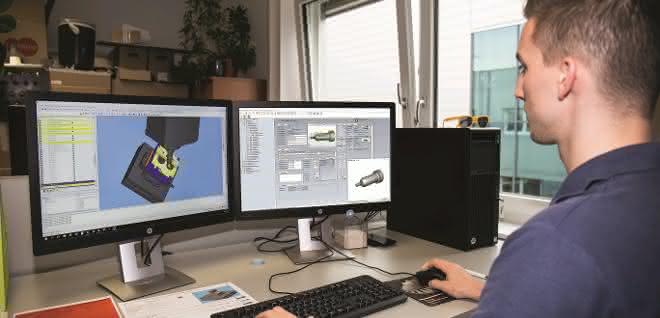
Central data management in toolmaking is now handled by ToolDirector VM for tool data management and FactoryDirector VM for CAM/NC program management. "The requirement for the interface to Esprit CAM was that all technology data for turning and milling tools had to run through it. We wanted complete transparency," explains Holzinger. The data consistency should go so far that the information is transferred from the presetting devices to the Heidenhain or Siemens controls of the machines. The tool data should be usable everywhere. Coscom project manager Stefan Kühn: "All data is created completely neutrally, i.e. independently of the individual target systems, and passed on to them as required with the corresponding technology information." In the run-up to the project, it was carefully considered how the data acquisition could be transferred to the digital Balluff chip of the tools via the presetting devices and how the data should be transferred to the machine. The physical movement of the equipment from the tool dispenser to the machine is mapped completely digitally with all the associated information. The data consolidation for this takes place in the ToolDirector VM. There is no uncontrolled data sink. Bidirectional data exchange takes place in the same way with the two presetting devices from Haimer and Zoller. The set-up sheet is generated at the click of a mouse via a parser run in the FactoryDirector VM. "This provision of information takes just a few seconds. And every employee understands the result: they can immediately see how the complete tool was assembled, measured and which machine it was assigned to," says Holzinger. "Basically, this is a digital twin," says Christian Erlinger, Member of the Management Board at Coscom. "This is because it is the complete equipment documentation for work preparation and the store floor. We have implemented the digital tool twin for this with ToolDirector VM."
A total of around 1,600 complete tools are defined in the software solution, of which around 270 are standard tools and around 4,000 individual components are digitally archived. Martin Holzinger explains why this is so important for Miba: "In the past, the stock of used tools increased considerably over time because employees were unsure whether the tool would still be sufficient for the job. They therefore preferred to use a new tool rather than a used one, even though it would still have been usable."
Agile project management and strong partnership
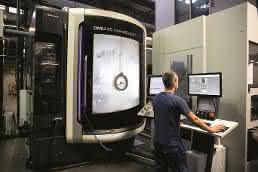
Implementing the extensive specifications was a challenge for the experts at Coscom. Esprit CAM now does its job with a deep integration into the Tool- and FactoryDirector VM. This means that the recording of tool storage locations and other operating resources is always transparent and the generated NC codes can be accessed securely.
"Our project partner for the connection was Pimpel. The company is very good at implementing infrastructure projects in conjunction with operational systems such as the CAM and simulation connection," emphasizes Christian Erlinger.
The specialists always pursue the project goals with a certain degree of agility because priorities can shift. For example, the integration of an NC grinding machine was not yet an issue at the start of the project, but it became one as the project progressed. The ability to expand and update the system solution must be guaranteed. The CAM connection benefits from Coscom TCI technology: ToolDirector VM has the so-called Tool Cooperation Interface (TCI) for seamless CAD/CAM and simulation process data exchange. The tool database is opened for third-party providers via a type of tool data container. The advantage: the tools are created and maintained for all target systems in a central location.
Central store floor digitization: visualization at the machines
At Miba, digitalization extends from the AV to the store floor. All production-related information required for the work process is visualized directly at the machine in toolmaking using the central networking technology InfoPoint VM on terminals. The operator can call up all production information here. InfoPoint VM ensures that the checked result from the CAM and simulation department is implemented in line with the specifications. In this way, the previous isolated visualization solutions on the machines have been replaced by a central system.
Martin Holzinger: "We were not competitive in the production of small parts, partly due to the high set-up costs. This was never an issue for large parts. The Coscom solution has turned the tide here. Thanks to the consistency of the solution, we have been able to significantly reduce the set-up time for a 5-axis milling machine in 2-shift operation. The output is now three times that of the previous system, as we are now able to fully utilize the machine's capacity. We started with four people on the machine, then reduced it to three and occasionally there are now only two."
Foundation stone for future viability
"It's unbelievable what savings can be extrapolated across the large number of employees," marvels Thomas Schernthaner. The implementation of the solution can be measured not only in terms of money, but also in terms of satisfaction and motivation. "The Coscom solution can be expanded at any time and is therefore adaptable. The project implementation took time and a certain amount of initial effort was necessary. But it was worth the effort because we also thought about the future. As part of our digitalization strategy, we have created a sustainable IT solution for this trend with Coscom - and thus the basis for the future viability of our company."


You might also be interested in
Atlas Copco takes over long-standing sales partner
Atlas Copco has taken over Heide-Pumpen. The specialist for mobile pumps has been working closely with Atlas Copco in sales and service for a long time, especially for surface pumps for construction site dewatering and wastewater detour or in the...
 read more...
Lutz Pumpen at the Achema 2024
New mobile drum pump with battery drive
The new B3 Battery from Lutz Pumpen promises mobile and safe working with aggressive liquids without having to compromise on pumping performance compared to wired versions. The battery-powered drum pump will be on display at Achema, the world's...
read more...Maintenance and Pumps&Valves in February
Final preparations are underway in Dortmund: On February 21, 2024, maintenance will start as the leading trade fair for industrial maintenance and with it Pumps&Valves as the trade fair for industrial pumps, fittings and valves.
read more...Liquid separator keeps pumps dry
Vacuum clamping minimizes distortion and enables five sides to be machined in one clamping operation. The use of cooling lubricants poses a challenge: If they get into the vacuum generator, they can cause serious damage.
read more...Spring clutches for construction machinery
Spring clutches from Torsion Control Products (TCP) are ideal for use in construction machinery where modern diesel engines are used.
read more...Protection against cooling lubricant
Liquid separator from Schmalz keeps pumps dry
Anyone clamping with a vacuum during CNC machining must protect the pump from cooling lubricant. The NLS liquid separator from Schmalz separates the cooling lubricant and returns it to the running process - without interrupting the vacuum.
read more...Which clutch for what?
Mechanical engineering and its applications are multifaceted. Every application is special and requires a perfect machine design. Individual components in the system must also be optimally designed.
read more...Energy efficiency needs electrical engineering and IT
The energy crisis makes one thing clear: it is not enough to simply screw a photovoltaic system onto your roof or purchase green electricity. Industry is faced with the challenge of reducing consumption in order to counter the rise in energy prices,...
read more...Solutions for a networked and climate-neutral industry
At the world's leading trade fair for industry, around 4,000 companies from the mechanical engineering, electrical and digital industries as well as the energy sector will be showcasing solutions for the production and energy supply of the future.
read more...