
Digital twin
Take off with the Product Innovation Platform
The automotive industry can learn from the aviation industry when it comes to optimizing billable operating hours and fleet availability. There, many processes relating to operations have been optimized. After all, new mobility concepts in the automotive sector based on the "pay per use" principle can only be economically successful if the vehicles are on the move as often as possible.
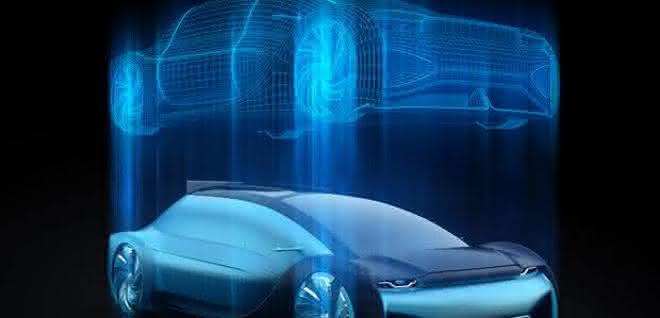
When it comes to the product lifecycle, the aviation and automotive industries have little in common at first glance: on the one hand, aircraft that have been on the market for more than 20 years, and on the other, vehicles that are being launched in ever shorter cycles.
However, there is one area in which the aviation industry is clearly ahead: It is the processes surrounding maintenance, repair and overhaul (MRO). Because safety is the top priority in this industry, airlines have to comply with a very complex set of rules with constant checks and maintenance measures. These range from minor repairs, which can be carried out on the apron during ongoing operations, to the complete disassembly and reassembly of the entire aircraft, known as a D-check. The latter is carried out approximately every ten years and takes four to six weeks. During this time, around 30,000 to 50,000 working hours are required. But even in the interim, for example during the C-check, which is due after one and a half years, passenger aircraft have to remain on the ground for one to two weeks and around 5,000 working hours are due. In view of the high costs of labor and downtime, the industry has therefore developed a system of optimal processes and tools. A product innovation platform with an end-to-end digital twin and digital thread plays an important role in this.
In this respect, the automotive industry has a lot of catching up to do. After all, car-sharing offers and car-as-a-service concepts only work if the vehicles are on the move as often as possible. This, in turn, can only succeed if the maintenance processes are also much more optimized than has been the case to date. Traceability and transparency across different variants and configurations must be ensured at all times.
Overcoming silos with the Digital Thread
In particular, the increasing linking of hardware and software in modern vehicles will be a major problem in the future. If, for example, different versions of an ECU (Electronic Control Unit) are used within a model generation, the resulting dependencies on the software must be mapped in a PLM system.
Instead, many car manufacturers still store their data in dozens of fragmented systems. There are many of these throughout the life cycle of the product: In the requirements phase, one of the established requirements management tools is used in most cases. Often, however, Excel is simply used. CAD systems for mechanical components, E-CAD solutions for electronics and ALM applications for software management are used in the design phase. In addition to these authoring tools, a PDM system may be used as a management tool for all aspects of mechanics. In production, the Manufacturing Execution System (MES) works together with the ERP system. All of this information is stored separately in data silos and is therefore not available for in-depth analyses that can uncover correlations. However, this is precisely what is important: Only if it is clearly recognizable which components are actually installed and which decisions were made in the design phase can well-founded decisions be made about maintenance work and maintenance intervals.
Only the combination of context and real-time data in the area of predictive maintenance enables the meaningful establishment of new business models in which customers pay for the use of a vehicle, for example. In this case, a PLM system makes it easier to comply with service level agreements and maintenance intervals can be scheduled in such a way that quality and cost-effectiveness are optimally coordinated. At the same time, it is possible to provide customers with individual offers that are tailored to their individual usage profile.
Conversely, the combination of IoT technology and PLM solution enables the further development and continuous improvement of a product. For example, an OEM can use the IoT data to identify which stresses occur in practice and which components exhibit weaknesses during operation. Based on this knowledge, it is possible to redesign and improve future vehicle generations. Ideally, a closed loop is created that considerably simplifies the implementation of modern mobility concepts. Data lakes are often mentioned in connection with IoT data. However, only the networking of big data analysis in the data lake with a specific product configuration produces usable results. If this networking is not successful, the data lake is more like another data swamp.
The greater role of software
The close integration of hardware and software is playing an increasingly important role in the production of modern vehicles. To achieve this, the clearly defined, planned processes of hardware engineering must be harmonized with the iterative, agile approach of software engineering. At the same time, these methods will also become established beyond software development, triggering a paradigm shift that will fundamentally change engineering. As a result, IT solutions that provide a consistent view of the database will become extremely important.
At the same time, simulations are playing an increasingly important role. Particularly in view of the strict requirements of level 4 or 5 autonomous vehicles, more and more simulations need to be carried out today. This is the only way to really cover all eventualities that could never be "experienced" through test drives alone.
However, the results of such simulations are still simply stored on a file system. However, the basic input parameters can no longer be consistently traced. One of the reasons for this is that such input parameters are sent by email in the form of spreadsheet files that can no longer be clearly assigned to a specific simulation just a few months later.
New possibilities through PIM
In order to obtain an end-to-end view of processes and components relating to automotive design, manufacturers must increasingly rely on the digital thread and synchronize it with the digital twin. This is the only way to create a comprehensive view that covers all phases of the lifecycle: from the initial idea and design through to the smallest installed screw and all software systems.
The comparison with an orchestra is obvious here: the individual musicians each master their instrument perfectly. But it is only through the successful coordination and orchestration of all the individual people and components that the structure becomes more than the sum of its parts.
While the aviation industry is already far ahead in this area, the automotive industry still has a lot of catching up to do. This step does not even require radical and costly changes to the IT landscape. Systems such as those from Aras can act as a bridge between various existing solutions and enable authoring systems, E-CAD management tools and other systems to be combined into a flexible and powerful platform for the entire product life cycle.
Andreas Grave, Director Automotive EMEA at Aras / ag


You might also be interested in
Predictive maintenance in retrofit
Predictive maintenance pays off. This is because early detection of impending failures means that systems can be serviced in a targeted manner before production downtime occurs. But how complex is it to integrate such a maintenance concept into an...
 read more...
Maintenance instead of replacement
The circular economy starts with the machinery
Sustainability in industry starts with machines, says our guest author from Deguma: How maintenance, modernization and the 5R strategy save resources, energy and CO₂.
read more...3D printing for unplanned requirements
The material fails and the machine suddenly stops? Then you need to take the right measures to be able to resume production quickly. Material failure in the form of faulty components or material wear in the frame are a risk for any production.
read more...High demands in terms of safety, application and robustness
Demanding work in the electrical trade and energy supply as well as smooth processes in production require innovative and customized measurement technology that scores points for safety, ease of use and resilience.
read more...Car meets e-bike: riding with lubrication-free polymer bearings
Studies show that the proportion of pedestrian and bicycle traffic is increasing in urban areas. With the JetBike, JetBike GmbH from Braunschweig presents a mixture of e-bike and car and relies on lubrication-free polymer bearings from Igus.
read more...Hydraulic hub for more efficient servicing
Bosch Rexroth presents a digital toolbox for service and maintenance. With a comprehensive range of digital services, the Hydraulic Hub simplifies and accelerates the service and maintenance of hydraulic products and increases machine availability.
read more...Arnold Umformtechnik expands after-sales...
Faster help with VR glasses
Arnold Umformtechnik is expanding the after-sales service for its machines to include digital remote services. The focus is on data security, simple operation and clear processes.
read more...147,000 euros per hour: high costs for German companies due to unplanned downtime
According to the "Value of Reliability" study, 67% of industrial companies in Germany experience unplanned downtime at least once a month. This costs the German economy 147,000 euros per hour. Nevertheless, reactive maintenance concepts are not...
read more...Maintenance starts with a maintenance planner
Legal requirements stipulate that machines and systems must be serviced regularly. The maintenance work serves to ensure occupational safety and economic efficiency.
read more...