

Organic semiconductors
OLED pioneer Karl Leo receives European Inventor Award
The European Patent Office (EPO) has honored the German physicist Karl Leo for his groundbreaking work in the field of organic semiconductors. His research led to the development of a new generation of highly efficient organic light-emitting diodes (OLEDs), which are now used in a large number of smartphones worldwide.
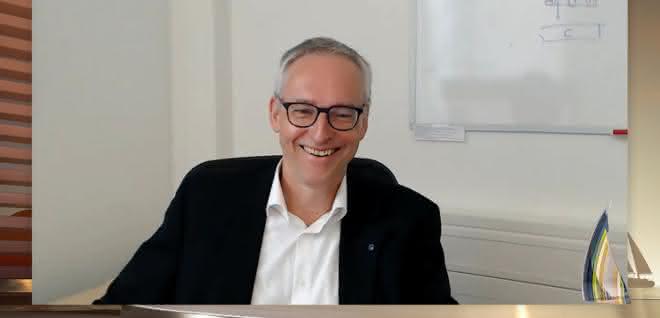
His inventions have fundamentally changed the electronics industry and are widely used in solar technology. In a career spanning over 30 years, Leo has turned many of his research successes into commercially successful companies.
The European Patent Office (EPO) has awarded German physicist Karl Leo the European Inventor Award 2021 in the "Lifetime achievement" category. Leo's method of amplifying organic semiconductors with electron-generating substances ("doping") has fundamentally changed the electronics industry and helped millions of people to improve their products. His highly efficient, organic OLED (organic light-emitting diode) display technology provides greater image brightness, higher color resolution and better energy efficiency. OLED displays can now be found in almost all newer smartphones and other electronic devices for everyday use.
The European Inventor Award was presented for the 15th time this year as part of a digital event and was therefore open to the general public, who were able to connect from all over the world.
"Karl Leo's life's work has had an enormous impact on many areas. He has advanced environmentally friendly technologies and improved products that are used by millions of people around the world today," says EPO President António Campinos. "Throughout his remarkable career, he also demonstrated the ability to identify commercial applications in ground-breaking basic research, applying his technology to solve problems and creating businesses and jobs."
Leo's successes represent a career built on a passion for research and technology and an innate curiosity. Leo has co-founded numerous start-ups in "Silicon Saxony" to bring his inventions to market and continues to explore new applications for his groundbreaking organic semiconductors: "I see possibilities that go far beyond what has been achieved so far: Flexible, lightweight, environmentally friendly organic electronics can be used almost anywhere," says the inventor. "If my past has taught me anything, it's that dreaming is worthwhile."
From basic research to practice
Karl Leo's early fascination with household electronics - his passion for repairing earned him the nickname "the technician" among his family - later sparked his interest in semiconductors. In 1985, as part of his diploma thesis at the Fraunhofer Institute for Solar Energy Systems ISE in Freiburg, he began to investigate how electronic devices could be made better.
Leo's doctoral thesis and his work in the early years of his career focused on inorganic semiconductors, which are made of non-carbon-based materials. At the time, organic semiconductors were considered impractical due to their poor electrical conductivity and short lifetimes. Leo noticed that few scientists had considered doping organic semiconductors, i.e. adding tiny amounts of substances that create free-moving electrons to increase a material's conductivity. "A fresh look at research is often helpful because it makes you question dogma," says the inventor.
In 1998, Leo and his team of researchers, including the then doctoral students Martin Pfeiffer and Jan Blochwitz, achieved the decisive breakthrough when they developed an organic semiconductor LED at the Technical University of Dresden that only required a fifth of the voltage previously needed. Their high efficiency, long service life, energy-saving production process and the possibility of recycling made these organic semiconductors a more sustainable alternative to inorganic semiconductors. Leo and his team continued to refine the process, and in 2001 the scientist co-founded the German start-up Novaled AG to commercialize OLED technologies and materials. The company was later acquired by Samsung.
In the following years, Leo began to adapt the semiconductors to organic solar cells. This led to the co-founding of a spin-off that is behind the world's first industrial-grade organic solar film that can be applied to buildings. "My dream is that in 10 or 20 years it will be used on every building and help solve the climate crisis," says Leo.


You might also be interested in
Research at the Intersection of Fiber...
New Fiber-Optic Technology Reduces Energy Consumption in Photonic Computers
Frozen at -196 °C: A new liquid-core fiber combines light and sound with high efficiency, opening up new avenues for quantum computing and photonics.
 read more...
A quantum computer that performs calculations using oscillations
When it comes to storing information, quantum computers have so far run up against technical limitations. Instead of electromagnetic storage, researchers are now using mechanical vibrations. Their vibrating memory can store significantly more...
read more...Hydrogen Pipelines Put to the Test
New real-world lab tests safety and resilience
The Federal Institute for Materials Research and Testing (BAM) is opening a real-world laboratory to study pipelines and components for the safe operation of future hydrogen networks.
read more...Research Platform for the Energy Supply of the Future
For the first time, the Karlsruhe Institute of Technology (KIT) is bringing together key hydrogen technologies in a single research environment. The facility is intended to demonstrate how the production, storage, transport, and use of hydrogen can...
read more...When the quantum computer arrives
The Research Race to Ensure the Security of Critical Infrastructure
How can we protect our critical infrastructure from attacks by quantum computers in the future? As part of the QUEST project, Darmstadt University of Applied Sciences is researching new methods—post-quantum cryptography—designed to withstand even...
read more...VDE study on electrical engineering
More retirements than graduations
According to a VDE analysis, more than 30,000 electrical engineers will retire by 2029 without enough graduates to replace them. This is due to falling student numbers and high drop-out rates.
read more...Giving lightweight construction a profile
Pultrusion: A process that forms fibers under tension
Pultrusion is developing from a niche process into a key process for lightweight construction and sustainable fiber composite structures. The Fraunhofer IWU shows applications from energy to mobility.
read more...Green hydrogen directly from the sun and water
A start-up project at the Karlsruhe Institute of Technology (KIT) aims to fundamentally simplify the production of green hydrogen: Mass-produced photoreactor panels are to be used to produce hydrogen directly from sunlight and water - without...
read more...Fraunhofer shows industrial future between AI, data and new materials
At Hannover Messe 2026, the Fraunhofer-Gesellschaft will be presenting solutions for a resilient industry: from AI and data rooms to hydrogen technologies and material and recycling innovations.
read more...