

Tensile strength of 3D components
Voxelfill strategy overcomes inhomogeneous strengths in 3D printing
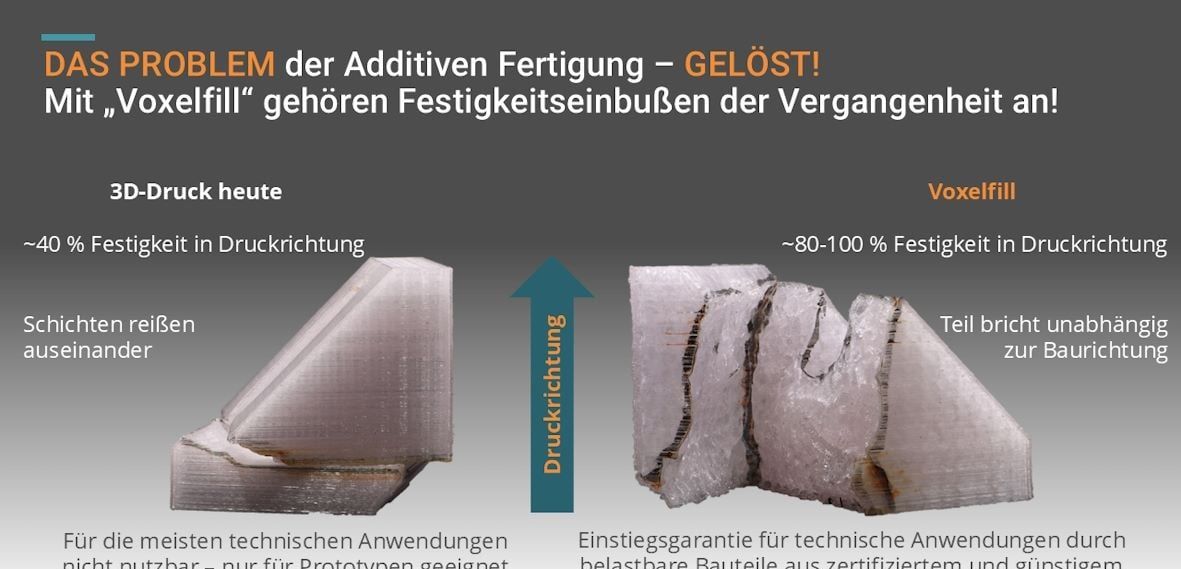
The company AIM3D has succeeded in demonstrating the advantages of the patented voxelfill process. Strength tests now prove that this process can overcome inhomogeneous strengths of 3D components in the X, Y and Z axes and thus comes close to conventional processes such as injection molding.
Since 2017, AIM3D has consistently relied on 3D pellet printers as opposed to FDM 3D printers, which process granulates instead of filaments. Significantly lower material purchase costs for granulates and the use of reclaimed material straight from the mill are the basis for the high cost-effectiveness of this AM production strategy with 3D pellet printers. Clemens Lieberwirth, CTO of AIM3D: "We believe in our CEM technology more than ever." 3D pellet printers offer the unique option of cost-effectively mapping the properties of conventionally manufactured components with an additive manufacturing strategy. With the voxelfill strategy, 3D printing now approaches the strength of conventional injection molding.
Principle is innovative and disruptive
In the additive manufacturing of polymers, components have inhomogeneous strength values due to the layer-based build-up process. This is mainly due to disadvantages in tensile and flexural strength as well as brittle behavior along the Z-axis. In contrast, the achievable strengths along the X and Y axes of some processes already approach the strengths of classic injection molding processes. AIM3D has already proven this with the processing of fiber-filled materials such as PA6 GF30 and pure thermoplastics such as ULTEM 9085.
In order to enable the broad applicability of 3D components, the phenomenon of inhomogeneous strengths must be fundamentally resolved. Using the 3D extrusion technology of the CEM process, AIM3D has developed a voxelfill strategy that overcomes these limitations and increases the cost-effectiveness of the CEM process. Voxelfill can also be used for multi-material components and is generally suitable for the material groups plastic, metal and ceramic for the construction of 3D components. Clemens Lieberwirth emphasizes: "Voxelfill gives processors the unique opportunity to improve Z-strength and printing speed. We are therefore working consistently on the further development of this technology."
Voxelfill strategy at a glance
The aim of developing Voxelfill was to overcome inhomogeneous strengths in 3D printing. Currently, material extrusion 3D printing achieves around 50 percent strength in the direction of printing, depending on the material. The printed layers therefore tear apart and the components are often only suitable for prototypes. With Voxelfill, AIM3D now achieves 80 percent strength compared to the mold-bound injection molding process and therefore enables the technical application of 3D-printed parts made from certified granulates. The potential target is even 100 percent. Voxelfill is a combination of injection molding and 3D extrusion printing based on the CEM process. Voxelfill achieves almost isotropic material properties in all installation directions, as well as higher productivity and fiber orientation in the Z-direction, making it a game changer in the field of 3D component strength.
Implementation of the test series with Voxelfill
Voxelfill achieves strengths of 80 percent in the plane compared to injection molding. The values initially determined apply to unfilled technical polymers. This results in twice the strength compared to conventional 3D printing with FDM printers. For fiber-filled technical polymers, the expected increase in strength compared to conventional 3D printing with FDM printers is even higher.
The test series with Voxelfill were set up with tensile bar geometries to determine the XY strength and the Z strength. Variant A depicted horizontal tensile bars with tensile direction in the XY plane. Variant B were upright tensile bars with tensile direction in the XZ plane. Variant C was a block with tensile direction in the XZ plane based on milled specimens. As part of the AIM3D feasibility study, the stress (MPa) and elongation (in percent) were measured for variants A to C (material Polycore PETG-1000 from Polymaker).
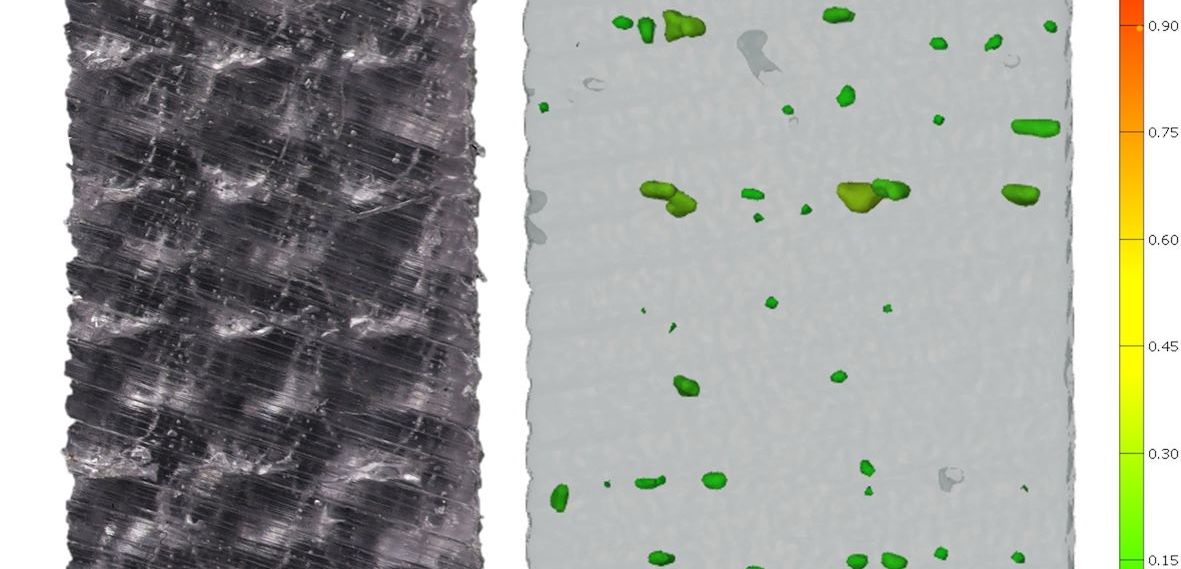
Despite high tensile strengths, the voxel fill samples still exhibited pores, i.e. air inclusions in the range of <0.15 mm³. Therefore, an even higher tensile strength and thus isotropy is conceivable through further optimization of the filling density. The potential of the voxelfill process is expanded by the use of fiber-filled polymers.
Derived from the previous test series
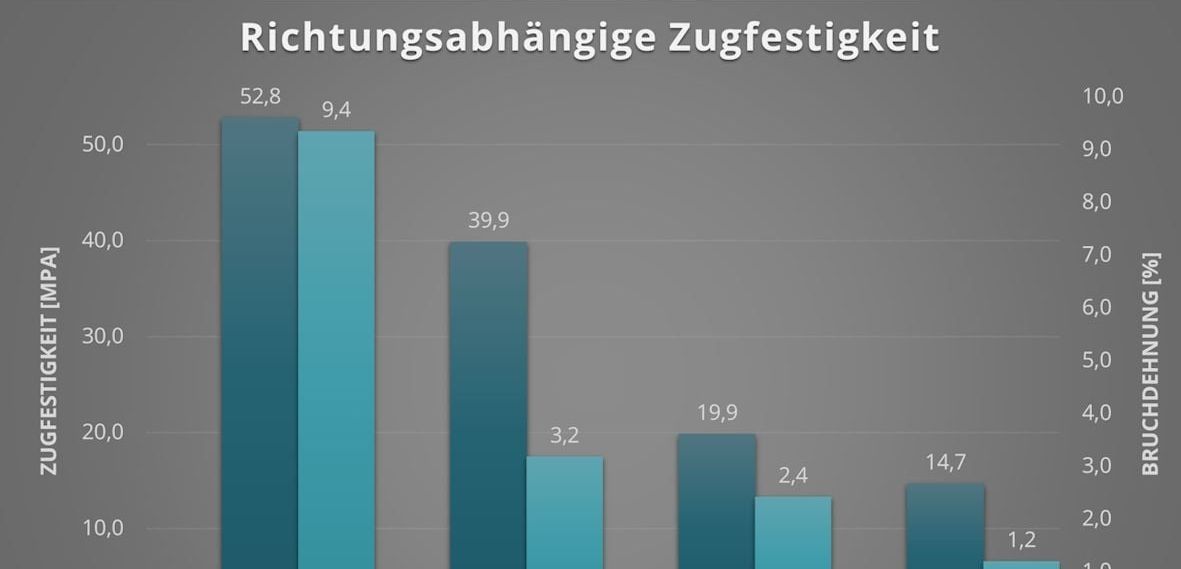
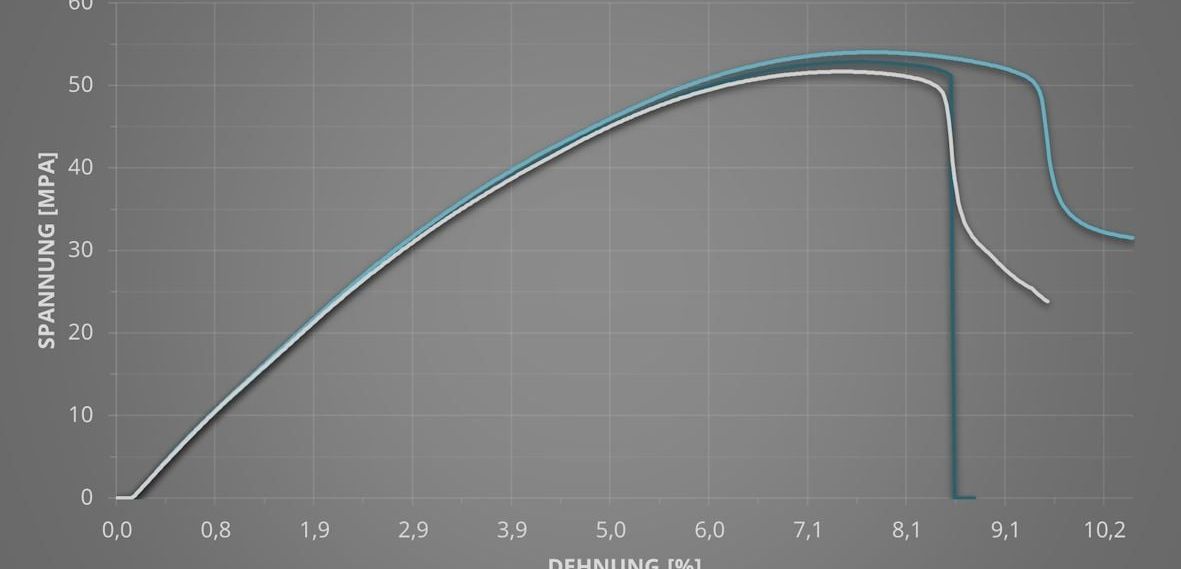
The results from the initial tests show the great potential of Voxelfill. They form the "proof of concept" for this combination of material extrusion 3D printing and injection molding. When looking at the results of the conventionally produced samples (layer by layer), the weak point of anisotropy in 3D-printed components becomes apparent. The samples printed in XY orientation show a ductile stress-strain curve, which is typical for an unfilled plastic. At 52.83 MPa, the tensile strength is even slightly higher than the value from the material data sheet (50 +/-1.1 MPa) for injection molding. A comparison of the samples printed conventionally in the XZ direction - once directly as a standing tension rod and once as a block for subsequent machining of the tension rods - shows deviations in both the tensile strength and the standard deviation. This results from the unfavorable geometry of a standing tension rod for material extrusion 3D printing.
Physically, this can be explained as follows: Due to its small contact surface at the base and the excessive height with a simultaneously varying cross-section, the samples are exposed to vibrations during direct production, which can lead to a misalignment of the tracks. These geometry-related inaccuracies lead to a weakening of the material structure, as they influence the cross-section of the material and can result in notches. The higher standard deviation is a good indication that a stochastic effect - such as the oscillation of the tension rod - plays a major role here. However, a tensile test is a test in which geometric effects and notch effects should not be taken into account. For further consideration of the strength in the XZ construction direction, the focus was on the samples that were milled from a vertically printed block. The possible subsequent melting of the layers due to machining was prevented by using suitable tools and cooling. If one compares the samples printed in the XZ direction, which were printed conventionally, with the voxel-fill samples, a doubling of the tensile strength becomes apparent. This increases from 20 MPa for the conventionally printed samples to 40 MPa for the voxelfill samples. In comparison, the strength of the horizontally printed samples was 53 MPa.
The result is as follows: This corresponds to an anisotropy of 70 percent for the conventionally printed samples and an anisotropy of only 23 percent for the voxel fill samples.
New test series with fiber-filled materials surprise with improved strengths
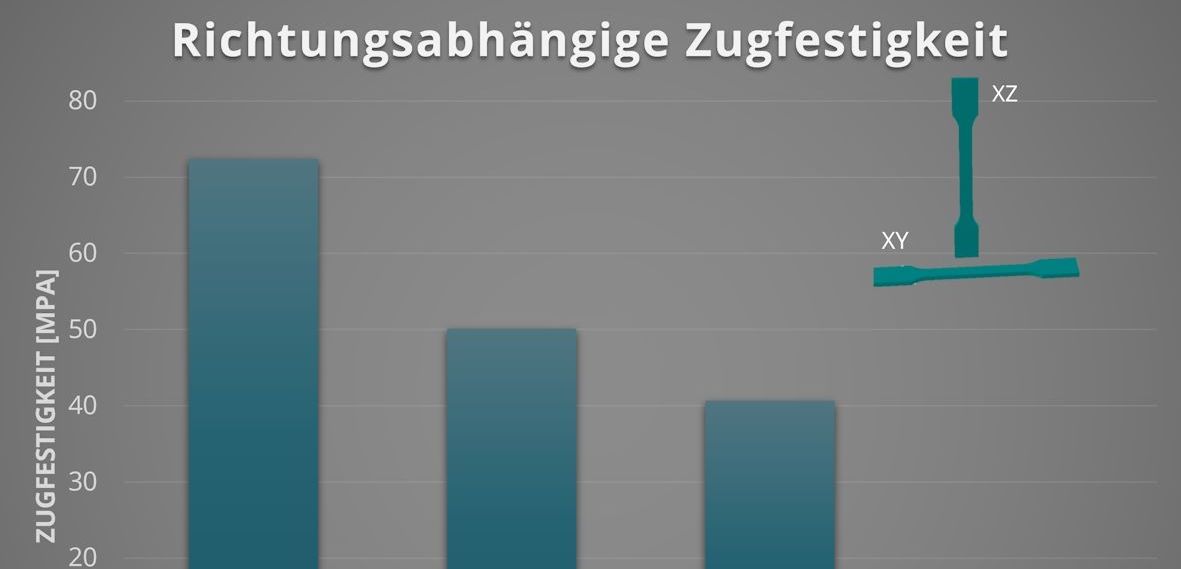
The transfer of the voxel fill process to fiber-filled plastics clearly confirms the positive influence on the Z-strength. Tests were carried out with PETG GF30 from Polymaker at an extrusion temperature of 270 °C. A series of tests was set up to determine the optimum printing parameters in order to assess comparability with the maximum achievable strength in both conventional and voxel-fill printing. XY-lying tensile bars were produced as a reference. These were printed in two different infill orientations, one aligned in the tensile direction and one +/-45° to the tensile direction. The tensile strength with the infill oriented in the tensile direction was the highest at 72.4 MPa. However, this corresponds to a designed case that does not occur in a real injection molded part, as the fiber distribution depends on the part geometry and the number and orientation of the injection points. In comparison, the horizontal tension rods with an infill orientation of +/- 45° achieved 50.1 MPa.

Standing tensile bars were then printed without voxel fill using conventional, layer-by-layer infill, which corresponds to the status of normal 3D printers. These achieved a tensile strength of 12.8 MPa. In comparison, the upright test specimens printed using voxel fill achieved a higher strength of 40.7 MPa.
Derivation of homogeneity and strength from the test series with filled materials
If the values determined are compared with each other to determine the homogeneity of the strength, a homogeneity of 81 percent is achieved for Voxelfill compared with the +/-45° printed reference samples and 56 percent with the aligned reference samples. The conventionally printed tensile bars, on the other hand, only achieve a homogeneity of 25 percent compared to the +/-45° printed reference specimens and 18 percent compared to the aligned reference specimens. The strength-enhancing effect of Voxelfill, which leads to more homogeneous component properties comparable to injection molding, could therefore also be demonstrated with fiber-filled plastics.
A look at the fiber distribution under the confocal microscope also shows fibers aligned in the Z direction, which are introduced by the vertical injection process in Voxelfill. Clemens Lieberwirth emphasizes: "This effect of aligning the fibres is unique to Voxelfill and cannot be achieved in conventional, layer-by-layer 3D extrusion printing."
Improving reproducibility with a 3D pellet printer
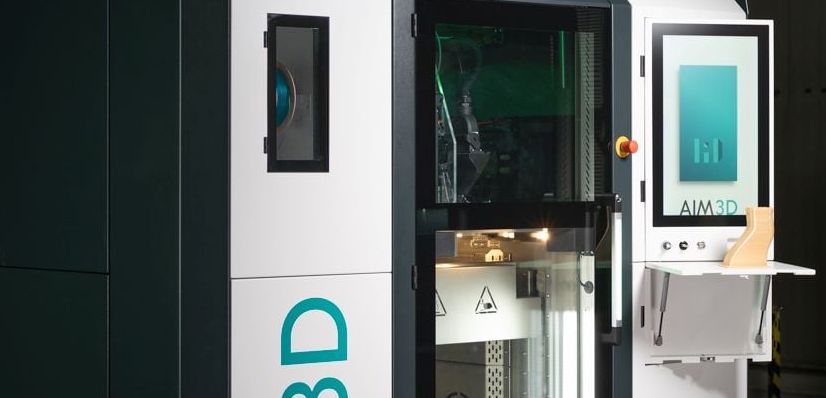
The ExAM-510 system from AIM3D is predestined for use in industrial production. The system, which will be launched in 2022, currently operates at a maximum build rate of 150 cm³/h. According to the manufacturer, the aim is to achieve build rates of 300 to 600 cm³/h. This should achieve processing volumes of 1,000 to 4,000 kilograms per year; all figures refer to components with a maximum quality of 150 µm layer thickness and the use of a 0.4 mm nozzle of the 3D printer and are therefore comparable to 3D components of fused deposition modeling (FDM).
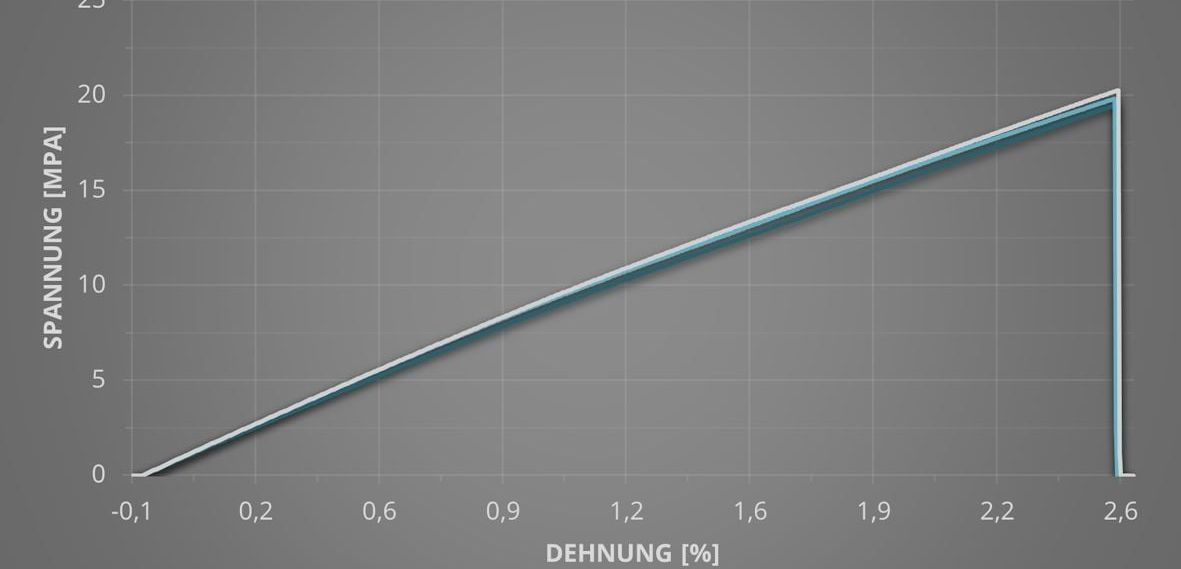
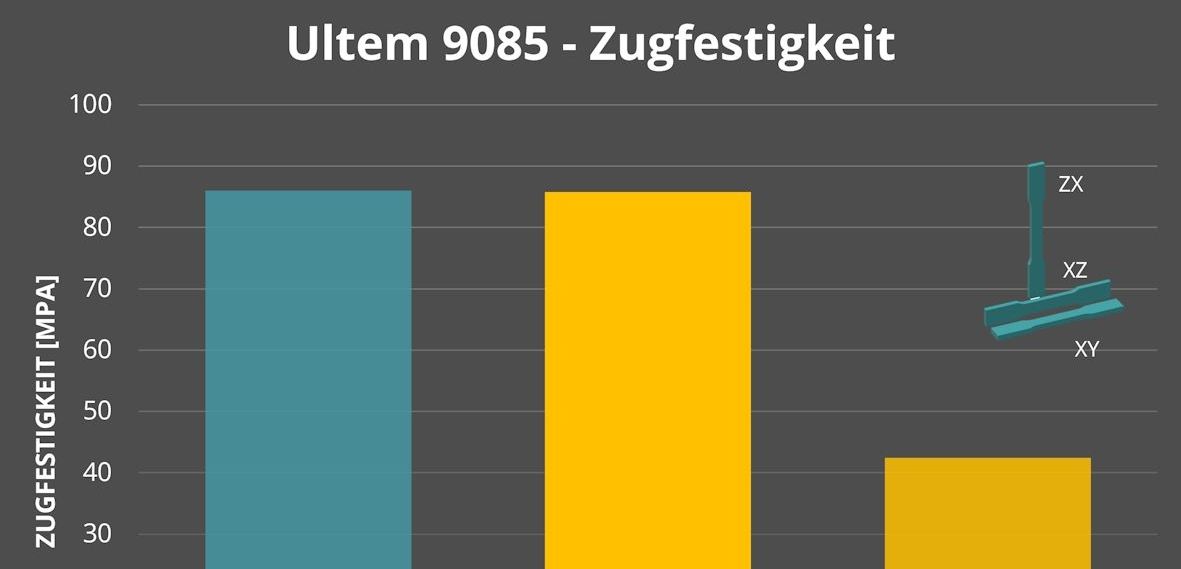
Reproducibility - i.e. the repeatability of the process - is crucial for the construction of a 3D component. For a user, this is a central point for consistent component quality, especially in the series production of small and medium-sized batches. Injection molding technology components and 3D components have comparable material homogeneities because granulate ULTEM 9085 is used. The latest tensile tests in accordance with DIN EN ISO 527-2 Type 1A demonstrate high process stability due to low standard deviations. This is achieved primarily through the patented pellet extruder technology, which ensures gentle processing of the material and minimizes degradation of the polymers in the extruder.
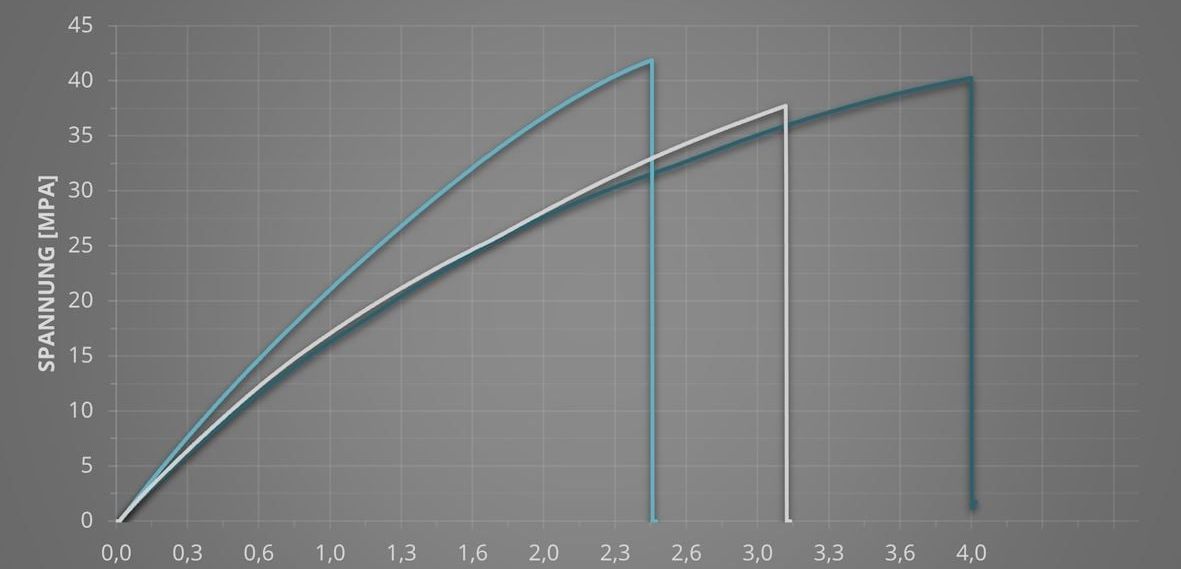
The ExAM 255 and ExAM 510 3D pellet printers enable the use of standard pellets with or without fillers to generate resilient 3D components. PEI is flame retardant according to UL 94-VO. PEI is suitable for high application temperatures, i.e. 180 °C permanently or 217 °C up to the glass transition. With the PEI material Sabic ULTEM 9085, 3D pellet printing now opens up component properties that come close to the classic injection molding process. A 100 percent higher elongation at break is achieved compared to FDM printers. PEI therefore opens up application areas in automotive, aerospace, rail vehicles and defense technology.
Outlook on the potential of Voxelfill
The voxel fill strategy using the CEM process enables the use of different materials: hybrid multi-material solutions with different voxel filling materials and construction materials for the contour or structure of the inner walls are possible. In this way, the material properties can be "customized". Component weight, damping properties, center of gravity manipulations or elasticities can be defined three-dimensionally to suit the application. By selectively filling only certain volume chambers (selective densities) on the basis of FE simulations, the component properties can be specifically influenced.
Voxelfill makes it possible to fill only those areas of a component that are absolutely necessary for the flow of force. As a result, these components look like "classic" components from the outside, with all the advantages for post-processing. At the same time, however, 3D printing reduces the amount of material and weight, including lightweight construction. Especially when using fiber-reinforced materials, the use of Voxelfill provides an additional option for specifically aligning the fibers in the component in order to increase the mechanical properties.
In the plane, the CEM process already offers good possibilities for controlling the orientation of the fibers. In the voxel fill strategy, this concerns the contour and the inner walls of the component. By injecting the material into the volume chambers (filling the voxels), the 3D component also receives fibers that are aligned in the Z-axis, thereby further improving the mechanical properties. The voxel fill process is particularly suitable for the 3D printing of plastics and fiber-filled plastics, but is also suitable for the 3D printing of metal and ceramic components using the CEM process. In general, there are advantages due to the higher build speed and the cross-layer filling.


You might also be interested in
New Resin Opens Up 3D Printing for the Optics Industry
With BMF Clear, Boston Micro Fabrication has introduced an optically transparent photopolymer resin for micro-precision 3D printing that achieves a light transmittance of over 90 percent at layer heights of 10 micrometers or more and is suitable for...
 read more...
3D Printing in the Defense Sector
Formnext Launches 2026 Defense Summit
Formnext is expanding its program to include the security and defense sector and will host the first Formnext Defense Summit in 2026. The event will focus on the potential of additive manufacturing for resilient supply chains, industrial...
read more...UltiMaker Doubles Speed in Industrial 3D Printing
With the Factor 4 Plus, UltiMaker is introducing a new version of its industrial desktop 3D printing platform, which operates at up to twice the print speed of the standard model. The platform is designed for use in manufacturing and defense...
read more...Stratasys takes over MarkForged
Stratasys is acquiring MarkForged from Nano Dimension for USD 42.5 million, thereby expanding its portfolio in the field of fiber-reinforced composites. The acquisition also strengthens the company's software and materials expertise in industrial 3D...
read more...Timo Göbel, Head of BMW Additive Manufacturing
"Clearly on course for broad industrialization"
The BMW Group's Additive Manufacturing Campus (AMC) is setting the course for the next stage of industrialization. Under the leadership of Timo Göbel, additive manufacturing is being further integrated into all stages of the vehicle life cycle. In...
read more...Real-time control to make recycling materials economical
The Fraunhofer IAPT is researching AI-based closed-loop processes for industrial 3D printing with recycled plastics. The aim is to achieve less waste, greater process stability and profitable printer farms.
read more...Forum Solutions 4AMIndustry shows ways into industrial application
Additive manufacturing has developed dynamically in recent years and has long outgrown its status as a purely innovative technology in many industries. Nevertheless, companies still face the challenge of integrating AM into their production...
read more...Alliance aims to drive forward industrial 3D printing
Machine components, electrostatically shielded transport containers, large components for the automotive, rail and aviation industries or specific medical products straight from the printer - the potential applications of additive manufacturing are...
read more...Photonic microchips with 3D connector
How a 3D system makes photonic chips industrially viable
A research team from Heidelberg is developing a 3D-printed "connector" for photonic microchips. The solution promises a low-loss, standardized coupling of glass fibre and chip - and could fundamentally simplify the production of photonic integrated...
read more...