
Food industry
The perfect pretzel with robotics
The food industry is one of the strongest growth markets for the automation sector. Robots fill pizzas, portion cheese, sort, pack and palletize. Trapo shows how automated solutions reduce sources of error and ensure high quality, short cycle times and consistent availability.
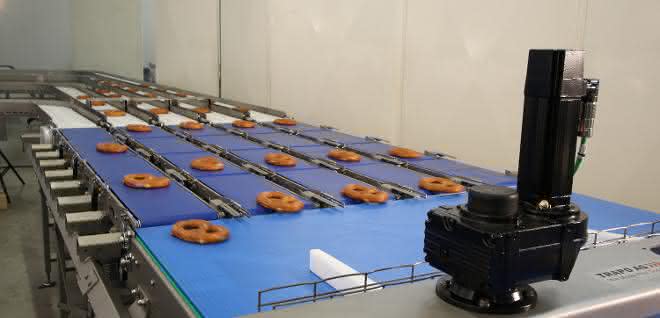
Symmetrically twisted strands of dough, thin arms and a thick belly - the production of pretzels used to require precise manual work. Today, fully automated baking lines produce identical dough loaves every second. Cameras and industrial image processing provide valuable support here: they are used to determine the coordinates of different pretzels and robots use a titanium knife to cut the perfect slit depending on the thickness of the dough so that the dough does not burst open - for consistent, high quality.
Combination grippers enable short cycle times
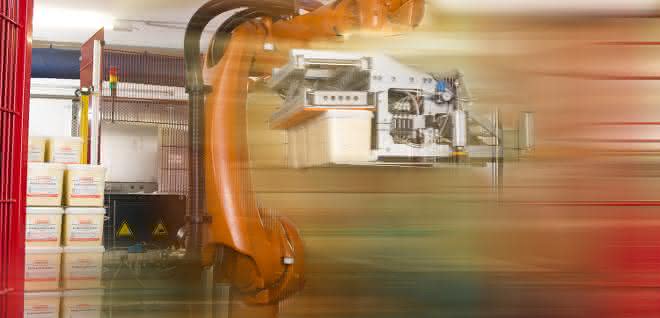
Combination grippers combine the functions of vacuum, fork, magnetic and mechanical grippers. They adapt to different product sizes and also grip pallets, workpiece carriers, intermediate layers or lids. Combination grippers therefore optimize the possible applications as well as the range of functions and performance of robot systems - from articulated arm robots to gantry robots and picker robots. In addition, the time-consuming and costly changing of grippers is no longer necessary, thus speeding up cycle times.
Layerpalletizers for gentle and precise layer formation
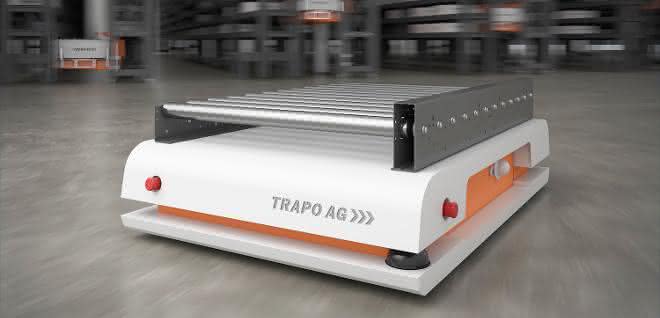
Snacks such as wafer slices have to be packaged in secondary packaging of different sizes. High-performance layer palletizers are capable of operating one or more palletizing stations as required, depositing objects cleanly and creating any number of layer patterns in different formats at high speed. High cycle times of up to ten layers per minute can be achieved. In the infeed area, flexible, omnidirectional tables or kinematic systems are used as a preliminary stage to palletizing for gentle layer formation.
Autonomous transport systems for flexible material flow
In contrast to rigid conveyor technology, driverless transport systems enable flexible, in-house transportation of goods. They can transport loads of up to 2,000 kilograms and also unfold their full benefits in the beverage industry, where the material flow is characterized by high quantities of uniform and easily stackable goods. In the prevailing block storage systems, autonomous transport systems easily take over the direct storage and retrieval of goods. With the help of vertical conveyors, they can also operate across different levels.
"In addition to accelerated intralogistics processes, optimized food safety is a key benefit of automated food processing," explains Jörg Thomas, Head of Sales at Trapo. "In many cases, people still represent the greatest hygiene risk in operational practice. Housings and control panels made of stainless steel are resistant to corrosion and acids, even when using chemical cleaning agents. They can be cleaned and disinfected quickly and safely. In this way, automated solutions that comply with hygienic design ensure operational safety for manufacturers in the food industry and safeguard their competitiveness." as


You might also be interested in
Basler acquires 76% of Indian image processor
Basler, supplier of image processing components for computer vision solutions, has acquired 76% of the Indian sales partner Alpha TechSys Automation.
 read more...
Process monitoring and fault detection
Cameras ensure quality during laser melting
Powder bed-based laser melting (PBF-LB/M) opens up new possibilities in additive manufacturing. Modern camera systems provide crucial process data to further increase quality and efficiency.
read more...Vision Sensor is three times faster than its predecessor
The 'CS-62' vision sensor from di-soric is around three times faster than its predecessor, the 'CS-60'. In combination with the 'nVision-i 25.1' software, it enables image processing solutions that were previously reserved for smart cameras.
read more...Thermal imaging cameras for quality control
Automated thermal imaging cameras are often suitable for quality control applications where temperature plays a role. However, while there are various solutions on the market for slow processes, it is challenging to select a camera that reliably...
read more...Easy entry into industrial VGA thermography
Reliable temperature measurement is a prerequisite for the success of many industrial processes. Berlin-based manufacturer Optris presents the Xi 640 infrared camera, a new member of its Compact Line, which enables non-contact temperature...
read more...Powder bed-based laser melting optimized
Aconity3D has set itself the goal of optimizing the stability of the manufacturing method of powder bed-based laser melting and thereby promoting its use in a wide range of industries. By using high-speed industrial cameras from SVS-Vistek, the...
read more...INDUSTRIAL Production Products of the year...
2nd place, category handling, assembly and production logistics: SICK
safeVisionary2 is the first 3D time-of-flight camera with Performance Level c safety certification. It enables safe three-dimensional environmental detection and won 2nd place in the competition for Product of the Year 2024 in the handling, assembly...
read more...Nomination Products of the Year 2024
SICK: Camera systems safeVisionary2
safeVisionary2 is the first 3D time-of-flight camera with Performance Level c safety certification. It enables safe three-dimensional environmental detection and has been nominated in the 2024 Product of the Year competition in the handling,...
read more...AI vision brings additional opportunities
The seamless integration of AI into the consumer sector has helped to improve our quality of life and make interactions with technology more efficient. In industry, AI vision with machine learning opens up new possibilities that are not covered by...
read more...