

Interview with Adrian Steiner
Shuttle warehouse as an investment in the future
TGW is building a highly automated shuttle warehouse on Lake Lucerne for coffee machine specialist Thermoplan, which is due to go into operation in February 2020. Thermoplan CEO Adrian Steiner talks about the reasons for automation and the role ergonomics play in the design of the picking workstations.
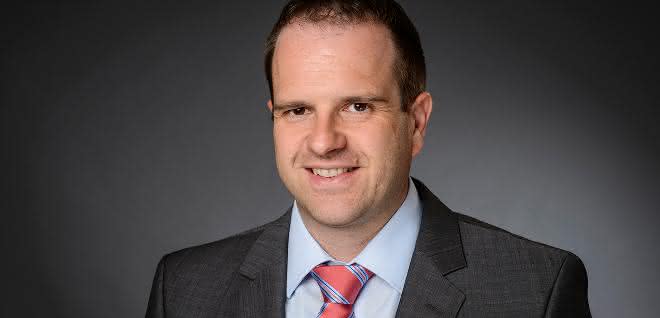
Mr. Steiner, what challenges does the B2B business pose for Thermoplan - and what does this mean for your intralogistics?
The most important thing for us is that we believe in Switzerland as a production location. To ensure that we can continue to be successful here tomorrow and the day after tomorrow, we need to invest in the automation of the material flow. Of course, this also entails an increase in efficiency.
What were the reasons for switching from a manual warehouse to a shuttle warehouse?
Among other things, the growing market volume played a role in the decision; daily coffee consumption has been increasing for years. Our customers are benefiting from this development - and Thermoplan is growing with them. The coffee machines have to work reliably, that's ultimately how our customers measure us. In order to meet these quality management requirements worldwide, intralogistics must also function perfectly. For example, to ensure the traceability of components and products.
From manual in the past to fully automated today: what does this mean for Thermoplan?
Three and a half years ago, we decided to automate our intralogistics and developed a master plan with an external consultant. We proceeded step by step and first introduced new software to control the material flow. This also changed the way we work. The next step was therefore the intensive training of our employees.
The third step is now the actual automation with a shuttle warehouse from TGW. As a small family business, this is a demanding investment for Thermoplan - and a challenge. With a project like this, you need specialist know-how and a partner you can rely on. That was one of the reasons why we chose TGW.
What were the challenges in planning and connecting the shuttle warehouse to the existing buildings?
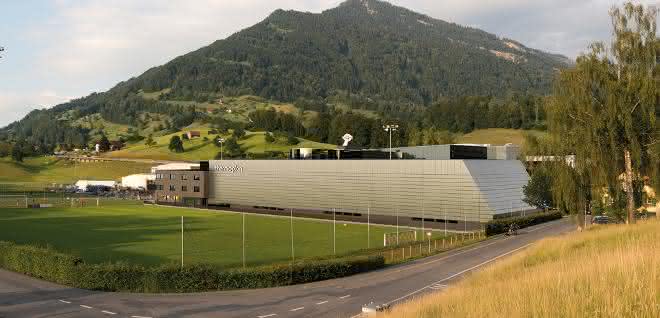
We actually wanted to erect a building into which the shuttle warehouse would also be integrated. However, given the required size of the system, we quickly realized that this could not be implemented in the existing space. We therefore erected the shuttle as a separate building and connected it to the existing plant with a walkway.
What role did the special soil conditions play in this?
The area on which we are building is called "Weiher" - that says it all (laughs). From a geological point of view, it is an area where the foothills of a rock massif protrude, but it still contains a lot of water. For optimum stability, we had to drill 162 piles into the ground - if you were to line them up, they would be 2,185 meters long. The foundation not only has to bear the weight of the structure, but also absorb the kinetic energy of the shuttles.
Can you describe the highlights of the system concept?
We will have over 40,000 trays in the shuttle, the hall itself has a volume of 27,000 cubic meters - that alone is impressive. It will be great to see the 100 Stingray shuttles moving back and forth automatically next year: I'm really looking forward to it.
What role did ergonomics play in the TGW order picking workstations?
We traditionally attach great importance to keeping our employees healthy: that is the most important thing for us. Accordingly, we strive to create an ergonomic working environment: this ranges from acoustics, lighting conditions and working height to the ergonomic design of TGW's height-adjustable picking workstations. as


You might also be interested in
Plagiarius 2024 negative prize
On January 26, 2024, the Plagiarius campaign awarded its dreaded "Plagiarius" negative prize for the 48th time to manufacturers and retailers of particularly brazen counterfeits and fakes.
 read more...
Ivalua honors winners of the Generative AI...
AI-supported "add-ons" for buyers within 48 hours
Ivalua, provider of cloud-based spend management solutions, announced the winners and innovations of the first Generative AI Innovation Cup. The competition took place in December 2023. It was open to all Ivalua partners and employees - more than...
read more...Efaflex celebrates 50 years of high-speed...
The emphasis is on "fast"
Since day one, Efaflex has wanted to use new technologies as early as possible and drive progress in the industry. This year, the family business is celebrating its 50th anniversary under the motto "Fast Forward".
read more...Security of supply even during power outages
In the winter of 2022, Germany was worried about energy shortages. The drugstore retailer dm did not paint any horror scenarios, but nevertheless saw the possibility of controlled, temporary, regional power cuts (brownouts).
read more...Safety technology in mechanical engineering
Modules with new functions
Euchner's product highlights at EMO 2023 include the communication-capable solenoid interlocks.
read more...Transforming the paper industry towards climate neutrality
Together with partners from industry and research, Voith is developing a project for the optimization of energy and material flows in paper production. The aim of the research project is to develop a digital framework that enables effective process...
read more...Up to 95 percent less flue gas thanks to direct extraction
The requirements for occupational safety measures and safety technology are also constantly increasing in welding technology. The Technical Rules for Hazardous Substances (TRGS) stipulate that welding fumes and harmful substances must be extracted...
read more...Competitive advantages with large machines
Whether 3D-printed components for machines and systems, prototypes or aids for design: additive manufacturing is almost indispensable for modern companies in mechanical and plant engineering and automation if they want to play in the premier league.
read more...Transport technology from the modular system
Many transport tasks can be realized with the help of linear technology. Pre-configured solutions are available to simplify the interaction between the linear unit, motor, gearbox and controller. This minimizes the effort required for research and...
read more...