
Lifting technology and cranes
Frequency inverters save energy with hoists
Power consumption and clean energy are also important in industrial lifting technology. Gefran's vector-controlled frequency inverters for hoists and cranes offer various functions that enable high energy savings.
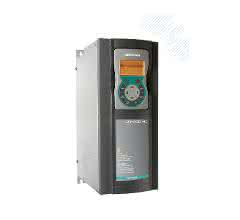
The intelligent frequency inverters with field-oriented vector control ADV200 HC from Gefran are designed for motor outputs from 0.75 kilowatts to 1.65 megawatts and can be defined as a universal drive. They control asynchronous motors with or without speed sensors and control all lifting and adjusting movements - for example in hoists, gantries or overhead cranes. The inverters are characterized by high performance and sophisticated control functions. At the same time, they are easy to install and configure and offer a high level of user-friendliness as well as programming software in five languages.
Depending on the model, the voltage supply of the inverters is 380 Vac...690 Vac, 50 to 60 Hertz or 450...1120 volts DC. The overload is up to 180 percent. Key functions and features include self-calibration of the speed-current-flow controllers and detection of motor data when the motor is rotating and stationary, brake control, load swing damping, a joystick for safe remote operation, no overrunning of positions, "Moist Speed Up" and collision protection to prevent damage to the load.
The ADV200 HC also has the RS485 serial interface (Modbus RTU) and offers a connection to the common ProfiBus-DP, Canopen, DeviceNet and Real Time Ethernet fieldbuses, for example GDNet, EtherCAT, EtherNet/IP and ProfiNet.
In combination with the AFE200 active front-end unit, the power consumption of the respective application can be reduced. The infeed and regenerative unit uses the inertia forces of the loads to save energy and thus enables the lifting systems to be optimized. They are designed for a power range from 22 kilowatts to 1.65 megawatts for a three-phase supply of 400 to 690 volts and can feed the DC bus of the frequency inverters. This means that clean energy can be fed back with a cosφ of 1 and extremely low distortion (THDi ≤ 3%). The SMB200 and FFE200 feed-in and feed-back units can also contribute to significantly more economical operation of a system if suitably designed. as


You might also be interested in
Plagiarius 2024 negative prize
On January 26, 2024, the Plagiarius campaign awarded its dreaded "Plagiarius" negative prize for the 48th time to manufacturers and retailers of particularly brazen counterfeits and fakes.
 read more...
Ivalua honors winners of the Generative AI...
AI-supported "add-ons" for buyers within 48 hours
Ivalua, provider of cloud-based spend management solutions, announced the winners and innovations of the first Generative AI Innovation Cup. The competition took place in December 2023. It was open to all Ivalua partners and employees - more than...
read more...Efaflex celebrates 50 years of high-speed...
The emphasis is on "fast"
Since day one, Efaflex has wanted to use new technologies as early as possible and drive progress in the industry. This year, the family business is celebrating its 50th anniversary under the motto "Fast Forward".
read more...Security of supply even during power outages
In the winter of 2022, Germany was worried about energy shortages. The drugstore retailer dm did not paint any horror scenarios, but nevertheless saw the possibility of controlled, temporary, regional power cuts (brownouts).
read more...Safety technology in mechanical engineering
Modules with new functions
Euchner's product highlights at EMO 2023 include the communication-capable solenoid interlocks.
read more...Transforming the paper industry towards climate neutrality
Together with partners from industry and research, Voith is developing a project for the optimization of energy and material flows in paper production. The aim of the research project is to develop a digital framework that enables effective process...
read more...Up to 95 percent less flue gas thanks to direct extraction
The requirements for occupational safety measures and safety technology are also constantly increasing in welding technology. The Technical Rules for Hazardous Substances (TRGS) stipulate that welding fumes and harmful substances must be extracted...
read more...Competitive advantages with large machines
Whether 3D-printed components for machines and systems, prototypes or aids for design: additive manufacturing is almost indispensable for modern companies in mechanical and plant engineering and automation if they want to play in the premier league.
read more...Transport technology from the modular system
Many transport tasks can be realized with the help of linear technology. Pre-configured solutions are available to simplify the interaction between the linear unit, motor, gearbox and controller. This minimizes the effort required for research and...
read more...