
Wood conveying technology
40 years of conveying via rolls
A Torwegge roller conveyor has been transporting goods in Bad Salzuflen in East Westphalia for four decades. At Holztechnik Friedrich Klinkert, the system is used as an outfeed roller conveyor for freshly pressed veneers.
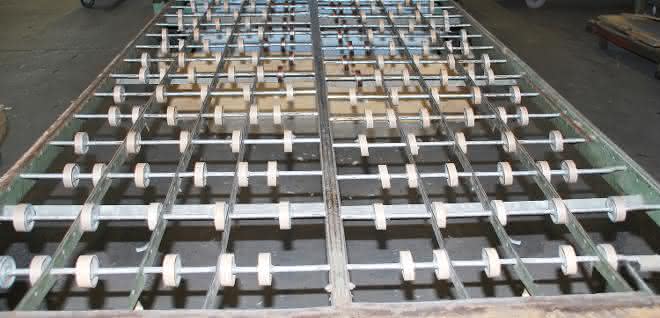
"The roller conveyor was built in 1979 and still works perfectly," reports Sven Lübbing, responsible for sales and technology at Holztechnik Friedrich Klinkert. The company from Bad Salzuflen has been active in veneer processing for more than 40 years. The conveyor technology from Torwegge serves the company as an outfeed roller conveyor and has always run flawlessly. Repairs have never been necessary. Uwe Eschment, Managing Director of Torwegge, explains: "Our systems are designed for long running times and low-maintenance operation."
The gravity roller conveyors are used in a variety of ways as conveyor lines in production, incoming goods or shipping, for example. There, they optimize the internal material flow of light products such as wood veneers through to heavy goods such as tile packages. In wood processing, the chemical reaction between metal and oak is particularly important when choosing the right conveyor. Metal rollers can oxidize due to the heat of processed oak panels and, in combination with the tannic acid of the wood, leave behind discolouration. Torwegge has recognized this and therefore offers castors with a polyurethane coating. The plastic prevents oxidation and thus the unwanted stains on the wood. Rubber or steel castors can also be installed on request.
In general, the roller conveyors can be adapted to individual requirements. You can choose between small, light, heavy-duty, all-round, ball and scissor roller conveyors. The required inclination of the roller conveyor should also be determined depending on the respective nature of the load carrier and the unit weight of the conveyed goods. Only then can the goods run smoothly and independently. as


You might also be interested in
Torsten bekommt seinen eigenen Stand
Torwegge ist in diesem Jahr erstmals zwei Mal auf der Logimat vertreten. Die beiden Geschäftsbereiche Intralogistiksysteme und Komponenten haben je einen eigenen Stand.
 read more...
Torsten hat sich weiterentwickelt
Torwegge wird auf der Logimat an zwei Ständen vertreten sein. An Stand B39 in Halle 10 wird die neueste Entwicklungsstudie des fahrerlosen Transportsystems Torsten gezeigt. Und gegenüber an Stand B43 informiert das Unternehmen Räder, Rollen,...
read more...Schienen für Schwerlast
Torwegge hat neue Schienen für Förderanlagen im Programm. In zwei wesentlichen Punkten unterscheiden sich die Mini-Schwerlast-Röllchenschienen von herkömmlichen Produkten dieser Art.
read more...CU-Flex copper processing center
Process copper in three stations
Boschert also presented the revised CU-Flex copper processing center with its three stations for punching, bending and shearing in Hanover. This allows users to completely manufacture copper parts in just one work process.
read more...Transportation of sheet metal blanks
ACE industrial gas tension springs relieve the strain on blank grippers
Two medium-sized suppliers have joined forces to increase safety when designing a new blank gripper for the automotive industry.
read more...Safelog expands its portfolio
The AGV family from Safelog is growing. With the AGV M4-C, the technology company from Markt Schwaben is launching a new transport robot with a scissor lift system.
read more...Koenig's discipline
AMF clamping technology pulverizes production times at the world's oldest printing press manufacturer Koenig & Bauer in Würzburg
read more...Moving heavy loads easily
For a manufacturer of lift tables, the collaboration with Blickle has paid off in full. The wheel and castor specialist supplied castor solutions with the ErgoMove electric drive system.
read more...More safety for smooth warehouse processes
Ergonomics and an improved workstation layout, the introduction of a safety culture, specific work instructions and the introduction of regular safety checks ensure a safe environment in a warehouse.
read more...