
Thin section bearing
Slim bearings
Thin section bearings can solve problems in applications with limited installation space if they are selected and used professionally. Findling is a specialist in this field. Thin section bearings require little installation space and are used in applications where large shaft diameters with small bearing cross-sections are required.
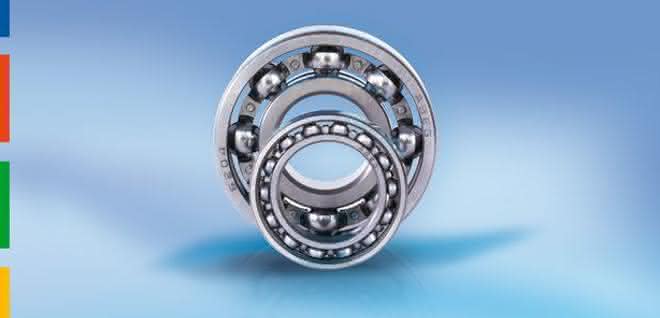
However, the slim bearings pose design challenges. This is because thin inner and outer rings are elastic, and concentricity is only achieved when the bearings are mounted on the shaft. The filigree structure of the rings and the out-of-roundness when not installed also cause problems in terms of sealing technology: a gap often occurs so that the seal does not rest on the inner ring, which the customer sees as a defect. Last but not least, there is little space available for cages in thin section bearings due to the small cross-sections. These are therefore made thin in order to avoid unwanted contact with seals and cover washers.
However, thin cages quickly reach their load limits during oscillating movements, resulting in cage breakage and total failure. Findling's range includes thin section bearings with an internal diameter of three to 220 millimetres. Even series 67 with an extremely thin cross-section guarantees maximum precision, says Findling. pb


You might also be interested in
Freeformer and 3D printer for liquid silicone
At Rapid.Tech 3D from May 9 to 11, 2023 in Erfurt, Arburg Additive will be presenting its Freeformer 750-3X, which processes original plastic granules, and the LiQ 5 for 3D printing of liquid silicone (LSR). The company will also be providing...
 read more...
Meaningful data on the service life of the seal
Seals prevent substances from penetrating or entering technical components. The intelligent seals from Freudenberg Sealing Technologies can significantly expand this core task in the future: the seal itself is also a sensor and becomes a "smart...
read more...Integrated ERP system for watertight processes
Rubber-based seals are used in window frames and escalators. They are also a must in tunnel projects to prevent water damage. Sealable, a specialist in sealing and insulation solutions, relies on an ERP system from Pro Alpha, which covers everything...
read more...New pallet roller for the warehouse
Conveyor technology specialist Rulmeca is expanding its range of conveyor rollers for pallets and other heavy goods with the XPS series.
read more...Three leak tests at once
Systems for leak testing modern components for electromobility and hydrogen fuel cells are a key focus of Worthmann Maschinenbau and its subsidiary Maceas.
read more...Efficient automation with pneumatic clamping elements
With new pneumatic products in the categories "pneumatic clamps" and "positioning elements and systems", norelem is expanding its existing range of components for the production processes of Industry 4.0.
read more...Stainless steel connections for the chemical industry
Connections for chemical systems, such as mixers and vacuum dryers, must be absolutely tight and reliable. Special stainless steel connections ensure process reliability.
read more...Powerful IO-Link master and L-coded cables
Components in the food industry must meet hygienic requirements and a high degree of protection. The new IO-Link masters from ifm's PerformanceLine series meet protection classes IP65, IP67 and IP69K, the M12 sockets are made of stainless steel and...
read more...Robot recycles batteries
Used batteries from electric cars contain valuable raw materials that can still be used. To be able to recycle them, a research team from the Center for Digitized Battery Cell Production (ZDB) at Fraunhofer IPA is developing a robot cell with a wide...
read more...